Experience the future of healthcare with our state-of-the-art robotic systems. We offer advanced, minimally invasive surgeries.
Fill in your details to get started
Rajasthan's First Make-in-India Robotic Surgical System | Apex Hospitals
Apex Hospitals is the first hospital in Rajasthan to perform surgeries using a Make-in-India robotic surgical system (the SSI Mantra system), marking a landmark moment for surgical care in the region. Our Department of Robotic Surgery offers minimally invasive robotic procedures across urology, gastrointestinal surgery, oncology, and cardiac surgery. With surgeons who have over ten years of experience, patients benefit from smaller incisions, minimal blood loss, reduced pain, faster recovery, and superior surgical precision, all at an affordable cost.
First in Rajasthan | Make-in-India Robot | 10+ Years Experience | Minimal Scarring & Blood Loss |
What is Robotic Surgery?
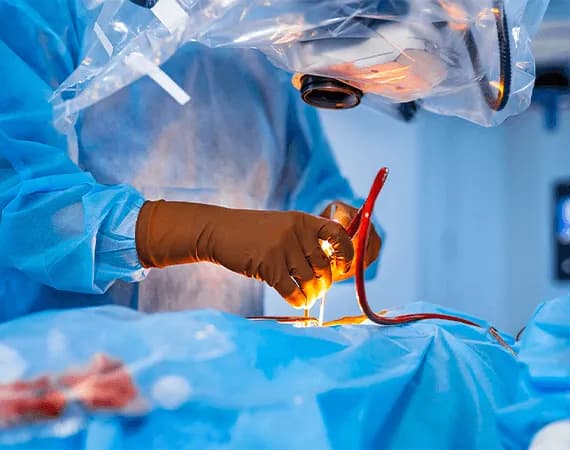
Robotic surgery is a minimally invasive surgical technique in which a surgeon uses a robotic system, controlled from a console inside the operating room, to perform precise procedures through small incisions, guided by a high-definition 3D camera that magnifies the operating field up to ten times.
How It Works
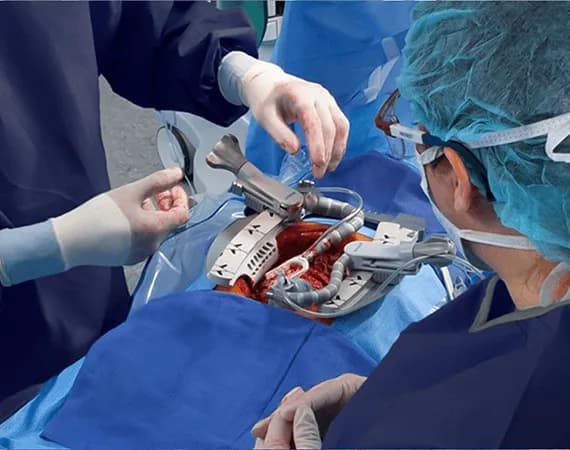
Specialised instruments are inserted into the patient's body through a series of small incisions, each no larger than a keyhole. These instruments are attached to three robotic arms, which the surgeon controls with fine finger and foot movements from a console in the operating theatre. A fourth arm holds a high-definition, 3D stereoscopic camera that gives the surgeon a magnified, ten-times enlarged view of the operating field, far beyond what is visible to the naked eye or through standard laparoscopy.
The robotic arms translate the surgeon's hand movements with greater precision and a wider range of motion than the human hand alone can achieve, eliminating natural hand tremor and allowing access to tight anatomical spaces. The surgeon is in complete control at every moment, the robot does not act autonomously.

Robotic Surgery vs Open Surgery vs Laparoscopy
Feature | Open Surgery | Laparoscopy | Robotic Surgery |
Incision size | Large (10–30 cm) | Small (0.5–1 cm) | Small (0.5–1 cm) |
Surgical precision | Standard | Good | Superior — 10x magnification |
Range of motion | Natural hand | Limited | 360° — greater than human wrist |
Blood loss | Higher | Reduced | Minimal |
Hospital stay | 7–14 days | 3–5 days | 1–3 days |
Recovery time | 4–6 weeks | 2–3 weeks | 1–2 weeks |
Scarring | Significant | Minimal | Minimal |
Infection risk | Higher | Lower | Lower |
Tremor | Present | Present | Present |
Our robotic surgery programme covers a wide range of specialties. Each procedure below uses the Make-in-India robotic system for enhanced precision, minimal invasiveness, and faster recovery.
Minimally invasive removal of the prostate gland, typically for prostate cancer. Offers superior precision in preserving surrounding nerves.
Removal of all or part of the bladder for bladder cancer. Robotic approach reduces blood loss and enables precise reconstruction.
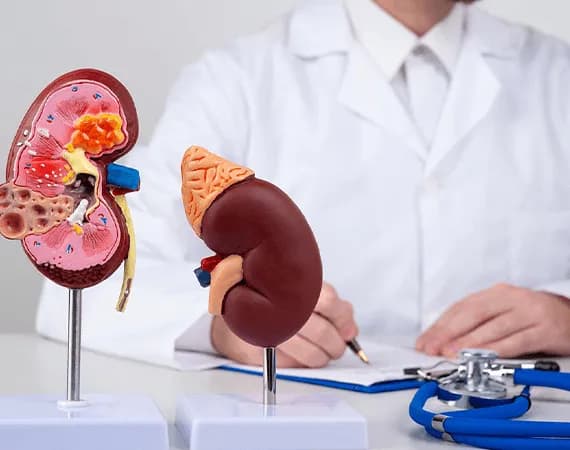
Correction of ureteropelvic junction (UPJ) obstruction — a blockage between the kidney and ureter — restoring normal urine flow.
Partial or total removal of the stomach for stomach cancer, severe ulcers, or other gastric conditions. Precise dissection with minimal blood loss.
Removal of part or all of the colon for colon cancer, diverticulitis, Crohn's disease, or severe polyps.
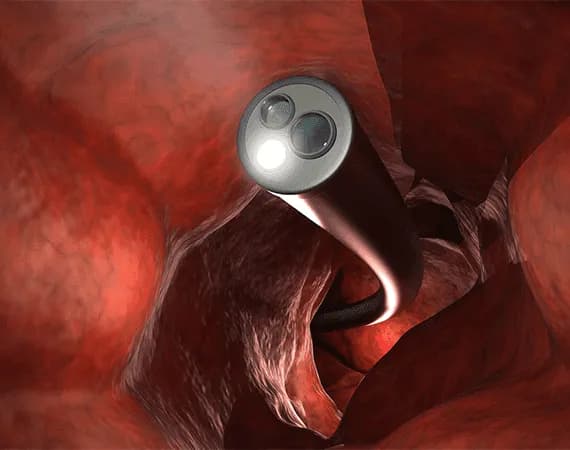
Minimally invasive robotic procedures on the stomach, intestines, liver, and other GI structures — especially beneficial for complex cases requiring high precision.
Minimally invasive repair of inguinal, hiatal, and abdominal wall hernias with enhanced precision and faster recovery than open repair.
Robotic-assisted cancer surgery across multiple organ systems — enabling precise tumour removal while preserving surrounding healthy tissue.
Minimally invasive robotic repair of atrial septal defects (ASD) and ventricular septal defects (VSD), congenital holes in the heart, through small keyhole incisions in the chest, avoiding the need for full open-heart surgery (sternotomy) in eligible patients.
Repair or replacement of the mitral valve through small incisions in the chest, with robotic precision and significantly reduced recovery time compared to open heart surgery.
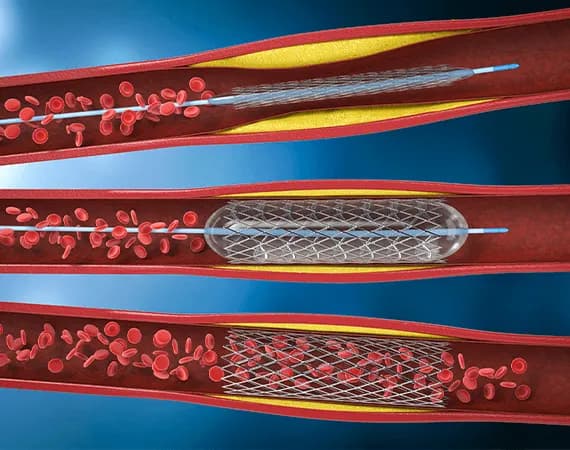
Coronary artery bypass grafting performed minimally invasively using robotic assistance, particularly beneficial for single or double vessel disease in eligible patients.
Benefits Robotic Surgery

Smaller incisions — no large surgical wound
Minimal blood loss — lower risk of transfusion
Reduced post-operative pain and discomfort
Shorter hospital stay — typically 1–3 days
Faster return to daily activities and work
Lower risk of wound infection
Minimal scarring
Reduced risk of complications compared to open surgery
10x magnified, high-definition 3D visualisation
360-degree range of motion — beyond what the human wrist can achieve
Elimination of natural hand tremor
Access to tight, complex anatomical spaces
Greater precision in tumour removal and nerve preservation
Better outcomes in complex reconstructive procedures
Real-time surgeon control at every step
Apex Hospitals is the first hospital in Rajasthan to perform surgeries using a Make-in-India robotic surgical system. Patients in Rajasthan no longer need to travel to Delhi, Mumbai, or other metro cities to access robotic surgery, world-class precision is now available here, at an affordable cost.
Our robotic surgery team spans urology, GI surgery, oncology, and cardiac surgery, giving patients access to robotic-assisted care across a wide range of conditions. Each specialist brings 10+ years of surgical experience combined with advanced robotic training.
Robotic surgery at Apex Hospitals is priced to be accessible, not just for those who can afford to travel to larger cities. Shorter hospital stays, faster recovery, fewer complications, and reduced need for additional procedures make robotic surgery cost-effective over the full treatment journey, not just the day of surgery.
Patient Journey
OPD available Monday to Saturday. Book online, call our helpline, or walk in during OPD hours. Bring all prior investigation reports — scans, blood tests, biopsy results, for a focused consultation. The relevant surgeon (urologist, GI surgeon, cardiac surgeon, or oncologist) will be your primary contact.
The surgeon reviews your diagnosis, imaging, and reports to determine whether robotic surgery is the right approach for your condition. Not every patient or every condition requires robotic surgery, the team recommends it only when it offers a meaningful advantage. A complete pre-operative workup is conducted including blood tests, cardiac evaluation, and anaesthesia assessment.
Your surgeon explains the robotic procedure in plain language, what will be done, what to expect, recovery timeline, and potential risks. Pre-operative preparation instructions (fasting, medicines, bowel prep if needed) are provided in writing.
The procedure is performed under general anaesthesia. Small incisions are made for the robotic arms and camera. The surgeon operates from the console, with a 10x magnified 3D view of the operative field and precise robotic instrument control. Operating time varies by procedure, typically 2–4 hours for most robotic surgeries.
Most robotic surgery patients are ambulatory (able to move) within 24 hours. Hospital stay is typically 1–3 days for most procedures. Pain is managed effectively with oral medicines. Diet is gradually reintroduced depending on the procedure.
Patients are discharged with clear written instructions on wound care, activity restrictions, diet, and medicines. Follow-up is scheduled at 1 week, 1 month, and 3 months. Oncology patients have additional follow-up for disease monitoring. Teleconsultation is available for patients from outside Jaipur.
“If you can't find the answer to your question here, please don't hesitate to contact our support team for assistance.”
Robotic surgery is a minimally invasive technique where a surgeon operates using a robotic system, controlling robotic arms and a 10x magnified 3D camera through small incisions. The surgeon is in complete control; the robot does not act independently.
Yes. Robotic surgery is performed by experienced surgeons with the same safety standards as conventional surgery, with the added benefit of greater precision, 10x magnification, and reduced blood loss. The surgeon is in control at every step, the robotic system is a tool, not an autonomous operator.
Robotic surgery offers advantages over standard laparoscopy in complex cases, including greater range of motion, 10x 3D magnification, and elimination of hand tremor. For straightforward procedures, laparoscopy remains effective. Your surgeon will advise which approach is best for your specific condition.
Most patients are mobile within 24 hours of robotic surgery and are discharged within 1–3 days. Return to daily activities typically takes 1–2 weeks , significantly faster than the 4–6 weeks required after open surgery.
Yes. We offer robotic oncology surgery for prostate cancer, bladder cancer, stomach cancer, colon cancer, head and neck cancers, and gynaecological cancers. Robotic surgery enables precise tumour removal while preserving surrounding healthy tissue and nerves.