
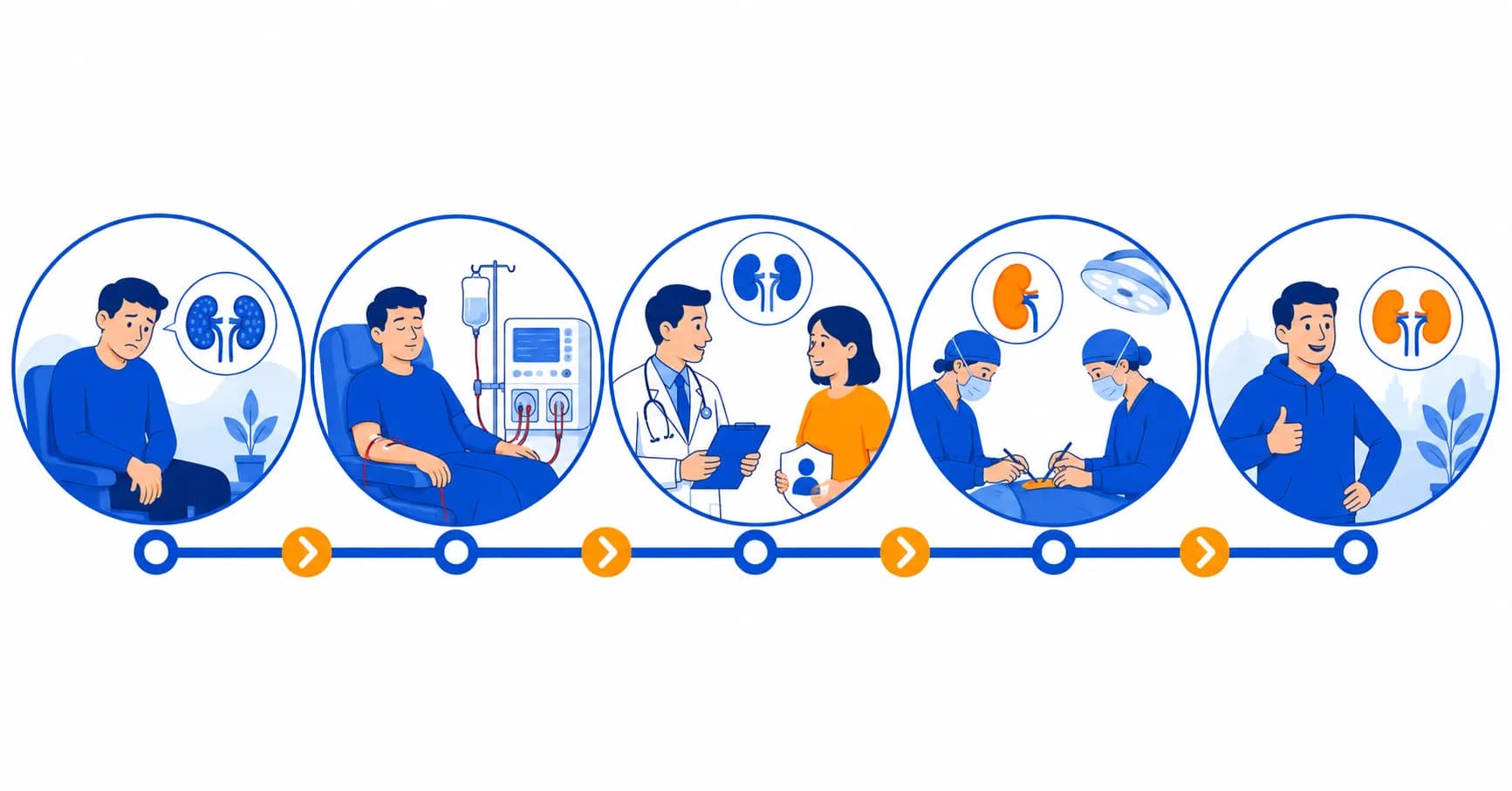
Understanding the stages of CKD, the warning signs of kidney failure, and how nephrologists in Jaipur decide when a transplant becomes the best path forward.
By Apex Hospitals · Published 4th September, 202
Chronic Kidney Disease (CKD) is a progressive condition in which the kidneys gradually lose their ability to filter waste, balance fluids, and regulate essential minerals in the blood. It is classified into five stages based on the estimated Glomerular Filtration Rate (eGFR), a measure of how well the kidneys are filtering blood per minute.
In the early stages (Stage 1–3), most patients can manage CKD through medication, dietary changes, blood pressure control, and careful monitoring. However, as the disease advances to Stage 4 and especially Stage 5 also called End-Stage Renal Disease (ESRD), the kidneys can no longer sustain life without external support. At this point, the two main treatment options are dialysis and kidney transplantation.
You can learn more about chronic kidney disease and its progression on the Apex Hospitals disease library.
Dialysis, whether hemodialysis or peritoneal dialysis, is a life-sustaining treatment that artificially filters the blood when the kidneys can no longer do so. It is not a cure; it replaces only about 10–15% of normal kidney function and requires sessions multiple times a week for the rest of the patient's life.
A kidney transplant, by contrast, replaces the failed kidney with a healthy donor kidney, either from a living donor (a family member or compatible volunteer) or a deceased donor. A successful transplant can restore kidney function to near-normal levels, dramatically improving quality of life, reducing cardiovascular risk, and in many cases extending life expectancy compared with long-term dialysis.
For eligible patients, most nephrologists and transplant specialists consider kidney transplantation the preferred long-term treatment for end-stage renal disease.
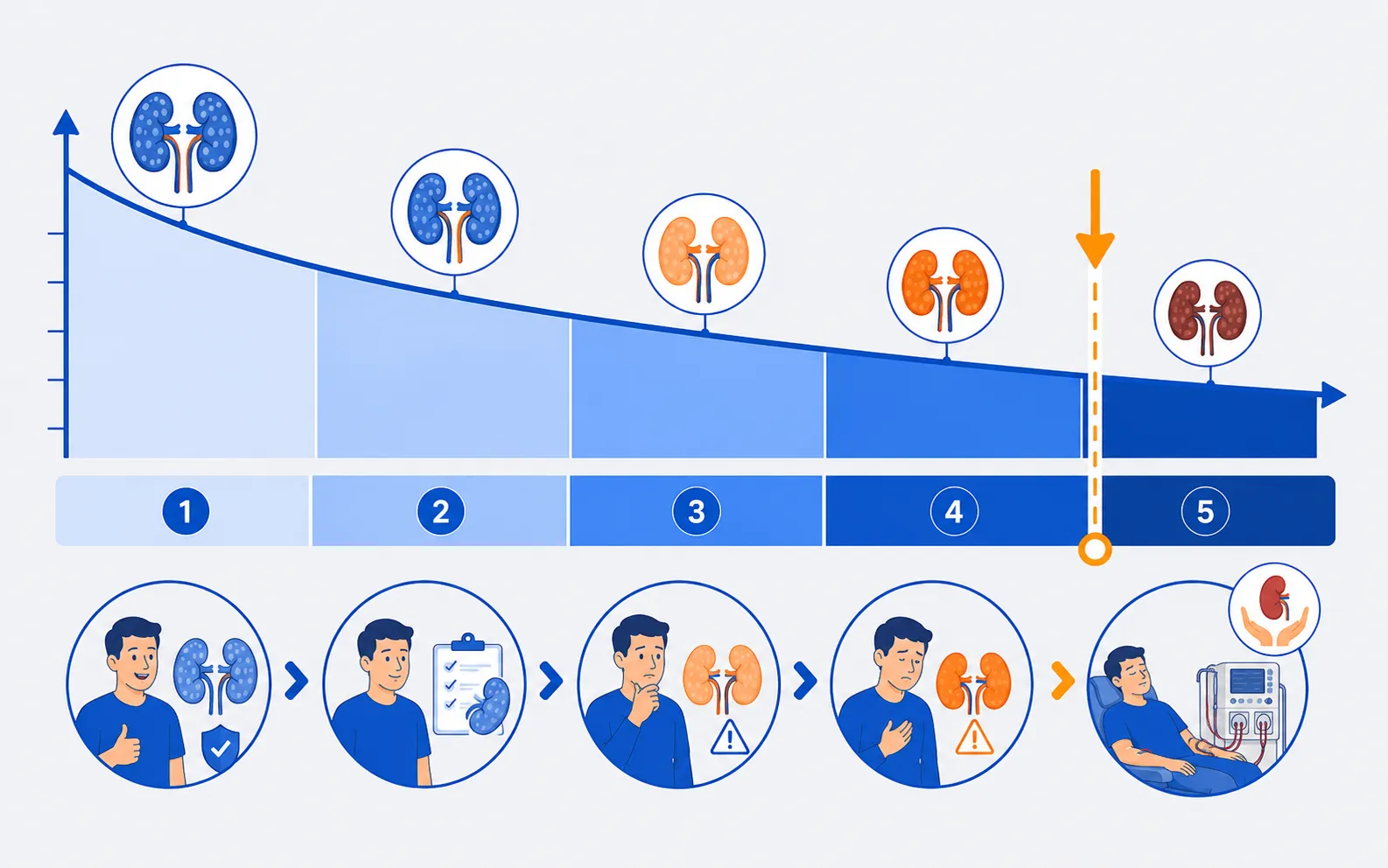
The decision to evaluate a patient for a kidney transplant is not made overnight. Nephrologists look at a combination of clinical markers, symptom burden, and quality-of-life factors. The following are the most important indicators:
Current clinical guidelines recommend beginning transplant evaluation when eGFR drops to around 20 mL/min, before dialysis becomes necessary. This allows time for donor matching, pre-transplant workup, and listing with a transplant centre, so the patient can ideally receive a kidney before reaching full dialysis dependence. A pre-emptive transplant (done before dialysis starts) is associated with better outcomes.
Uremia, the build-up of waste products in the bloodcauses symptoms such as persistent nausea, vomiting, loss of appetite, fatigue, confusion, and itching. When these symptoms cannot be adequately controlled with medication and diet, it signals that the kidneys are failing to maintain a safe internal environment and that renal replacement therapy is urgently needed.
Advanced CKD impairs the kidneys' ability to regulate sodium, potassium, and fluid balance. Dangerous potassium levels (hyperkalemia), persistent fluid retention causing breathlessness, and uncontrolled metabolic acidosis are all signs that the kidneys are no longer managing the body's chemistry, and that intervention is needed. Electrolyte imbalance management is a core part of the nephrology service at Apex Hospitals' specialities.
Many patients begin dialysis before a transplant becomes available. If a patient on dialysis experiences frequent hospitalizations, cardiovascular complications, severe fatigue, or an inability to maintain employment or daily activities, the transplant team will typically accelerate the evaluation process. Long-term dialysis carries its own risks, including accelerated cardiovascular disease, making transplantation the preferred goal for suitable candidates.
Conditions such as diabetic nephropathy, hypertension-related renal disease, and glomerular diseases (such as IgA nephropathy or focal segmental glomerulosclerosis) can cause CKD to progress more rapidly. Patients with these diagnoses are often referred for transplant evaluation earlier in their disease course. Poorly controlled cardiovascular disease can also complicate both dialysis and transplant eligibility, making early specialist review important.
Not every patient with end-stage CKD is automatically eligible for transplantation. The transplant team conducts a thorough evaluation that includes:
Medical fitness: Cardiac function, lung health, and absence of active infection or malignancy are assessed. Conditions like heart failure may need to be optimised before surgery.
Blood and tissue typing: ABO blood group compatibility and HLA (human leukocyte antigen) matching between donor and recipient are critical to reducing rejection risk.
Psychosocial readiness: The patient must be able to commit to lifelong immunosuppressive medication and regular follow-up.
Absence of absolute contraindications: Active cancer, severe systemic infection, or irreversible multi-organ failure may preclude transplantation.
Age alone is not a contraindication, many patients in their 60s and 70s successfully receive kidney transplants when their overall health is adequate.
In India, the majority of kidney transplants are performed using kidneys from living related donors, typically a parent, sibling, spouse, or child. Living donor transplants offer several advantages: they can be planned electively, the kidney is healthier (shorter cold ischaemia time), and outcomes are generally better than deceased donor transplants.
Deceased donor transplants are also performed in India under the framework of the Transplantation of Human Organs and Tissues Act (THOTA) and are coordinated through state-level organ sharing networks. Patients in Rajasthan are listed with the state transplant authority and may receive a deceased donor kidney when a compatible organ becomes available.
The nephrology and transplant team at Apex Hospitals in Jaipur guides families through the legal, medical, and logistical requirements of both pathways, ensuring that the process is as smooth as possible for patients from Rajasthan and surrounding regions.
Once a nephrologist refers a patient for transplant evaluation, the process typically involves the following steps:
Comprehensive medical workup: Blood tests (renal biomarkers, complete blood count, liver function, viral serology), ECG, echocardiogram, chest X-ray, and imaging of the urinary tract.
Donor evaluation: If a living donor is identified, they undergo an equally thorough assessment to confirm their suitability and protect their long-term health.
Transplant committee review: A multidisciplinary team — including nephrologists, transplant surgeons, cardiologists, and anaesthesiologists — reviews all findings and approves the case.
Legal and ethical clearance: In India, living donor transplants require approval from the hospital's authorisation committee and, in some cases, the state government.
Surgery and post-operative care: The transplant surgery itself typically takes 3–4 hours. Post-operative care focuses on immunosuppression management, infection prevention, and monitoring for rejection.
At Apex Hospitals Malviya Nagar, Jaipur, the nephrology team works in close coordination with cardiology, diabetology, urology, and transplant surgery, providing truly integrated care under one roof. Our experienced specialists are available for consultation at our Malviya Nagar facility (SP-4 & 6, Central Marg, Malviya Nagar Industrial Area, Jaipur).
A successful kidney transplant is not the end of the medical journey — it is the beginning of a new phase of careful management. Transplant recipients must:
Take immunosuppressive medications every day for life to prevent the immune system from rejecting the new kidney.
Attend regular follow-up appointments to monitor kidney function, drug levels, and signs of rejection or infection.
Manage blood pressure, blood sugar (especially important for diabetic patients), and cholesterol to protect the transplanted kidney.
Avoid nephrotoxic substances, including certain over-the-counter painkillers (NSAIDs), herbal remedies, and contrast dyes without medical supervision.
Report any sudden decrease in urine output, fever, swelling, or pain over the transplant site immediately to their nephrologist.
With good adherence, a living donor kidney can function well for 15–20 years or more. Ongoing nephrology follow-up, including regular renal biomarker diagnostics, is essential to catch any early signs of chronic rejection or recurrent disease. Our health tips section also offers practical guidance for kidney patients on diet, hydration, and lifestyle.
Transplant evaluation is typically recommended when eGFR falls to around 20 mL/min (late Stage 4 or early Stage 5). Starting the evaluation early — before dialysis is needed — gives the best chance of a pre-emptive transplant, which has superior outcomes compared with transplantation after years on dialysis.
Yes. Many patients receive a transplant after a period on dialysis. However, the longer a patient remains on dialysis, the higher the risk of cardiovascular complications and sensitisation (development of antibodies that make matching harder). Early referral is always preferable.
Yes. Jaipur has established transplant centres, including Apex Hospitals Malviya Nagar, where a multidisciplinary team supports patients through the full transplant journey — from pre-transplant evaluation and dialysis to surgery and long-term post-transplant nephrology care.
In experienced centres, one-year graft survival rates for living donor kidney transplants in India are comparable to international standards — typically above 95%. Long-term outcomes depend on immunosuppression adherence, blood pressure control, and regular follow-up.
Not necessarily. Diabetes and hypertension are among the most common causes of CKD, and many patients with these conditions successfully receive transplants. The key is ensuring that these conditions are well-controlled and that there is no severe end-organ damage (such as advanced heart disease) that would make surgery unsafe. The transplant team will assess each case individually.
A potential living donor must be in good general health, have compatible blood group and ideally good HLA matching, and be willing to undergo a thorough medical and psychological evaluation. The donor evaluation is conducted independently to protect the donor's interests. Our nephrology team at Apex Hospitals can guide both patient and potential donor through this process.
If you or a family member has been diagnosed with CKD Stage 3 or above, has kidney stones with recurrent infections, persistent urinary tract infections, or is already on dialysis and wondering about transplant options, early specialist review is essential. The sooner a nephrologist is involved, the more treatment options remain open.
You can read patient reviews from people who have received kidney care at Apex Hospitals, or browse our full range of health blogs for more information on kidney disease management.
End-to-end kidney care under one roof — from early CKD diagnosis and dialysis to transplant evaluation and post-transplant nephrology follow-up.
Advanced hemodialysis and CRRT infrastructure, including ICU-level continuous renal replacement therapy for critically ill patients with acute kidney injury.
Integrated multidisciplinary support with cardiology, diabetology, urology, and transplant teams — essential for managing the complex comorbidities that accompany advanced CKD.
Dedicated laboratory support for renal biomarker diagnostics, enabling accurate staging and monitoring of kidney disease progression.
Transparent, package-based dialysis pricing and structured care pathways that help patients and families plan ahead with confidence.
Our nephrology team at Apex Hospitals Malviya Nagar, Jaipur is here to help you understand your options — whether you are newly diagnosed with CKD or exploring transplant eligibility.