

A kidney transplant is a life-changing milestone, but the journey to full health begins the moment surgery ends. Here is what expert post-transplant support looks like, and why it matters.
By Apex Hospitals · Published 1st August, 2026
Receiving a new kidney is a profound medical achievement, one that can restore years of quality life to patients who have lived with chronic kidney disease or end-stage renal failure. Yet the transplant procedure itself is only the beginning. The weeks, months, and years that follow demand careful medical supervision, lifestyle adjustments, and a strong support network.
This guide walks you through every phase of post-transplant recovery, from the first hours in the hospital to long-term kidney health, drawing on established nephrology practice and the care philosophy at Apex Hospitals.
Immediately after surgery, patients are moved to a dedicated post-operative or ICU-level unit where vital signs, urine output, and blood pressure are monitored continuously. The new kidney (the graft) may begin producing urine within minutes of being connected, a reassuring early sign of graft function, or it may take a few days to "wake up," a phenomenon called delayed graft function (DGF).
During this window, the nephrology team watches closely for:
Acute rejection episodes — the immune system recognising the new organ as foreign
Fluid and electrolyte imbalances — the transplanted kidney recalibrates its filtration role
Surgical-site complications — bleeding, lymphocele, or ureteral leaks
Infection risk — immunosuppressants lower the body's natural defences
At Apex Hospitals, CRRT (Continuous Renal Replacement Therapy) machines are available in the ICU for patients who need bridging renal support during the immediate post-operative period, particularly in complex cases.
Perhaps the single most important aspect of post-transplant care is adherence to immunosuppressive therapy. These medications prevent the body from attacking the donor kidney, but they must be taken exactly as prescribed, missing even a few doses can trigger rejection.
The standard regimen typically combines three classes of drugs:
Calcineurin inhibitors— the backbone of most protocols
Antimetabolites — reduce lymphocyte proliferation
Corticosteroids — often tapered over time but sometimes continued long-term
Drug levels are monitored through regular blood tests. Apex Hospitals' dedicated laboratory infrastructure for renal biomarker testing allows the transplant team to fine-tune drug dosing quickly, reducing both rejection risk and the side-effect burden of over-immunosuppression.
Patients should inform every healthcare provider, including dentists and general practitioners, that they are on immunosuppressants, as many common drugs interact with transplant medications.
Transplant recipients must learn to recognise symptoms that warrant immediate medical attention. Early intervention is almost always more effective than delayed treatment.
Contact your nephrologist promptly if you notice:
Sudden decrease in urine output or dark-coloured urine
Swelling in the legs, ankles, or around the transplant site
Fever above 38°C (100.4°F) — a potential sign of infection or rejection
Pain or tenderness over the transplant site (lower abdomen)
Unexplained weight gain of more than 1–2 kg in 24 hours
Elevated blood pressure readings despite medication
Patients with a history of urinary tract infections should be especially vigilant, as UTIs can rapidly progress to graft-threatening pyelonephritis (a serious kidney infection) in immunosuppressed individuals.
Nutritional needs shift significantly after transplantation. Unlike the strict fluid, potassium, and phosphorus restrictions required during dialysis, post-transplant dietary guidance focuses on a balanced, heart-healthy pattern — while still avoiding specific risks.
Fresh vegetables and fruits (wash thoroughly to reduce infection risk)
Lean proteins — chicken, fish, eggs, and legumes
Whole grains and fibre-rich foods to manage steroid-related weight gain
Low-fat dairy for calcium and bone health (corticosteroids deplete bone density)
Grapefruit and pomelo — these fruits inhibit enzymes that metabolise tacrolimus and cyclosporine, causing dangerous drug-level spikes
Raw or undercooked meat, fish, and eggs — infection risk is elevated on immunosuppressants
Excess salt — contributes to hypertension, a leading cause of long-term graft loss
Alcohol — interacts with medications and stresses the liver
A registered dietitian familiar with transplant nutrition should be part of your care team.
Most patients are encouraged to begin gentle walking within 24–48 hours of surgery. Physical activity improves cardiovascular health, helps manage steroid-related weight gain, and supports mental wellbeing, all critical after transplant.
A graduated return-to-activity plan typically looks like this:
Weeks 1–4: Short walks, light household activities; avoid lifting more than 5 kg
Weeks 4–8: Gradually increase walking duration; light stretching and low-impact exercise
Months 2–3: Return to desk work or sedentary employment (with physician clearance)
Month 3 onwards: Most patients can resume near-normal activity; strenuous contact sports require individual assessment
Driving is typically restricted for 4–6 weeks post-surgery or until the transplant team confirms adequate wound healing and pain control.
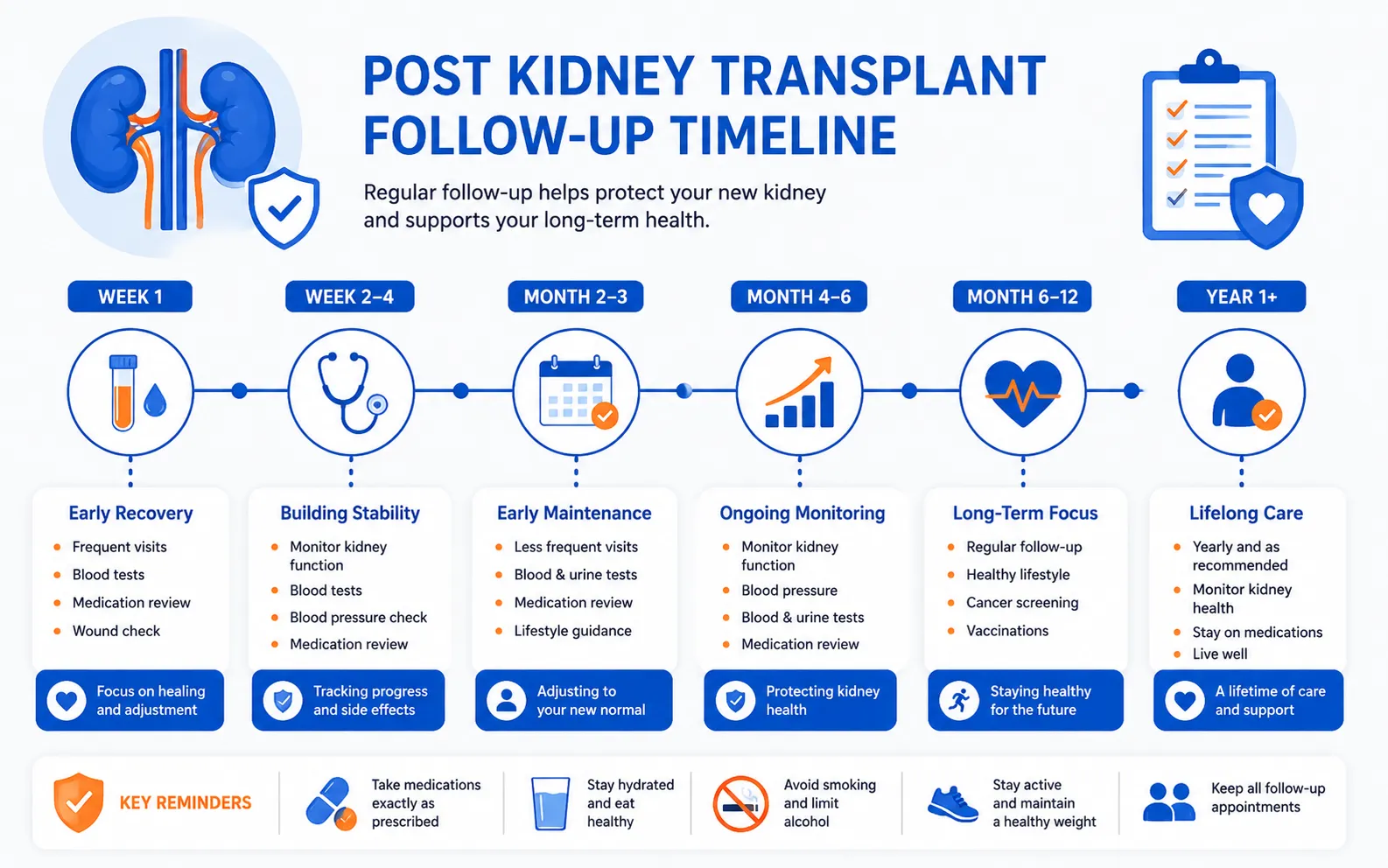
Consistent follow-up appointments are non-negotiable after kidney transplant. The frequency decreases as the graft stabilises, but monitoring never truly stops.
A typical schedule:
First month: 2–3 clinic visits per week; daily blood tests in the first two weeks
Months 1–3: Weekly visits; blood tests every 1–2 weeks
Months 3–12: Monthly visits; blood tests monthly
Year 1 onwards: Every 3–6 months, with annual comprehensive review
Each visit typically includes serum creatinine and eGFR (estimated Glomerular Filtration Rate — a blood test that estimates how well the kidneys are filtering) (to assess graft function), complete blood count, liver function, blood pressure, and urine protein screening. Apex Hospitals' integrated diagnostic imaging systems and laboratory support for renal biomarkers allow the transplant team to track graft health with precision at every stage.
Patients in Jaipur seeking the best doctor for kidney transplant follow-up care can consult the Apex Hospitals specialist team for structured post-transplant monitoring.
Immunosuppression is a double-edged sword: it protects the graft but opens the door to several long-term health challenges that require proactive management.
Transplant recipients can develop high blood pressure, driven by calcineurin inhibitors and corticosteroids. Tight blood pressure control (target typically below 130/80 mmHg) is one of the most important factors in preserving long-term graft function.
Corticosteroids and tacrolimus can impair insulin secretion. Regular fasting glucose and HbA1c monitoring allows early detection and management before diabetes damages the new kidney.
Long-term steroid use accelerates bone loss. Calcium and vitamin D supplementation, along with DEXA scans (bone density scans) at regular intervals, help prevent fractures.
Transplant recipients have a significantly elevated risk of skin cancer and other malignancies due to chronic immunosuppression. Annual dermatology review, daily sunscreen use, and prompt evaluation of any new skin lesion are essential.
Patients with a history of coronary artery disease or other cardiac conditions face compounded risk after transplant. Lipid management, smoking cessation, and regular cardiac screening are part of comprehensive post-transplant care.
The psychological dimension of transplant recovery is often underestimated. Patients may experience anxiety about rejection, guilt if the organ came from a deceased donor, or depression during the slow recovery period. These feelings are normal and deserve clinical attention.
Evidence-based strategies that help include:
Peer support groups with other transplant recipients
Structured psychological counselling or cognitive behavioural therapy (CBT)
Mindfulness and stress-reduction practices
Open communication with the transplant coordinator and care team
Family involvement is equally important. Caregivers benefit from education about medication schedules, warning signs, and the emotional arc of recovery, reducing household stress and improving adherence.
For patients seeking kidney transplant in Jaipur, access to a centre with a dedicated nephrology and transplant team, supported by advanced diagnostics and round-the-clock emergency nephrology care makes a measurable difference in outcomes. Post-transplant care is not a single appointment; it is a structured, multi-year relationship between patient and specialist.
Apex Hospitals offers a comprehensive nephrology programme with state-of-the-art haemodialysis machines, CRRT capability for critically ill patients, and a dedicated laboratory for renal biomarker monitoring. The team supports patients through every phase — from pre-transplant evaluation and chronic kidney disease management to long-term graft surveillance.
Read more about our medical specialities or explore patient experiences shared by those who have been through the transplant journey at Apex.
Most patients are discharged from hospital within 5–10 days if there are no complications. Full recovery — returning to work and normal activity — typically takes 4–8 weeks. However, close medical follow-up continues for life, as the transplanted kidney requires ongoing monitoring.
Most patients do not need dialysis once the transplanted kidney is functioning well. In cases of delayed graft function, short-term dialysis support may be required while the new kidney recovers. Apex Hospitals' advanced haemodialysis machines and CRRT technology ensure this bridging support is available when needed.
Short domestic trips are generally possible after the first 3 months, with physician clearance. International travel is usually deferred for at least 6 months. Always carry a full medication supply, a letter from your transplant team, and ensure access to medical care at your destination.
Acute rejection is treatable, especially when caught early. Treatment typically involves high-dose intravenous corticosteroids or other immunosuppressive agents. This is why regular follow-up and prompt reporting of warning symptoms are so critical. Chronic rejection develops more slowly and is managed by optimising immunosuppression and controlling blood pressure and proteinuria (protein in blood).
With good adherence to medications and follow-up, a living-donor kidney functions for an average of 15–20 years; deceased-donor kidneys average 10–15 years. Some patients enjoy graft function for 25 years or more. Lifestyle factors — blood pressure control, avoiding nephrotoxic drugs, not smoking — significantly influence longevity.
Yes. Kidney transplant services, including pre-transplant workup, surgical transplantation, and comprehensive post-transplant follow-up, are available in Jaipur. Apex Hospitals provides a full-spectrum nephrology programme supported by advanced technology and an experienced specialist team. You can contact us to schedule a nephrology consultation.
Our nephrology team at Apex Hospitals is here to guide you through every step of your recovery journey.