Logo
Logo
DoctorsBook Appt.Call

Contact Us

Medicine UnmaskedCall Emergency Helpline
Logo

Book appointment

Contact Us

Medicine UnmaskedCall Emergency Helpline
Logo

Book appointment

Get Your Surgery Cost Estimate. Know the Price Before You Decide

Receive a detailed surgery cost estimate based on your diagnosis and treatment plan. Our experienced surgical teams and modern infrastructure ensure safe outcomes. Plan your procedure with clarity, confidence, and complete medical transparency.

Quick Appointment

Fill in your details to get started

What is Continuous Renal Replacement Therapy?

CRRT is a blood purification procedure used to sustain kidney function in patients with acute kidney injury, sepsis-like syndrome, and multi-organ failure, particularly those who are hemodynamically unstable.

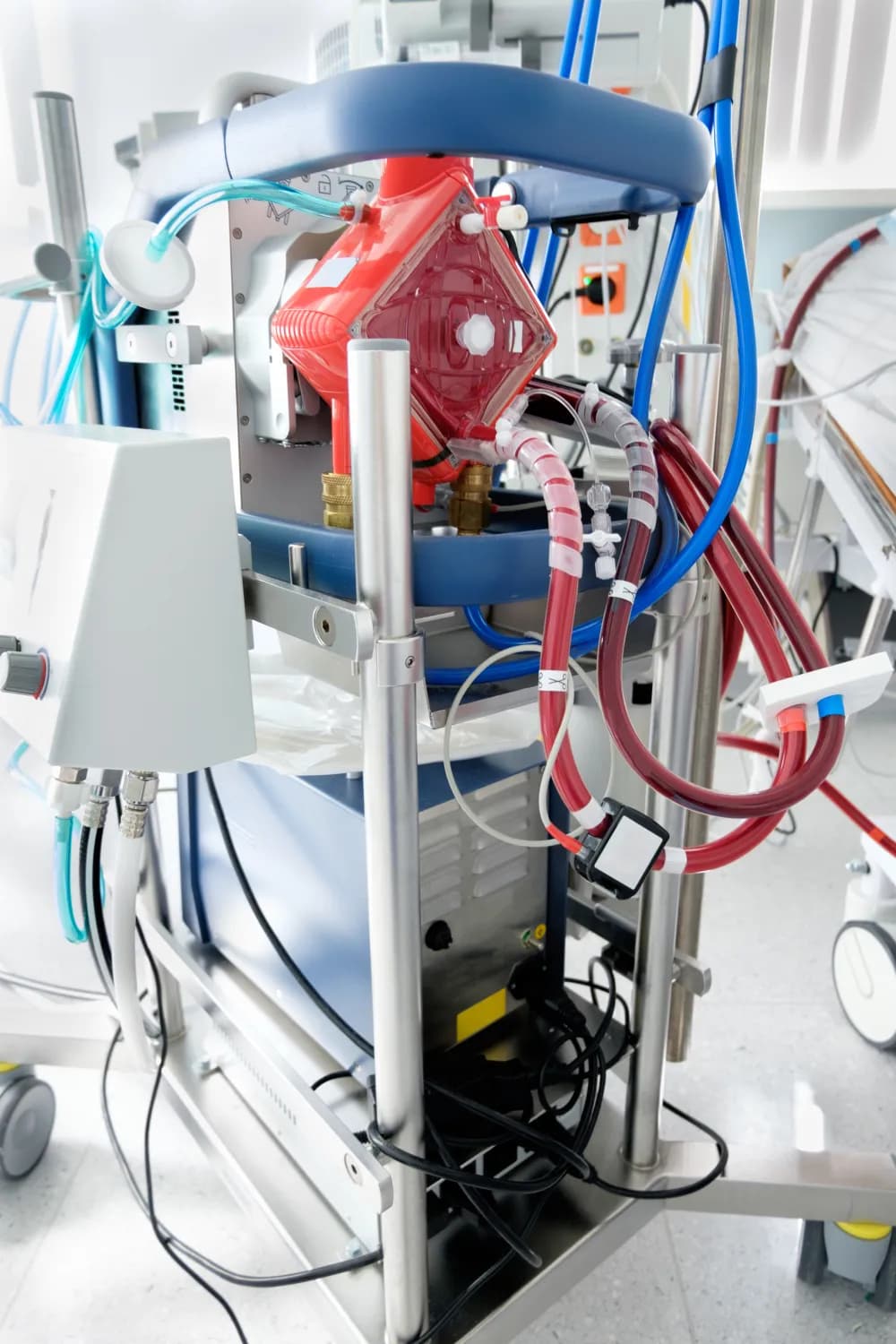
The patient's blood passes through a blood purification machine, filtration, and blood warmer during CRRT dialysis therapy. This blood purification therapy is a slow, continuous process that can operate 24 hours a day to remove fluid and uremic toxins from the patient's blood and return the blood to the patient's body. This therapy improves haemodialysis tolerance in patients with unstable pulse rates and blood pressure. CRRT therapy is regarded as both a life-saving and a life-sustaining treatment.

Types of CRRT

Various CRRT techniques are distinguished by their waste elimination processes.

  • Continuous Venovenous Hemofiltration (CVVH)
  • Continuous Venous Haemodialysis (CVVHD)
  • Continuous Venovenous Hemodiafiltration (CVVHDF)

Indications of CRRT

There are common and uncommon indications of CRRT for the treatment of acute renal failure when complicated by any of the following:

The most common indications of CRRT

  • Kidney failure with insufficient blood pressure treated with multiple life-sustaining drugs
  • Kidney failure with an increase in extracellular fluid (ECF) volume, associated with volume overload and severe cardiac failure.
  • Renal failure accompanied by acute or chronic liver failure and cirrhosis.
  • Cerebral oedema or brain swelling along with Kidney failure
  • Hyper catabolism refers to an abnormally high metabolic decomposition of tissue or substance that causes physical deterioration and weight loss.

Less frequent manifestations of CRRT

  • Systemic inflammatory response Syndrome (SIRS)
  • Septicaemia or sepsis
  • Multiple organ failure disorder
  • Tumour lysis syndrome.

What does this treatment involve?

The patient will require the placement of a haemodialysis catheter. A large IV catheter is implanted into a vein in the neck or groin of the patient. The physician who inserts the IV catheter will sedate the area with lidocaine and may administer pain medication or sedation to make the patient more comfortable. You will be asked to leave the room during this procedure because it will be performed under sterile conditions.

Once this catheter has been inserted, CRRT can commence. A large CRRT machine will be placed next to the bed of the patient. It is essential that the nurse has access to the machine at all times. Please be mindful of the machine, bags, and tubing, and please be cautious not to touch the machine in any way, as it is very sensitive equipment.

How long will CRRT be required?

The CRRT treatment is intended to be temporary in the hopes that the kidneys will recover and resume normal function. The duration of the patient’s CRRT treatment will depend on how well they tolerate the treatment and what other medical issues they may be experiencing at the time. There is however a chance that the patient will require dialysis treatments in the future.

The team of health care providers, including the nurse and nephrologist (kidney specialist), will make decisions regarding the CRRT based on the response of the patient to the therapy.

Ongoing therapy

Frequently, the nurse will be required to extract blood to assess the efficacy of the CRRT. Additionally, the nurse will examine the machine and IV pumps every hour.

The bags of fluid that are affixed to the dialysis machine must be frequently replaced by the nurse. The nurse will also monitor the catheter site and change the dressing as necessary.


Frequently Asked Questions

We've compiled a list of the most frequently asked questions to help you find the information you need quickly and easily.

“If you can't find the answer to your question here, please don't hesitate to contact our support team for assistance.”

The primary difference is that CRRT is performed continuously over 24 hours, while regular dialysis (hemodialysis) is typically done in intermittent sessions, lasting 3-5 hours several times a week. CRRT provides a slower, gentler fluid and waste removal process, which is better suited for critically ill patients.
CRRT is preferred in critically ill patients because it allows for gradual fluid and waste removal, which helps avoid the sharp fluctuations in blood pressure and fluid balance that can occur with intermittent hemodialysis. This gradual process reduces the risk of complications such as hypotension, electrolyte imbalances, and worsening of the patient's condition.
The duration of CRRT depends on the patient’s response to treatment and the underlying cause of their acute kidney injury. It may be required for several days or even weeks, depending on how quickly the kidneys recover or if other treatments, such as a kidney transplant, are needed.
During CRRT, patients typically cannot eat or drink as they are often sedated or on mechanical ventilation in an intensive care setting. Fluid intake and nutrition are closely monitored and adjusted through intravenous lines and other support, depending on the patient’s condition.
CRRT is designed explicitly for acute kidney injury (AKI) and is generally not used for chronic kidney disease (CKD) unless a patient with CKD experiences an acute episode of kidney failure. For patients with CKD, traditional dialysis (either hemodialysis or peritoneal dialysis) is typically used.

Blogs

Multiple Myeloma: When Is a Stem Cell Transplant Needed?

September 4, 2026

Read More
Migraine Symptoms, Triggers & Treatment | Apex Hospitals

September 2, 2026

Read More
When Does Chronic Kidney Disease Need a Kidney Transplant?

August 15, 2026

Read More
Common Neurological Diseases in India: Prevalence, Risk Factors & Expert Care in Jaipur

August 14, 2026

Read More
Leukemia and Lymphoma: How Bone Marrow Transplant Changes the Outcome

August 8, 2026

Read More
Brain and Spine Problems: Common Causes, Risk Factors, and Treatment Options

August 8, 2026

Read More
Vascular Trauma: Why the Golden 6 Hours Can Save Your Limb

August 4, 2026

Read More
Support After Kidney Transplant: Your Complete Recovery Guide

August 1, 2026

Read More
Robotic Knee Replacement in Jaipur: What Patients Need to Know in 2026

July 30, 2026

Read More
Why Do Some Patients Need Surgery for Hernia, Gallstones or Abdominal Problems?

July 28, 2026

Read More
Types of Blood Cancer That Require a Bone Marrow Transplant

July 27, 2026

Read More
Understanding the Causes of Acute Respiratory Failure

July 23, 2026

Read More
Logo

To Book an appointment : +91 9829030011

For emergency : 0141-4101111

For Ambulance : +91 9929380108

care@apexhospitals.com

Download Our App

Quick Links

Find a doctor

About Us

Specialities

Careers

Contact Us

Privacy Policy

Disclaimer

Terms And Conditions

Academics

Apex Samvad

Resources

Events

News

Diseases

Health Checkup

Bio Medical Waste

EHSS Policy

NABH & NABL Certificates

Internal Grievance

External Grievance

CSR Policy

Locations

Apex Hospital - Malviya Nagar

Apex Hospital - Mansarovar

Apex Hospital - Sawai Madhopur

Apex Hospital - Jhunjhunu

Apex Hospital - Bikaner

Apex Hospital - Sri Ganganagar

Apex Hospital - Udaipur

Apex Hospital - Lucknow

Download on the App Store 
GET IT ON Google Play 

Powered By Docfyn