Mechanical ventilators are essential medical devices that play a vital role in saving lives, particularly in intensive care units (ICUs). These sophisticated machines provide mechanical breathing support to patients who cannot breathe adequately independently. Understanding mechanical ventilators' functions, components, and applications is crucial for medical professionals and patients.
Importance of Mechanical Ventilators in ICU
In the ICU, mechanical ventilators are indispensable for managing critical respiratory conditions. These life-saving machines are used to support patients with:
- Severe lung diseases
- Acute respiratory distress syndrome (ARDS)
- Undergoing significant surgeries that require general anaesthesia.
The primary purpose of mechanical ventilation in the ICU is to ensure adequate oxygen delivery to the patient's lungs and remove excess carbon dioxide, allowing the body to heal and recover.
Types of Mechanical Ventilation Used in the ICU
Depending on the patient's condition and specific requirements, several types of mechanical ventilation are utilized in the ICU.
- Invasive mechanical ventilator: The most commonly used type is positive pressure ventilation, which involves delivering pressurized air into the lungs through an endotracheal tube or tracheostomy.
- Non-invasive ventilation, such as continuous positive airway pressure (CPAP) and bilevel positive airway pressure (BiPAP), provides respiratory support without requiring intubation.
How Mechanical Ventilators Are Used in the ICU
Using mechanical ventilators in the ICU requires a multidisciplinary approach involving respiratory therapists, intensivists, and nurses. Before initiating mechanical ventilation, a thorough assessment of the patient's condition is conducted, including monitoring vital signs, blood gases, and lung mechanics. The ventilator settings, such as tidal volume, respiratory rate, and positive end-expiratory pressure (PEEP), are adjusted based on the patient's needs and response. Continuous monitoring and regular assessment ensure the optimal functioning of the mechanical ventilator and patient stability.
The Functions and Components of a Mechanical Ventilator
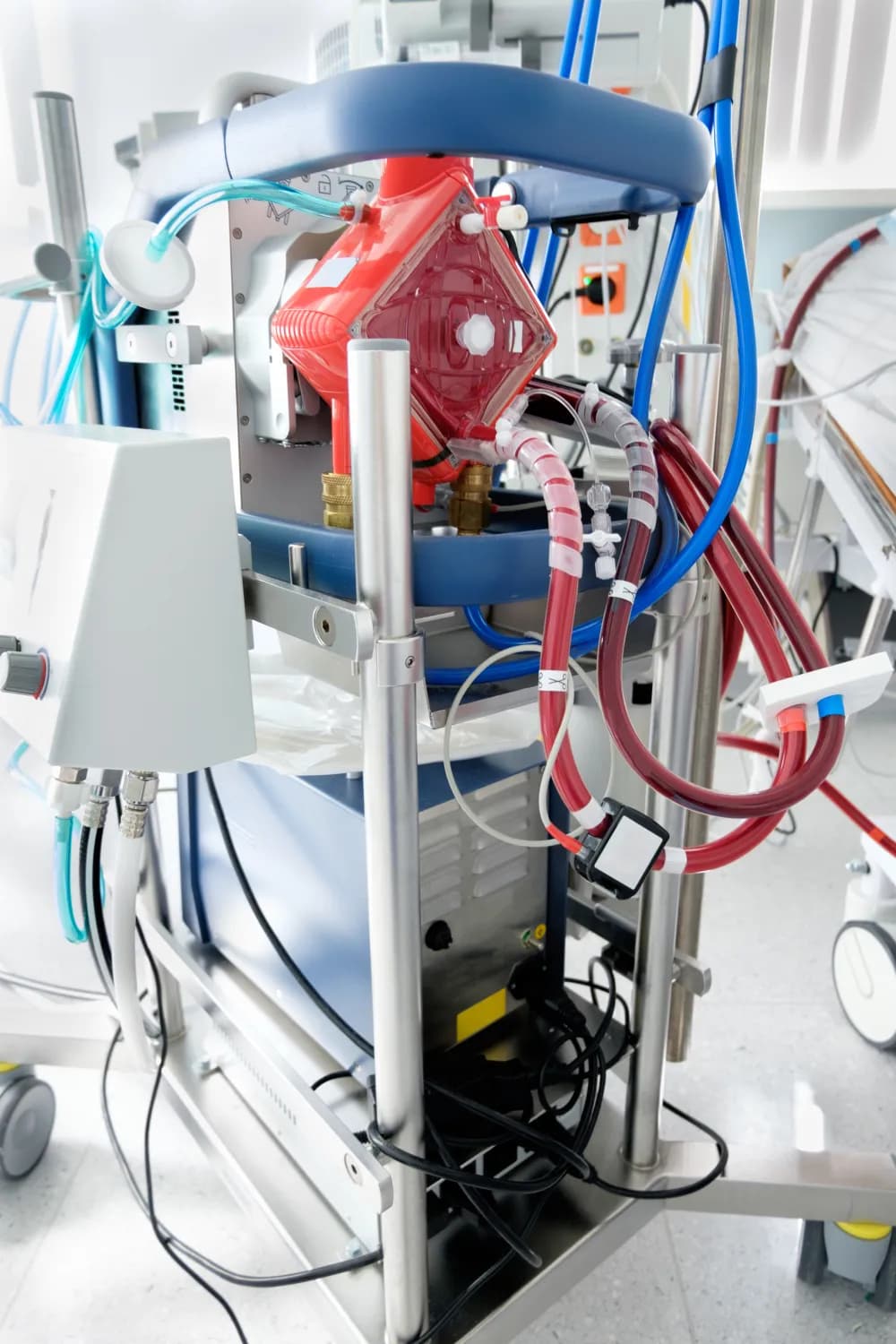
A mechanical ventilator consists of various components that provide respiratory support.
The key functions of a ventilator include:
- Delivering oxygen
- Removing carbon dioxide
- Maintaining appropriate ventilation parameters
The main components of a mechanical ventilator include:
- The control system
- Gas delivery system
- Patient circuit
- Monitoring system
These components work harmoniously to ensure precise control and delivery of respiratory gases while providing feedback on patient parameters and ventilator performance.
Understanding How a Mechanical Ventilator Works
To comprehend the inner workings of a mechanical ventilator, it is crucial to understand the basic principles of respiration.
- Mechanical ventilators rely on positive pressure to inflate the lungs and negative pressure to allow passive exhalation.
- The control system of a ventilator regulates the timing, volume, and pressure of the delivered breaths.
- The gas delivery system ensures the appropriate gas mixture is delivered to the patient.
By understanding these fundamental principles, healthcare professionals can optimize ventilator settings to achieve the desired respiratory support.
Can You Be on a Ventilator Without Being Intubated?
Contrary to popular belief, it is possible to receive respiratory support from a ventilator without undergoing intubation. Non-invasive ventilation methods like CPAP and BiPAP allow patients to receive mechanical ventilation through a mask or nasal prongs. These techniques are often used in acute respiratory failure or chronic respiratory conditions, providing adequate support while minimizing the invasiveness of traditional intubation.
Common Uses and Applications of Mechanical Ventilators
Mechanical ventilators find applications beyond the ICU.
- They are used during surgical procedures requiring general anaesthesia to maintain the patient's breathing and oxygenation.
- Emergency medicine also utilises Ventilators to stabilize patients in critical condition, such as those experiencing respiratory failure or trauma.
- In some cases, mechanical ventilation is employed in long-term care settings, providing ongoing respiratory support for patients with chronic respiratory conditions.
Potential Risks and Complications of Mechanical Ventilation
While mechanical ventilation is a life-saving intervention, it is not without risks and potential complications.
- Barotrauma, or lung damage caused by excessive pressure, is a concern, especially if ventilator settings are not carefully managed.
- Ventilator-associated pneumonia (VAP) is another significant risk, as the breathing tube can introduce bacteria into the lungs.
- Prolonged mechanical ventilation can lead to muscle weakness and psychological distress in patients.
Diligent monitoring and adherence to best practices can help mitigate these risks and improve patient outcomes.
Mechanical ventilators are indispensable devices in modern medicine, crucial in saving lives. From the ICU to the operating room, these machines provide critical respiratory support to patients with compromised lung function. Understanding mechanical ventilators' parts, components, and applications is essential for healthcare professionals to optimize patient care. By ensuring proper usage, diligent monitoring, and adherence to best practices, we can harness the life-saving potential of mechanical ventilators and improve outcomes for patients in need.