
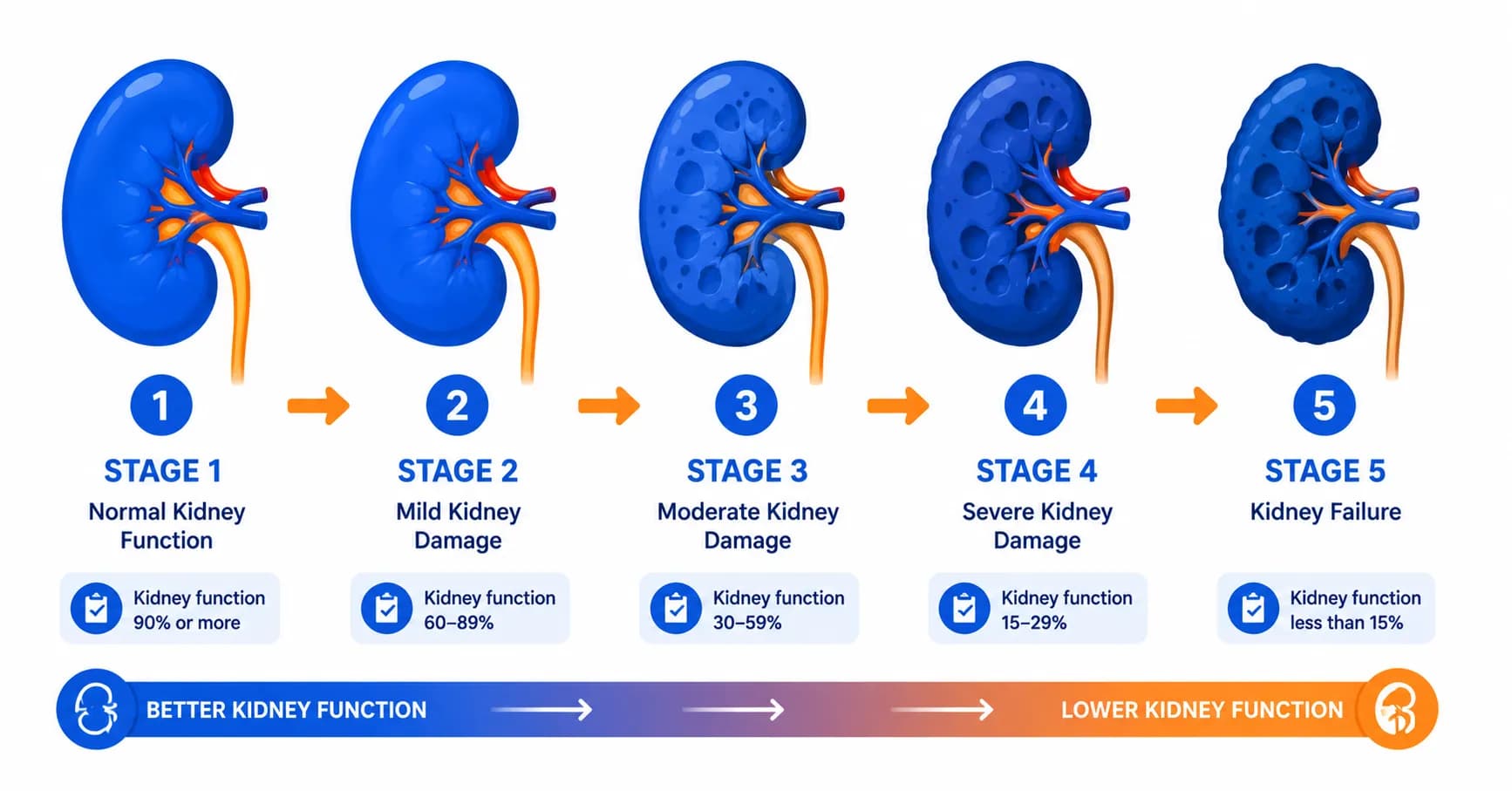
Understanding the five stages of CKD can help you act early, slow progression, and protect your kidneys — before it's too late.
By the Nephrology Team at Apex Hospitals · Published July 2025
Chronic Kidney Disease (CKD) is a long-term condition in which the kidneys gradually lose their ability to filter waste products, excess fluids, and toxins from the blood. Unlike an acute kidney injury — which can develop suddenly — CKD progresses silently over months or years, often without noticeable symptoms until significant damage has already occurred.
In India, CKD affects an estimated 17% of the adult population, with diabetes and hypertension being the two leading causes. In Rajasthan, high rates of uncontrolled blood pressure and type 2 diabetes make early detection and staged management especially critical. If you or a family member has been diagnosed with CKD, understanding the stages is the single most important step toward preserving kidney function for as long as possible.
You can explore a detailed overview of chronic kidney disease and its causes on the Apex Hospitals disease library.
Nephrologists classify CKD using a measure called the Glomerular Filtration Rate (GFR) — specifically the estimated GFR (eGFR), which is calculated from a simple blood creatinine test along with your age, sex, and body size. The eGFR tells your doctor what percentage of normal kidney filtering capacity remains.
A healthy adult typically has an eGFR above 90 mL/min/1.73 m². As CKD progresses, this number falls. The Kidney Disease: Improving Global Outcomes (KDIGO) guidelines divide CKD into five stages based on eGFR, each carrying different clinical implications and management goals.
Alongside eGFR, doctors also measure urine albumin-to-creatinine ratio (uACR) to assess how much protein is leaking into the urine — a key marker of kidney damage. Both numbers together give a fuller picture of disease severity and risk of progression.
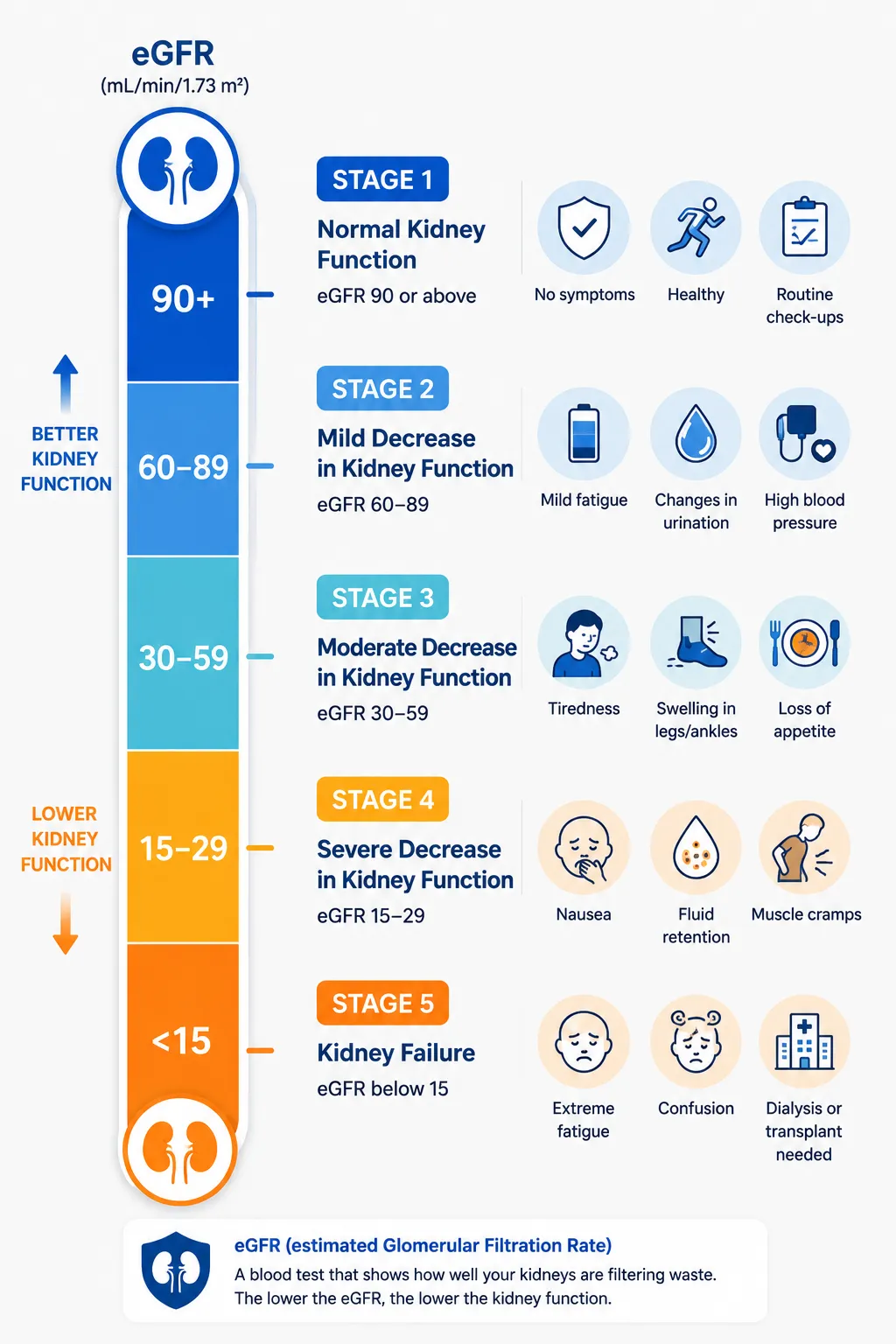
At Stage 1, the kidneys are structurally damaged — often evidenced by protein in the urine or abnormal imaging — but their filtering capacity is still normal or even slightly elevated. Most people have no symptoms at all. CKD at this stage is typically discovered incidentally during routine blood or urine tests for diabetes or hypertension.
What to do: Identify and treat the underlying cause (diabetes, hypertension, glomerular disease). Lifestyle changes — low-sodium diet, blood pressure control, smoking cessation — can halt progression entirely at this stage. Annual monitoring of eGFR and uACR is recommended.
Stage 2 is defined by a mildly reduced eGFR combined with evidence of kidney damage (such as persistent proteinuria). Kidney function is still largely preserved, and symptoms remain absent or very subtle — perhaps mild fatigue or slightly elevated blood pressure.
What to do: Continue aggressive management of risk factors. Medications such as ACE inhibitors or ARBs are often prescribed to reduce proteinuria and protect the kidneys. Dietary protein moderation may be advised. This is an ideal window to establish care with a nephrologist.
Stage 3 is divided into 3a (eGFR 45–59) and 3b (eGFR 30–44). This is the stage at which many patients first notice symptoms: fatigue, swelling in the ankles, changes in urination frequency, and mild anaemia. Complications such as anaemia, bone disease (due to impaired vitamin D activation), and early cardiovascular risk become clinically significant.
What to do: Regular nephrology follow-up every 3–6 months. Blood tests to monitor haemoglobin, phosphorus, parathyroid hormone (PTH), and bicarbonate. Dietary restrictions on potassium and phosphorus may begin. Medications to manage anaemia (erythropoiesis-stimulating agents) and bone health (phosphate binders, vitamin D analogues) are introduced as needed.
It is worth noting that patients with CKD Stage 3 are also at significantly elevated risk of coronary artery disease and heart failure, underscoring the need for integrated cardio-renal care.
At Stage 4, kidney function is severely compromised. Symptoms become more pronounced: persistent fatigue, nausea, loss of appetite, difficulty concentrating, muscle cramps, and significant fluid retention. Toxins that the kidneys can no longer adequately clear begin to accumulate in the blood — a condition called uraemia.
What to do: This stage requires intensive nephrology management and, critically, preparation for renal replacement therapy (RRT). Patients and families should receive education about haemodialysis, peritoneal dialysis, and kidney transplantation so that an informed decision can be made before kidney function deteriorates further. Vascular access surgery (for haemodialysis) or peritoneal catheter placement is typically planned at this stage.
Stage 5 CKD, also called End-Stage Renal Disease (ESRD) or kidney failure, means the kidneys can no longer sustain life without external support. Renal replacement therapy — haemodialysis, peritoneal dialysis, or kidney transplantation — becomes necessary.
Haemodialysis is the most common form of RRT in India, typically performed three times per week. Peritoneal dialysis offers greater flexibility for patients who prefer home-based treatment. Kidney transplantation, when feasible, offers the best long-term outcomes and quality of life compared to dialysis.
Learn more about our nephrology and renal replacement services at Apex Hospitals.
| Stage | eGFR (mL/min/1.73m²) | Description | Key Action |
|---|---|---|---|
| Stage 1 | ≥ 90 | Kidney damage, normal GFR | Treat underlying cause; lifestyle changes |
| Stage 2 | 60–89 | Mildly reduced GFR | Risk factor control; establish nephrology care |
| Stage 3a/3b | 30–59 | Moderately reduced GFR | Manage complications; dietary restrictions |
| Stage 4 | 15–29 | Severely reduced GFR | Prepare for dialysis or transplant |
| Stage 5 | < 15 | Kidney failure (ESRD) | Dialysis or kidney transplantation |
Because CKD is largely silent in its early stages, many patients in Jaipur and across Rajasthan present to nephrologists only at Stage 3 or 4. Recognising the following warning signs and seeking evaluation promptly can make a significant difference:
Persistent fatigue or weakness not explained by poor sleep
Swelling (oedema) in the feet, ankles, or around the eyes
Foamy or frothy urine — a sign of protein leakage
Changes in urination — more frequent at night, reduced output, or dark-coloured urine
Persistent high blood pressure that is difficult to control
Loss of appetite, nausea, or vomiting without an obvious gastrointestinal cause
Muscle cramps or restless legs, particularly at night
Difficulty concentrating or brain fog
If you have diabetes, hypertension, a family history of kidney disease, or have previously had kidney stones or recurrent urinary tract infections, annual kidney function screening is strongly advised even in the absence of symptoms.
Not everyone with CKD progresses to kidney failure. Several modifiable factors accelerate decline — and addressing them is the cornerstone of nephrology management:
Uncontrolled blood pressure — the single most important modifiable risk factor
Poorly managed diabetes — high blood glucose directly damages the glomeruli
High dietary protein and sodium intake — increases filtration pressure on damaged nephrons
Smoking — reduces renal blood flow and accelerates vascular damage
NSAIDs and nephrotoxic medications — common painkillers like ibuprofen can worsen kidney function significantly
Recurrent infections or obstruction — untreated urinary tract infections or obstructive uropathy
Anaemia — inadequately treated anaemia worsens cardiovascular and renal outcomes
Patients with hypothyroidism should also be aware that untreated thyroid dysfunction can worsen kidney function and complicate CKD management.
Dietary management in CKD is nuanced and changes as the disease progresses. General principles include:
Reduce sodium to less than 2 g/day to control blood pressure and fluid retention
Moderate protein intake — typically 0.6–0.8 g/kg/day in non-dialysis CKD; higher in dialysis patients
Limit potassium (from Stage 3b onwards) — avoid excess bananas, oranges, potatoes, and tomatoes if serum potassium is elevated
Restrict phosphorus — reduce processed foods, cola drinks, and dairy if phosphorus levels rise
Stay adequately hydrated — but follow your nephrologist's fluid restriction advice at advanced stages
Maintain a healthy weight and engage in moderate physical activity as tolerated
A registered renal dietitian can create a personalised meal plan that balances these restrictions without compromising nutrition. This is an integral part of the care pathway at Apex Hospitals.
At Apex Hospitals Malviya Nagar, Jaipur, the nephrology department offers end-to-end kidney care under one roof — from early-stage CKD diagnosis and management through to advanced dialysis and kidney transplant evaluation. The facility is equipped with advanced haemodialysis machines, CRRT (Continuous Renal Replacement Therapy) machines for critically ill patients in the ICU, dedicated laboratory infrastructure for renal biomarker testing, and integrated dialysis monitoring and safety systems.
The nephrology team works in close collaboration with cardiologists, diabetologists, urologists, and transplant specialists — recognising that CKD rarely exists in isolation. This multi-disciplinary approach is particularly important for patients in Jaipur who often present with co-existing hypertension, diabetes, and cardiovascular disease.
For patients requiring dialysis, Apex Hospitals offers transparent, package-based pricing so that families can plan care without financial uncertainty. Read patient reviews to understand what the experience of kidney care at Apex Hospitals looks like from a patient's perspective.
To consult our nephrologists or learn more about our renal services, visit our doctors page or browse our full range of medical specialities.
CKD cannot typically be reversed once kidney damage has occurred, but progression can be significantly slowed — and in some cases halted — with early, aggressive management of the underlying cause and risk factors. This is why early diagnosis at Stage 1 or 2 is so valuable.
The rate of progression varies widely between individuals. Some patients remain at Stage 2 or 3 for decades with good management, while others progress rapidly. On average, eGFR declines by 1–2 mL/min/1.73m² per year in well-managed CKD, but uncontrolled diabetes or hypertension can accelerate this to 5–10 mL/min/year or more.
Ideally, you should be referred to a nephrologist at Stage 3 or earlier if there is significant proteinuria, rapidly declining eGFR, difficult-to-control hypertension, or an unclear cause of CKD. By Stage 4, nephrology care is essential for planning renal replacement therapy.
No. At Stage 5, the three main options are haemodialysis, peritoneal dialysis, and kidney transplantation. Transplantation offers the best quality of life and long-term survival for eligible patients. Conservative (non-dialysis) management is also an option for elderly patients with multiple comorbidities who prefer comfort-focused care.
The primary tests are serum creatinine (to calculate eGFR) and urine albumin-to-creatinine ratio (uACR). Additional tests include serum electrolytes, haemoglobin, PTH, phosphorus, bicarbonate, and renal ultrasound. At Apex Hospitals, dedicated laboratory infrastructure supports comprehensive renal biomarker testing for accurate staging and monitoring.
Yes. Apex Hospitals Malviya Nagar in Jaipur offers comprehensive nephrology services including haemodialysis, CRRT for ICU patients, kidney transplant evaluation, and renal biomarker diagnostics — all within a multi-specialty hospital environment. Patients across Rajasthan can access high-quality kidney care locally.
CKD progresses through five stages defined by eGFR — early detection at Stages 1–2 offers the best chance of slowing progression.
Diabetes and hypertension are the leading causes; controlling both is the most effective intervention at any stage.
Symptoms often appear only at Stage 3 or later — routine screening is essential for high-risk individuals.
Stage 4 is the time to plan for renal replacement therapy — not to wait until Stage 5 crisis.
Kidney transplantation, when feasible, offers better outcomes than long-term dialysis.
Comprehensive kidney treatment is available in Jaipur at Apex Hospitals Malviya Nagar, with integrated multi-specialty support.
If you or a loved one has been diagnosed with CKD — or has risk factors such as diabetes or hypertension — our nephrology team at Apex Hospitals Malviya Nagar, Jaipur is here to help you understand your options and build a personalised care plan.