
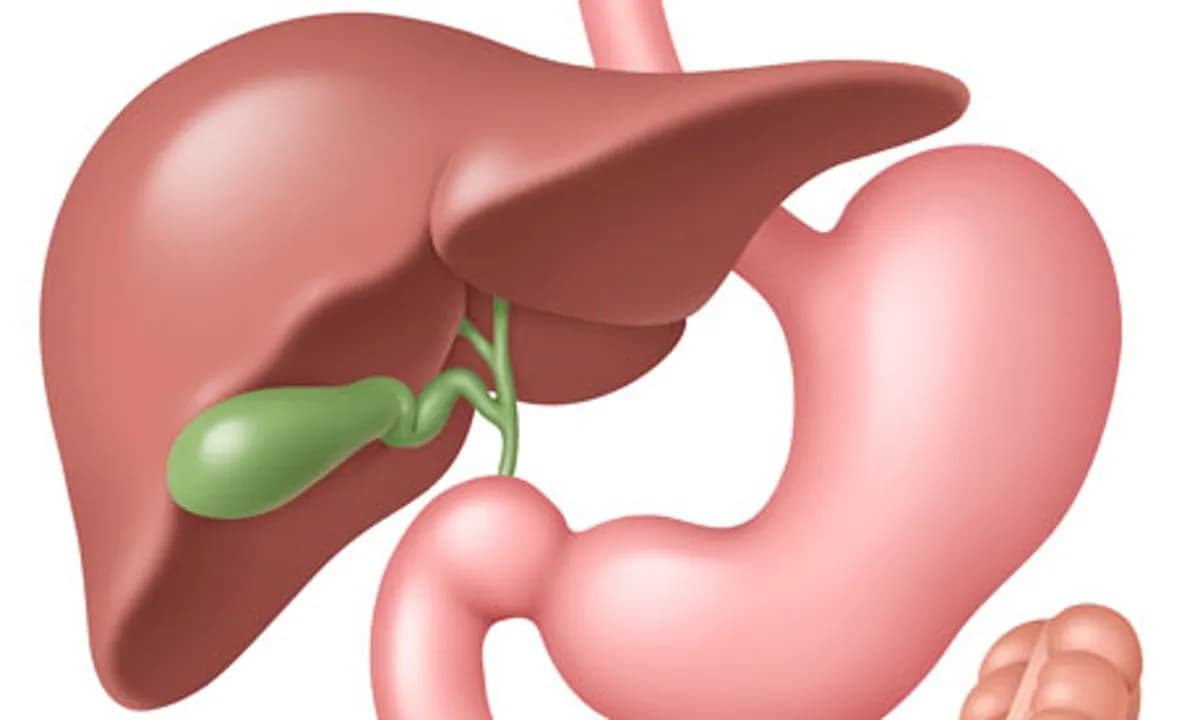
A simple guide to when watchful waiting ends and surgery becomes the safer choice.
By Apex Hospitals · Published 28July 2026
Abdominal pain is one of the most common reasons people visit a hospital in India, yet it is also one of the most misunderstood. A dull ache after meals, a bulge in the groin that appears when you lift something heavy, or a sudden sharp pain under the right rib: these symptoms can point to very different conditions, each with its own tipping point at which surgery becomes necessary.
This article focuses on three of the most frequently encountered surgical conditions of the abdomen: inguinal hernias and incisional (ventral) hernias, gallstone disease, and other common causes of abdominal pain that may ultimately require an operation.
If you or a family member has been told that surgery might be needed, or if you are trying to understand a recent diagnosis, read on.
A hernia occurs when an internal organ or fatty tissue pushes through a weak spot or tear in the surrounding muscle or connective tissue. The abdominal wall is the most common site. According to the National Institutes of Health (NIH), inguinal (groin) hernias account for roughly 75% of all abdominal wall hernias and are significantly more common in men.
Common causes of hernia include:
Chronic straining — heavy lifting, persistent cough, or constipation that raises intra-abdominal pressure over time
Previous abdominal surgery — incisional hernias develop at old surgical scars where the wall has been weakened
Congenital weakness — some people are born with a naturally thin or incomplete abdominal wall
Obesity — excess weight places sustained pressure on the abdominal muscles
Ageing — muscle tissue loses elasticity and strength with age, making hernias more likely after 50
The hallmark sign is a visible or palpable bulge, often more prominent when standing, coughing, or straining, that may or may not be accompanied by a dragging discomfort. In many cases the hernia is reducible (the bulge can be pushed back in), but this does not mean it is safe to ignore.
Not every hernia requires immediate surgery, but no hernia heals on its own. The decision to operate depends on the type of hernia, the patient's symptoms, and the risk of serious complications.
The two most feared complications are incarceration (the hernia becomes trapped and cannot be pushed back) and strangulation (the blood supply to the trapped tissue is cut off). Strangulation is a surgical emergency: without prompt intervention, the affected bowel or tissue can become gangrenous within hours. Symptoms include sudden severe pain at the hernia site, nausea, vomiting, and a hard, tender, non-reducible bulge.
Elective repair is widely recognised as one of the safest ways to treat a hernia, since it avoids the much higher risks that come with an emergency operation for a strangulated hernia.
Surgery is generally recommended when:
The hernia is symptomatic — causing pain, discomfort, or limiting daily activity
The hernia is enlarging over time
There is any episode of incarceration, even if it resolved spontaneously
The hernia is femoral (groin, below the inguinal ligament) — these carry a high strangulation risk
The patient is fit for anaesthesia and surgery
At Apex Hospitals Jaipur, the general surgery team performs open, laparoscopic (minimally invasive) and robotic hernia repairs. Laparoscopic repair, using small keyhole incisions and a mesh to reinforce the abdominal wall, is associated with less post-operative pain, a faster return to normal activity, and lower recurrence rates compared with open surgery in most patient groups.
Gallstones are hardened deposits, composed mainly of cholesterol or bilirubin, that form inside the gallbladder. They are extremely common: population studies in India suggest a prevalence of 4–6% in adults, with rates rising in urban populations due to dietary changes and sedentary lifestyles.
Many people carry gallstones for years without any symptoms — these are called silent gallstones. However, once symptoms begin, they tend to recur and worsen. Classic gallstone symptoms include:
Biliary colic — a cramping or steady pain in the upper right abdomen or central upper abdomen, often triggered by fatty meals, lasting 30 minutes to several hours
Nausea and vomiting accompanying the pain episode
Pain radiating to the right shoulder or back
Jaundice (yellowing of skin and eyes) if a stone migrates into the bile duct
Fever and chills suggesting infection (cholangitis) — a medical emergency
Once gallstones become symptomatic, the standard of care is laparoscopic cholecystectomy, keyhole removal of the gallbladder. Medications and dietary changes can reduce symptom frequency but cannot dissolve or eliminate stones reliably. Surgery is strongly advised when:
Biliary colic has occurred more than once
Acute cholecystitis (inflamed gallbladder) has been diagnosed
Stones have passed into the common bile duct (choledocholithiasis)
Pancreatitis has been triggered by gallstones
The gallbladder wall shows thickening or polyps on ultrasound that raise concern for cancer
Laparoscopic cholecystectomy is one of the most commonly performed operations worldwide. At Apex Hospitals, it is typically performed as a day-care or short-stay procedure under the gastrointestinal surgery department, with most patients returning home within 24 hours and resuming normal activities within a week.
Hernia and gallstones are not the only abdominal conditions that lead to the operating table. Several other diagnoses frequently require surgical management:
Inflammation of the appendix typically presents with pain that begins around the navel and migrates to the lower right abdomen, accompanied by fever, nausea, and loss of appetite. Untreated appendicitis can progress to perforation and life-threatening peritonitis within 24–72 hours. Laparoscopic appendicectomy is the standard treatment.
Adhesions (bands of scar tissue) from prior surgery, hernias, or tumours can block the small or large bowel, causing colicky abdominal pain, bloating, vomiting, and inability to pass gas or stool. Depending on the cause and severity, surgery may be needed urgently to relieve the obstruction and prevent bowel death.
A perforated gastric or duodenal ulcer causes sudden, severe, board-like abdominal rigidity — a true surgical emergency requiring immediate repair. Patients with a history of infection with a common stomach bacteria called H. pylori, or long-term use of anti-inflammatory painkillers (NSAIDs) such as ibuprofen, are at higher risk. The gastroenterology team at Apex works closely with surgeons to manage both the acute event and the underlying cause.
In women, lower abdominal pain can originate from ovarian cysts (particularly if they rupture or undergo torsion — twisting of the ovary, which cuts off its blood supply), ectopic pregnancy, or fibroids. Torsion of an ovarian cyst is a surgical emergency. The obstetrics and gynaecology specialists at Apex Hospitals are experienced in laparoscopic management of these conditions.
The phrase minimally invasive surgery (MIS) covers a range of techniques — laparoscopy, robotic-assisted surgery, and endoscopic procedures — that achieve the same surgical goals as open operations through much smaller incisions. The benefits are well-established: less blood loss, reduced post-operative pain, shorter hospital stays, lower infection risk, and faster return to work and daily life.
Apex Hospitals has invested significantly in MIS infrastructure, including modular operating theatres equipped with advanced laparoscopy systems, and a dedicated robotic surgery programme for select complex cases. Emergency operating theatres are available 24×7, ensuring that patients who present with acute abdominal emergencies receive timely surgical care without delay.
Not every patient is a candidate for laparoscopic surgery, prior abdominal operations, severe obesity, or unstable blood pressure or circulation may necessitate an open approach. Your surgeon will discuss the most appropriate technique based on your individual anatomy, medical history, and the urgency of the situation.
While many abdominal conditions can be managed electively, certain symptoms demand urgent evaluation. Go to the emergency department or call +91 98290 30011 (Apex Hospitals Malviya Nagar, Jaipur) immediately if you experience:
Sudden, severe abdominal pain that is constant and worsening
A hernia bulge that becomes hard, painful, and cannot be pushed back
Fever above 38.5°C with abdominal pain
Jaundice (yellow skin or eyes) with abdominal pain
Vomiting blood or passing black, tarry stools
Abdominal rigidity (board-like hardness of the belly)
Signs of shock — rapid pulse, low blood pressure, cold sweating, confusion
Apex Hospitals operates a fully equipped emergency and trauma department in Jaipur with on-site CT, MRI, and emergency labs available around the clock, ensuring rapid diagnosis and surgical access when minutes matter.
Apex Hospitals has been serving patients across Rajasthan since 1994 and holds NABH accreditation — the gold standard for hospital quality in India. The hospital's surgical programme is built on three pillars:
Multidisciplinary evaluation — surgeons, gastroenterologists, radiologists, and anaesthesiologists review complex cases together before recommending an operation, reducing unnecessary surgery and improving outcomes.
Advanced imaging before the knife — on-site CT, MRI, and ultrasound allow accurate pre-operative planning so there are no surprises in theatre.
Structured recovery pathways — the physiotherapy and rehabilitation team begins mobilisation within hours of surgery, reducing complications such as deep vein thrombosis and chest infections.
For patients with complex nutritional needs before or after major abdominal surgery, the dietetics and nutrition department provides tailored pre- and post-operative dietary guidance to support healing and reduce complications.
No. A hernia cannot heal on its own because the defect in the muscle or connective tissue does not close spontaneously. Without repair, most hernias gradually enlarge and the risk of incarceration or strangulation increases over time. Surgery is the only definitive treatment.
Any abdominal pain that is severe, sudden in onset, associated with fever, vomiting, jaundice, or a change in bowel habits warrants prompt medical evaluation. Even milder pain that recurs or is linked to eating should be assessed — conditions like gallstones and hernias are far easier to treat electively than in an emergency.
Laparoscopic cholecystectomy is one of the safest and most commonly performed operations in the world. Serious complications are rare in experienced hands. Most patients are discharged within 24 hours and return to desk work within a week. Your surgeon will discuss your individual risk profile before the procedure.
Symptomatic gallstones that are left untreated carry a significant risk of progression to acute cholecystitis, common bile duct obstruction, gallstone pancreatitis, or — rarely — gallbladder cancer. Once symptoms have begun, the risk of a serious complication within five years is substantial, which is why elective surgery is recommended promptly after the first symptomatic episode.
For laparoscopic procedures, most patients are mobile the same day and return to light activities within 5–7 days. Strenuous lifting and heavy exercise are typically restricted for 4–6 weeks after hernia repair to allow the mesh to integrate. Your surgical team will provide a personalised recovery plan.
The surgical team at Apex Hospitals Malviya Nagar, Jaipur is available to evaluate your condition and guide you toward the right treatment — whether that means watchful waiting or a planned minimally invasive procedure.

Download Our App


Powered By Docfyn