

When Do Doctors Recommend Robotic Knee Replacement or Robotic General Surgery?
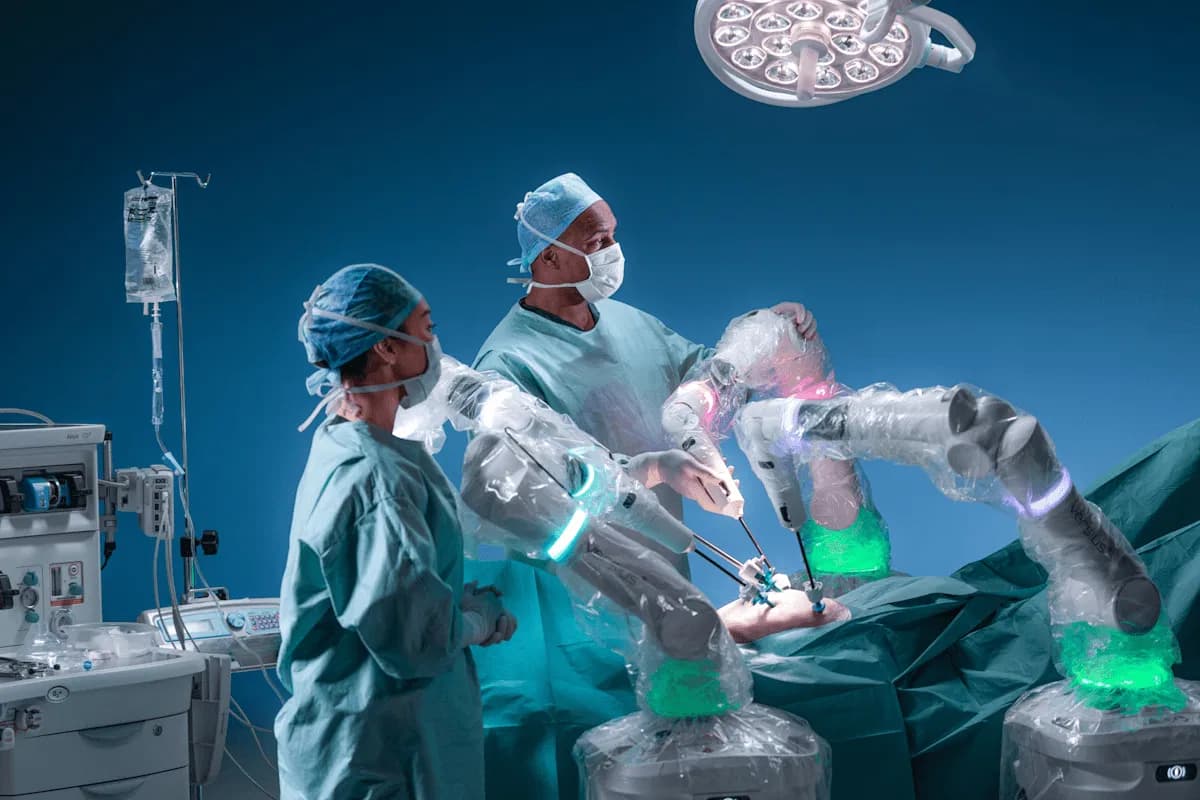
When Do Doctors Recommend Robotic Knee Replacement or Robotic General Surgery?
A practical guide to understanding the clinical criteria, patient profiles, and real-world conditions that lead surgeons to choose robotic-assisted procedures over conventional surgery.
By the Apex Hospitals Medical Editorial Team · Published July 2025
The Rise of Robotic Surgery: More Than a Trend
Robotic-assisted surgery has moved well beyond the realm of experimental medicine. In Jaipur and across India, an increasing number of patients are being referred for robotic procedures — not because it is the newest technology available, but because it demonstrably improves outcomes for specific clinical situations. Yet many patients arrive at a consultation unsure of one fundamental question: does my condition actually need robotic surgery, or will a conventional approach work just as well?
The answer depends on a careful assessment of your diagnosis, anatomy, lifestyle, and surgical risk profile. This article explains the clinical criteria surgeons use when recommending robotic knee replacement for arthritis, and robotic approaches for common general surgery procedures such as hernia repair and gallbladder removal.
At Apex Hospitals, Malviya Nagar, Jaipur — a NABH-accredited multi-specialty hospital established in 1994 — the robotic surgery programme uses the CORI Surgical System by Smith+Nephew, an imageless handheld robotic platform with real-time intraoperative 3D mapping (RI.KNEE technology) and AI-assisted implant planning — no pre-operative CT or MRI required.
Part 1: Robotic Knee Replacement — Who Is It For?
1. Moderate-to-Severe Knee Osteoarthritis That Has Not Responded to Conservative Treatment
The most common reason a doctor recommends knee replacement — robotic or conventional — is Grade 3 or Grade 4 osteoarthritis confirmed on X-ray, where cartilage loss causes persistent pain, stiffness, and functional limitation. According to the National Institute of Arthritis and Musculoskeletal and Skin Diseases (NIAMS), osteoarthritis affects millions of adults globally and is a leading cause of disability. When physiotherapy, weight management, anti-inflammatory medications, and intra-articular injections have failed to provide adequate relief over a sustained period, surgical replacement becomes the evidence-based next step.
The decision to choose robotic-assisted replacement over a conventional approach is driven by the precision advantage. The CORI system at Apex Hospitals enables 29% faster bone resection, 5× faster system response, and 2× more cutting volume compared to manual techniques, while keeping the surgeon in full control throughout the procedure. This translates to more accurate implant alignment, which is directly linked to longer implant survival and better functional outcomes.
2. Partial (Unicompartmental) Knee Arthritis in Active Patients
Not every patient with knee arthritis needs a total knee replacement. When arthritis is confined to one compartment of the knee — most commonly the medial (inner) compartment — a partial knee replacement preserves healthy bone and ligament tissue, leading to a more natural-feeling knee and faster recovery. Robotic assistance is particularly valuable here because the margin for error in partial replacement is smaller; the CORI system's real-time 3D mapping ensures the implant is seated within the precise boundaries of the diseased compartment without encroaching on healthy tissue.
Surgeons at Apex Hospitals' orthopaedic robotic surgery unit in Jaipur assess candidacy for partial replacement using weight-bearing X-rays, ligament stability tests, and range-of-motion evaluation — not just imaging alone.
3. Patients With Complex Anatomy or Prior Knee Surgery
Patients who have had previous knee surgeries, fractures, or significant deformity present a higher technical challenge for conventional knee replacement. Robotic systems excel in these cases because the intraoperative 3D mapping adapts to the patient's actual anatomy in real time — rather than relying on pre-operative templates that may not account for scar tissue or bony changes. The imageless nature of the CORI system means no additional radiation exposure from a pre-operative CT scan, which is an added benefit for patients who have already undergone multiple imaging studies.
4. Younger, Higher-Demand Patients Who Need Implant Longevity
A 55-year-old active professional has very different expectations from knee replacement than a 75-year-old with limited mobility. Younger patients place higher mechanical demands on the implant and are more likely to require revision surgery if alignment is suboptimal. Robotic-assisted placement consistently achieves tighter alignment tolerances, which is why many orthopaedic surgeons recommend it specifically for patients who want to return to activities such as walking long distances, cycling, or light sports after recovery. The orthopaedics team at Apex Hospitals evaluates each patient's activity goals as part of the surgical planning process.
Part 2: Robotic General Surgery — Hernia, Gallbladder, and Beyond
Robotic assistance in general surgery is not limited to orthopaedics. Procedures such as hernia repair and cholecystectomy (gallbladder removal) are now routinely performed with robotic platforms at high-volume centres, and the indications for choosing robotic over standard laparoscopic surgery are becoming clearer.
Robotic Hernia Surgery: When Is It Recommended?
Hernia repair is one of the most common surgical procedures performed worldwide. Surgeons consider a robotic approach in the following situations:
Complex or recurrent hernias: Patients who have had a previous hernia repair — particularly with mesh — often have significant scar tissue that makes laparoscopic dissection technically demanding. The robotic platform's wristed instruments provide greater dexterity in tight spaces, reducing the risk of inadvertent injury to surrounding structures.
Large ventral or incisional hernias: Abdominal wall reconstruction for large defects benefits from robotic assistance because the surgeon can perform precise fascial closure with suturing that would be extremely difficult laparoscopically.
Obese patients: Higher BMI increases the technical difficulty of laparoscopic hernia repair. Robotic systems provide better ergonomics and visualisation in these cases, and studies have shown lower conversion rates to open surgery.
Bilateral inguinal hernias: Repairing both sides simultaneously is more feasible robotically, reducing the need for a second procedure.
The general surgery team at Apex Hospitals evaluates hernia complexity using clinical examination and imaging before recommending the surgical approach.
Robotic Gallbladder Surgery (Cholecystectomy): When Does It Add Value?
Standard laparoscopic cholecystectomy is already a minimally invasive procedure with excellent outcomes for most patients. However, surgeons may recommend a robotic approach in specific circumstances:
Acute or gangrenous cholecystitis: Severe inflammation causes the gallbladder to adhere to surrounding structures. Robotic instruments' precision reduces the risk of bile duct injury — one of the most serious complications of cholecystectomy.
Mirizzi syndrome or complex anatomy: When the cystic duct anatomy is distorted, the enhanced visualisation and instrument control of robotic surgery improve safety.
Concurrent procedures: When gallbladder removal is being combined with another abdominal procedure (e.g., hernia repair or bowel surgery), a robotic platform allows the surgeon to complete both procedures through the same port sites with greater efficiency.
Patients with prior abdominal surgery: Adhesions from previous operations increase the technical challenge; robotic dexterity helps navigate these safely.
Robotic Surgery in Oncology and Other Specialties
Beyond orthopaedics and general surgery, robotic platforms are increasingly used in urological cancers, gynaecological surgery, and gastrointestinal oncology. Apex Hospitals operates a Make-in-India Robotic Surgery System for select oncological procedures, enabling precise, minimally invasive cancer surgery with faster recovery. The oncology department at Apex Hospitals and the urology team work in close collaboration to determine the most appropriate surgical platform for each cancer patient.
What Are the Genuine Benefits of Robotic Surgery?
It is important to be honest about what robotic surgery does and does not offer. The technology does not replace surgical skill — it amplifies it. The documented benefits that are clinically meaningful include:
Greater precision: Sub-millimetre accuracy in bone resection and implant placement reduces the risk of malalignment, which is a leading cause of implant failure and persistent pain after knee replacement.
Reduced soft-tissue trauma: Robotic systems minimise inadvertent damage to muscles, ligaments, and nerves adjacent to the surgical site.
Faster functional recovery: Patients typically mobilise sooner after robotic knee replacement and report less post-operative pain in the early recovery period.
Lower revision rates: Accurate implant positioning is associated with longer implant survival, reducing the likelihood of needing a second surgery.
Surgeon ergonomics: Reduced surgeon fatigue during long procedures can translate to more consistent performance throughout the operation.
A growing body of peer-reviewed literature on PubMed supports improved alignment outcomes and patient-reported satisfaction scores with robotic-assisted knee arthroplasty compared to conventional manual techniques.
When Is Robotic Surgery NOT the Right Choice?
Robotic surgery is not universally superior for every patient or every procedure. Surgeons at Apex Hospitals are transparent about this. Situations where conventional or standard laparoscopic surgery may be equally appropriate or preferable include:
Straightforward laparoscopic cholecystectomy in a young, healthy patient with uncomplicated gallstones — standard laparoscopy achieves excellent outcomes with a shorter operating time.
Simple inguinal hernia in a slim patient with no prior surgery — laparoscopic repair is well-established and cost-effective.
Patients with significant cardiac or pulmonary comorbidities where minimising anaesthesia time is the priority.
Emergency surgery where robotic setup time is not feasible.
The decision is always individualised. A thorough pre-operative consultation — including review of imaging, comorbidities, patient goals, and surgical history — determines the optimal approach. The gastrointestinal surgery specialists at Apex Hospitals and the orthopaedic team discuss all options openly with patients before any recommendation is made.
Questions to Ask Your Surgeon Before Robotic Surgery
If your doctor has recommended robotic surgery, or if you are considering asking about it, these questions will help you make an informed decision:
Why is robotic surgery recommended for my specific condition rather than a conventional approach?
How many robotic procedures of this type have you personally performed?
What are the specific risks associated with robotic surgery versus the conventional alternative for my case?
Will robotic surgery affect my recovery timeline or post-operative physiotherapy plan?
Is the robotic system used here approved and validated for this procedure?
What happens if the robotic system encounters a technical issue during surgery?
At Apex Hospitals, patients are encouraged to ask these questions during their pre-operative consultation. The hospital's physiotherapy and rehabilitation team is integrated into the surgical pathway, ensuring that recovery planning begins before the procedure itself.
Robotic Surgery at Apex Hospitals, Jaipur
Apex Hospitals has been delivering advanced surgical care in Rajasthan since 1994. The hospital's robotic surgery programme is built on two platforms: the CORI Surgical System by Smith+Nephew for orthopaedic procedures, and a Make-in-India Robotic Surgery System for oncological and general surgical applications. Both systems are operated by experienced surgeons within a NABH-accredited environment.
The hospital's recognition — including a USAID Grant, the Digital Transformation Award 2022, and coverage in the Harvard Business Review for its HOPE Tele-ICU programme — reflects a broader institutional commitment to evidence-based innovation rather than technology adoption for its own sake.
For patients in Jaipur and across Rajasthan considering robotic knee replacement or robotic general surgery, the first step is a detailed consultation with the relevant specialist. You can explore the full range of surgical expertise through the Apex Hospitals doctors directory or learn more about the specialities available across all Apex locations.
Frequently Asked Questions
Is robotic knee replacement suitable for all arthritis patients?
No. Robotic knee replacement is most beneficial for patients with moderate-to-severe osteoarthritis who have not responded to conservative treatment, those with complex anatomy or prior knee surgery, and younger active patients who need precise implant alignment for long-term durability. Your orthopaedic surgeon will assess your X-rays, functional status, and goals before recommending the approach.
Does robotic surgery mean the robot performs the operation independently?
No. The surgeon is in complete control throughout the procedure. The robotic system acts as a precision tool that provides real-time guidance, enhanced visualisation, and instrument stability — but every incision and movement is directed by the operating surgeon. The CORI system used at Apex Hospitals is specifically designed to keep the surgeon in full control at all times.
How long is recovery after robotic knee replacement compared to conventional surgery?
Most patients undergoing robotic knee replacement begin walking with assistance on the day of or the day after surgery. Full functional recovery typically takes 6–12 weeks, with physiotherapy playing a central role. Many patients report less early post-operative pain compared to conventional knee replacement, though individual recovery varies based on age, fitness, and the extent of arthritis.
Is robotic hernia surgery more expensive than laparoscopic hernia repair?
Robotic hernia surgery generally involves higher procedural costs than standard laparoscopic repair due to the equipment involved. However, for complex or recurrent hernias, the reduced risk of complications and lower revision rates can offset this difference over time. Your surgeon will discuss the cost-benefit considerations for your specific case, and the Apex Hospitals team can advise on insurance and Ayushman Bharat empanelment eligibility.
Can robotic surgery be used for cancer treatment?
Yes. Robotic platforms are increasingly used in urological cancers (prostate, kidney), gynaecological cancers, and gastrointestinal oncology. Apex Hospitals uses a Make-in-India Robotic Surgery System for select oncological procedures, enabling minimally invasive cancer surgery with faster recovery and reduced complications. The oncology and urology teams assess each patient's suitability on a case-by-case basis.
Where can I get a robotic surgery consultation in Jaipur?
Apex Hospitals Malviya Nagar (SP-4 & 6, Central Marg, Malviya Nagar Industrial Area, Jaipur, Rajasthan 302017) offers robotic surgery consultations across orthopaedics, general surgery, and oncology. You can call 098290 30011 or visit the robotic surgery page to book an appointment.
References
Considering Robotic Surgery? Start With a Consultation.
Speak with a specialist at Apex Hospitals, Jaipur to find out whether robotic knee replacement or robotic general surgery is the right choice for your condition.