By Apex Hospitals 3rd April, 2026 6 min read
Hernia surgery has been around for decades. But the way it is done has changed dramatically.
For a long time, patients had two choices: open surgery with a large incision, or laparoscopic surgery with smaller cuts. Both worked. But both had limitations, post-operative pain, recovery time, and in complex cases, difficulty for the surgeon to work with precision.
Robotic hernia repair is changing that. It gives surgeons a level of precision, vision, and control that was simply not possible before, and for patients, it means less pain, smaller scars, and a faster return to normal life.
This blog explains what robotic hernia repair is, how it compares to other options, who it is suitable for, and what recovery looks like.
| At Apex Hospitals, Jaipur: Dr. Rajnish has performed 8,000+ laparoscopic surgeries and 230+ robotic surgeries, the highest number of robotic surgeries in General & GI Surgery in Rajasthan. |
A hernia happens when an internal organ or tissue pushes through a weak spot in the muscle wall that is supposed to hold it in place. It most commonly affects the abdomen.
You might notice it as a lump or bulge, which may appear when you cough, strain, or lift something heavy, and disappear when you lie down. Over time, it often grows larger and can become painful.
• Inguinal hernia — in the groin area. The most common type, especially in men.
• Umbilical hernia — around the belly button. Common in newborns and adults.
• Incisional hernia — at the site of a previous surgical incision. The muscle weakens at the scar.
• Hiatal hernia — where the stomach pushes up through the diaphragm into the chest.
• Femoral hernia — in the upper thigh, just below the groin. More common in women.
| Important: Hernias do not heal on their own. They almost always require surgery. The question is not whether to operate, but which method is best for you. |
Not all hernia surgeries are the same. Understanding the differences helps patients make informed decisions.
| Open Surgery | Laparoscopic Surgery | Robotic Surgery |
| Incision size | Large single cut | 3–4 small cuts | 3–4 small cuts |
| Visualisation | Direct view | 2D camera | 3D HD camera, 10x magnification |
| Surgeon control | Hands directly | Long rigid instruments | Wristed robotic instruments |
| Pain after surgery | Higher | Moderate | Lower |
| Hospital stay | 2–3 days | 1–2 days | Often same day or 1 day |
| Recovery time | 4–6 weeks | 2–3 weeks | 1–2 weeks |
| Best for | Very large hernias | Most standard hernias | Complex, recurrent hernias |
The robot does not perform the surgery. The surgeon does, but with a significant upgrade in tools and vision.
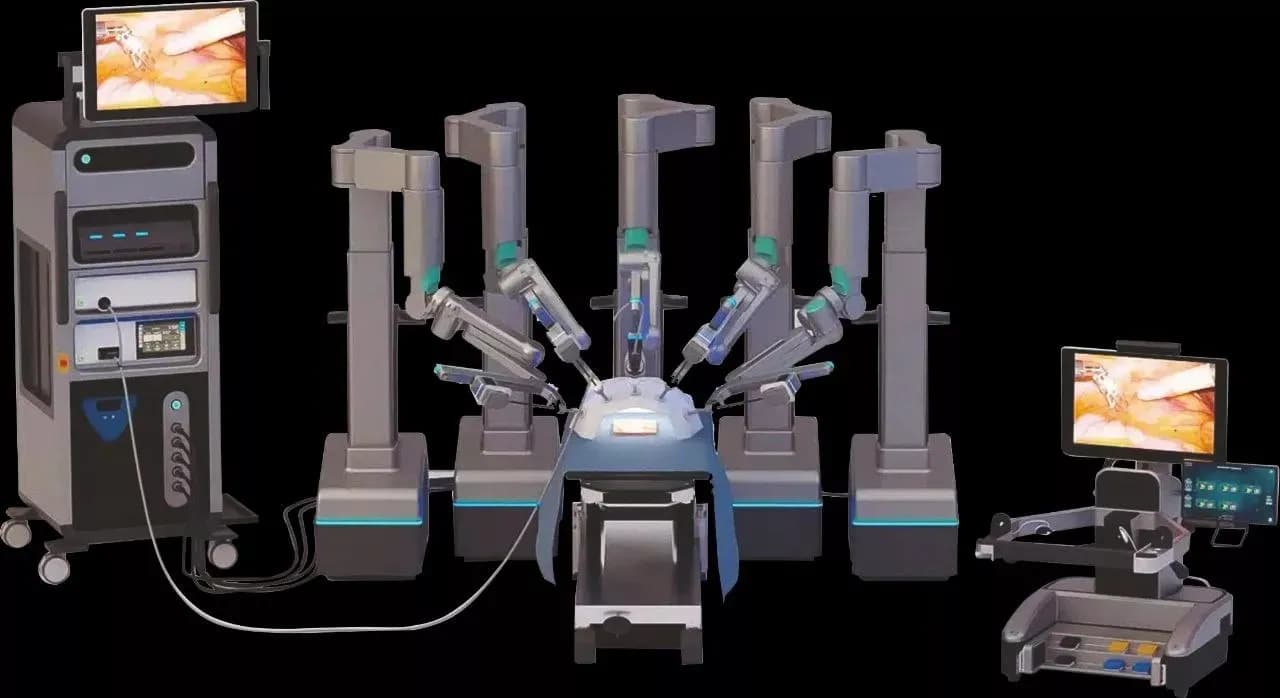
During robotic hernia repair, the surgeon sits at a console and controls four robotic arms with their hands and feet. The robotic arms hold the instruments and a 3D high-definition camera. Every movement the surgeon makes is translated precisely into the patient’s body.
Here is what these changes:
• The 3D camera magnifies the surgical field up to 10 times — the surgeon can see structures that are invisible to the naked eye
• The robotic instruments bend and rotate in ways that human wrists cannot — allowing work in tight, hard-to-reach spaces
• The system filters out natural hand tremors — every movement is steady and controlled
• Mesh placement — used to reinforce the weakened muscle wall — can be done with far greater precision
| Why this matters for hernia repair: Hernia repair involves placing a mesh over the weakened area and securing it carefully. Precision in placement directly affects whether the hernia returns. Robotic surgery allows for more accurate mesh positioning than either open or laparoscopic methods. |
Robotic hernia repair is particularly beneficial in the following situations:
• Recurrent hernias — where a hernia has come back after previous surgery and the anatomy is more complex
• Large or complex hernias — where precise mesh placement is critical
• Bilateral hernias — hernias on both sides of the groin, which can be addressed in a single robotic procedure
• Incisional hernias — at previous surgical sites where scar tissue makes dissection more difficult
• Obese patients — where robotic instruments navigate better through deeper tissue
• Patients who want the fastest possible return to work and daily activities
That said, robotic surgery is also used for straightforward inguinal and umbilical hernias, where it offers the same benefits of smaller incisions and faster recovery.
| Good to know: Not every hernia requires robotic surgery. Your surgeon will recommend the most appropriate approach based on the type, size, and location of your hernia, your medical history, and your personal recovery goals. |
Here is what patients consistently experience with robotic hernia repair compared to open surgery:
• Significantly less post-operative pain — smaller incisions mean less tissue trauma
• Shorter hospital stay — many patients go home the same day or the next morning
• Faster return to daily activities — most patients are up and moving within days
• Smaller, neater scars — the incisions are typically less than 1 cm each
• Lower risk of infection — less exposure of internal tissue to the environment
• Lower recurrence rates — more precise mesh placement reduces the chance of the hernia returning
• Less blood loss during surgery
Here is a simple overview of what the procedure involves:
• You will be given general anaesthesia — you will be asleep throughout.
• Three to four small incisions (usually less than 1 cm each) are made near the hernia site.
• A camera and robotic instruments are inserted through these incisions.
• The surgeon sits at a console nearby and controls the robotic arms using hand and foot controls while viewing a magnified 3D image of the surgical field.
• The herniated tissue is carefully pushed back into place and a surgical mesh is placed over the weakened area to reinforce it.
• The incisions are closed with stitches or surgical glue.
The procedure typically takes between 45 minutes and 2 hours, depending on the complexity of the hernia.
Recovery after robotic hernia repair is significantly faster than after open surgery. Here is what most patients can expect:
• Day 1–2: Mild discomfort, manageable with oral pain medication. Most patients are walking the same day.
• Week 1: Light activities at home. Avoid heavy lifting and strenuous exercise.
• Week 2–3: Most patients return to desk work and light daily activities.
• Week 4–6: Return to physical work, exercise, and full activity for most patients.
| Most patients say: The recovery was much easier than they expected. The pain was manageable and they were back to their routine far sooner than they had feared. |
Your surgeon will give you specific guidance based on the type of hernia and the complexity of the procedure.
Hernia recurrence, where the hernia returns after surgery, is a real concern, and one of the main reasons surgical techniques matter so much.
Recurrence rates after robotic hernia repair are comparable to or lower than those after open and laparoscopic surgery, particularly for complex and recurrent cases. The precision of robotic mesh placement is a key factor in reducing recurrence.
Following post-operative instructions, particularly avoiding heavy lifting during recovery, also plays an important role in long-term outcomes.
See a surgeon promptly if you notice:
• A lump or bulge in the abdomen, groin, or near a previous surgical scar
• Pain or discomfort at the site of the bulge, especially when bending, coughing, or lifting
• A bulge that cannot be pushed back in, this may indicate a strangulated hernia, which is a surgical emergency
• Nausea, vomiting, or sudden severe pain at the hernia site, seek emergency care immediately
Early treatment leads to simpler surgery and better outcomes. Do not wait until a hernia becomes an emergency.
At Apex Hospitals, Jaipur, the Department of General & Laparoscopic Surgery offers advanced robotic hernia repair for all types of hernias, from straightforward inguinal hernias to complex recurrent and incisional cases.
Dr. Rajnish, Consultant – General & Laparoscopic Surgery, has performed over 8,000 laparoscopic and 230+ robotic surgeries, bringing precision, experience, and a patient-first approach to every procedure. Apex Hospitals is also Rajasthan’s first hospital to use a Make-in-India robotic surgical system.
Diagnosed with a hernia? Explore your options.
Consult our surgical team at Apex Hospitals, Jaipur today.