
A clear, step-by-step guide to every evaluation a patient and donor must complete before a kidney transplant, written for patients and families in Jaipur and across Rajasthan.
By Apex Hospitals · Published 25th June, 2026
"If you or a loved one has just been told a kidney transplant might be needed, one of the first questions most families ask is: kidney transplant- what tests are done before the procedure actually happens? This guide breaks down every test, one step at a time, so you know exactly what to expect."
A kidney transplant is one of the most life-changing procedures in modern medicine, offering patients with end-stage chronic kidney disease the chance to live without dialysis. But before any transplant can happen, both the recipient and the potential donor must pass a thorough battery of medical tests. These evaluations protect the patient, protect the donor, and maximise the chance that the new kidney will function well for years to come.
At Apex Hospitals Malviya Nagar, Jaipur, the nephrology team coordinates a structured pre-transplant workup that covers every dimension of health, from blood group compatibility to psychological readiness. Understanding what to expect can reduce anxiety and help you prepare for each appointment.
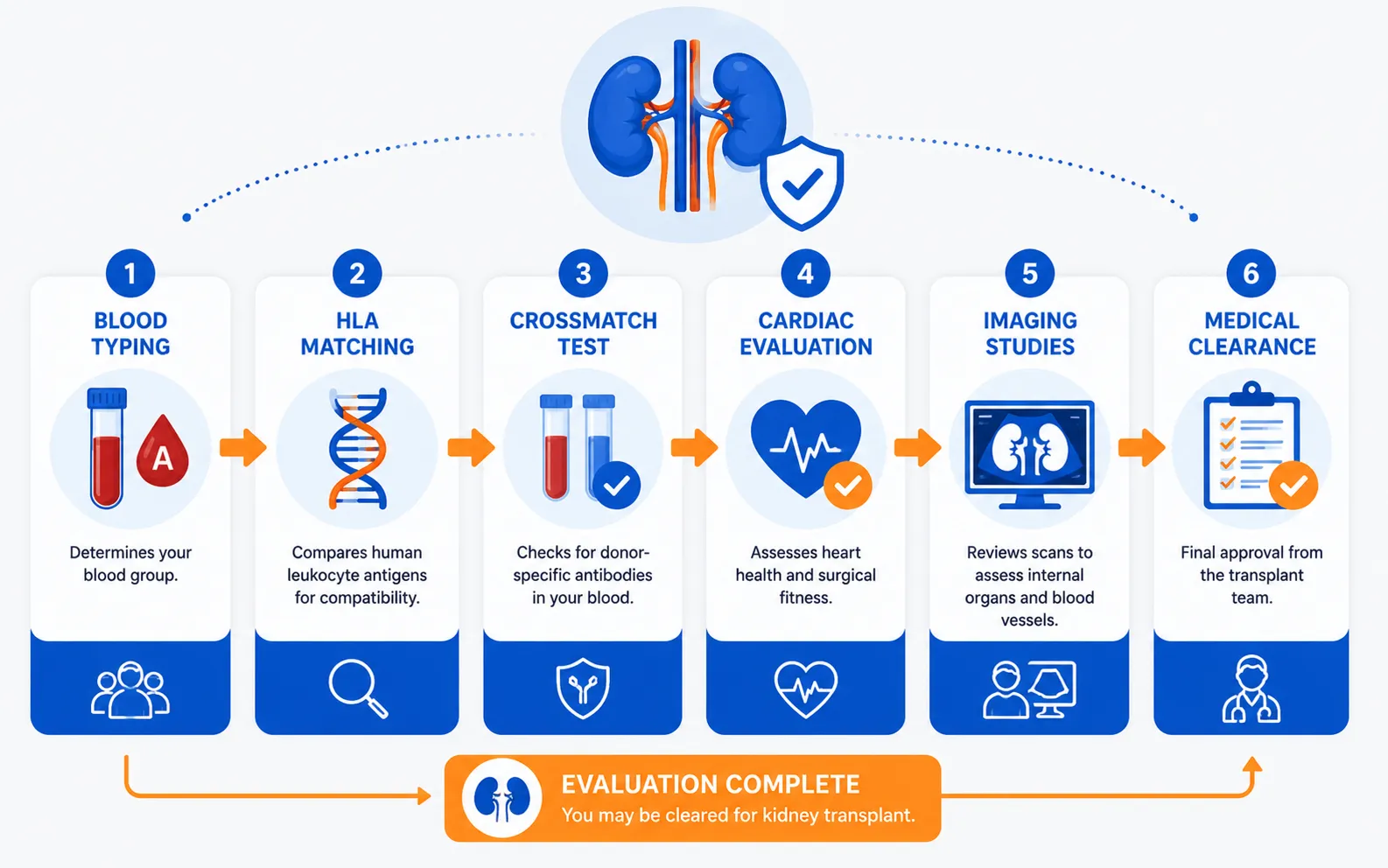
Just like everyone has a blood type- A, B, AB, or O- that needs to match before a blood transfusion, the same rule applies before a kidney transplant. This first test confirms that the donor's blood group is compatible with yours. If the blood groups don't match, the transplant cannot go ahead, because your immune system would attack the new kidney almost immediately, treating it as foreign tissue. In some specialised centres, transplants across incompatible blood groups are possible using additional treatment beforehand, but a compatible match remains the standard and simplest starting point.
HLA typing is a detailed genetic test that looks at proteins on the surface of your cells. The closer the HLA match between donor and recipient, the lower the risk of rejection. A blood sample is taken from both parties and sent to a specialised immunology laboratory. The results guide the transplant team in predicting long-term graft survival and in planning the right immunosuppressive regimen after surgery.
Even when blood groups and HLA types look compatible, a crossmatch test is performed immediately before transplant. The recipient's serum is mixed with the donor's lymphocytes. A negative crossmatch (no reaction) means the transplant can proceed safely. A positive crossmatch indicates pre-formed antibodies that would attack the new kidney and is generally a contraindication to transplant without further intervention.
This blood test measures the presence of antibodies in your bloodstream that could react against a donor organ. In simple terms, it checks how likely your body is to reject a donated kidney before the transplant even happens, for example, due to antibodies built up from a past pregnancy, a blood transfusion, or an earlier transplant. The more antibodies present, the more "sensitised" you are, and the harder it can be to find a perfectly matching donor. This information helps your transplant team plan ahead, including any extra treatment that may be needed before a suitable match is found.
These are routine blood tests that give your doctor a clear picture of your overall blood health before surgery. The blood count checks for anaemia, infection, and your platelet count, while the coagulation test checks how well your blood clots, making sure you're at low risk of excessive bleeding or unwanted clotting during the procedure. If anaemia is found, it can usually be treated before your surgery date to reduce risk.
This is a set of blood tests that gives your doctor a broad snapshot of how your kidneys, liver, and overall body chemistry are working before surgery. It typically checks:
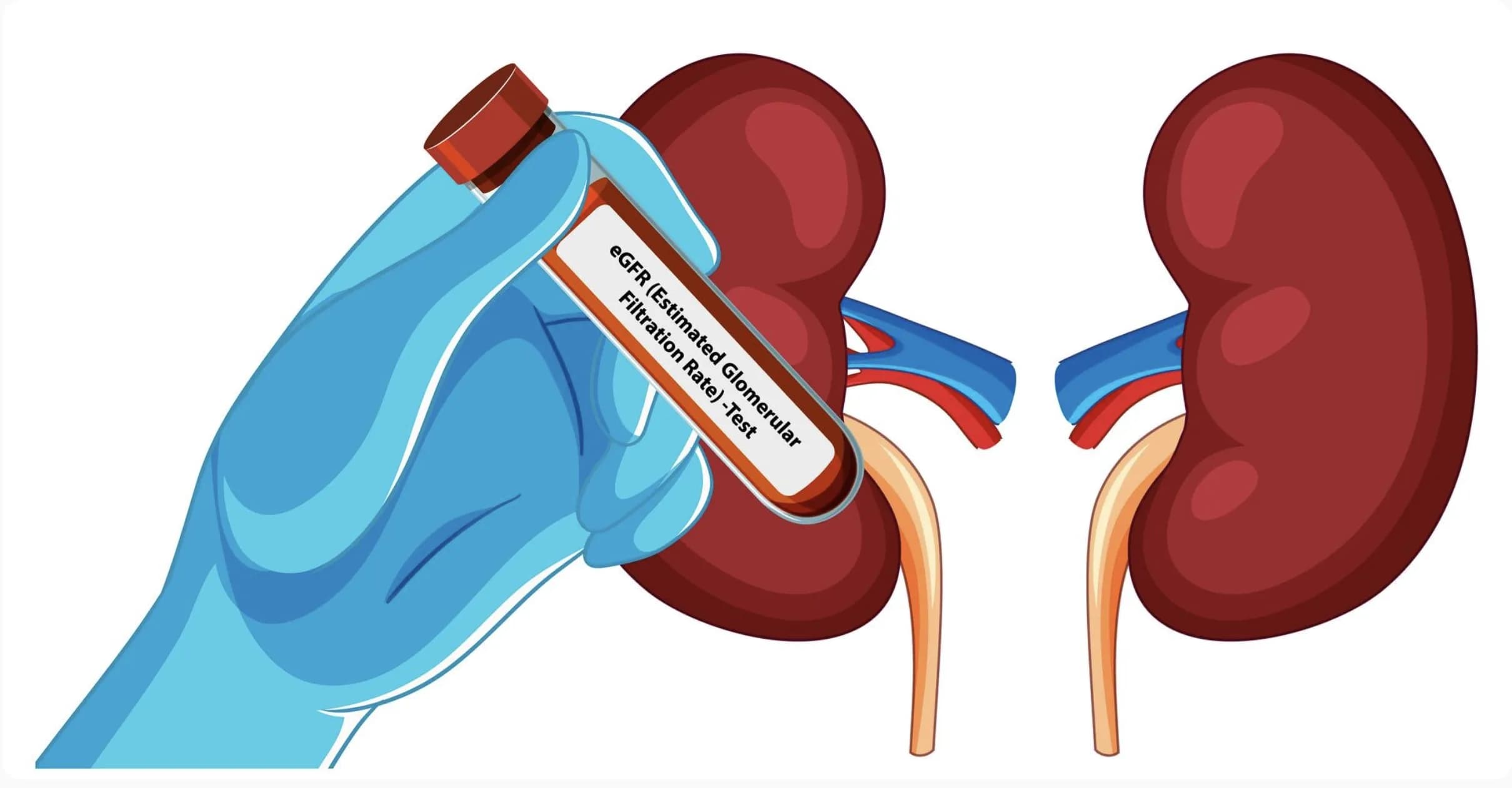
In addition, your doctor may use a specialised calculation called the eGFR (estimated kidney filtration rate) to get a more precise picture of how well your kidneys are functioning.
These results help confirm whether you are medically ready for surgery, and whether anything needs to be corrected beforehand.
A urinalysis and urine culture rule out active urinary tract infection, which must be treated before surgery. A 24-hour urine collection may also be done to measure residual kidney function.
Because the medications given after a transplant lower the body's natural defences, it is important to check for any hidden infections beforehand. Standard screening includes tests for:
A positive result does not automatically disqualify a patient, many infections can be managed or treated, but the team must know about them to plan post-transplant care appropriately.
Cardiovascular disease is the leading cause of death in kidney transplant recipients, which is why a thorough heart check-up is one of the most important parts of this evaluation. A thorough cardiac workup typically includes an electrocardiogram (ECG), echocardiogram, and, in patients with diabetes, older age, or known coronary artery disease, a stress test or coronary angiography. Apex Hospitals' integrated cardiology team works alongside the nephrology unit to clear patients for surgery and manage any cardiac risk factors identified.
Ultrasound of the abdomen and pelvis evaluates the native kidneys, bladder, and blood vessels. A Doppler study of the iliac vessels, where the new kidney will be connected, checks for adequate blood flow and rules out significant vascular disease. Chest X-ray is done to assess the lungs and heart size.
The medicines used after a transplant can sometimes allow a hidden cancer to grow, so your doctor will recommend standard age- and gender-appropriate cancer screening before your surgery. If any cancer is found, it must be fully treated before the transplant can go ahead.
A kidney transplant requires lifelong medication adherence. A psychosocial evaluation assesses the patient's mental health, support network, understanding of the process, and ability to comply with post-transplant care. This is not a pass/fail test, it is designed to identify support needs and ensure the patient has the best possible environment for recovery.
Living donor transplants, where a family member or close friend donates one kidney, generally produce better outcomes than deceased donor transplants. However, the donor's safety is paramount. The evaluation is equally thorough.
Blood group typing, tissue typing, and crossmatch testing are performed on the donor's samples alongside the recipient's. The donor also undergoes blood and urine tests to confirm that their own kidney function is excellent, since they will be living with only one kidney afterwards.
This test measures how well the donor's kidneys are filtering waste, and checks whether any protein is leaking into the urine (proteinuria), an early warning sign of kidney disease. If this is found, the person is usually not eligible to donate, as it would place too much strain on their remaining kidney.
The same infectious disease panel described for the recipient is performed on the donor. Any transmissible infection in the donor's kidney could be passed to the immunosuppressed recipient. Cancer screening is done for the same reason, to ensure nothing harmful is unintentionally transplanted along with the kidney.
A CT angiogram maps the exact anatomy of the donor's kidneys and their blood supply. This helps the surgical team plan the safest approach for removal (nephrectomy) and confirms there are no anatomical abnormalities such as multiple renal arteries or kidney stones that could complicate the procedure.
The donor must be in excellent general health. An ECG, blood pressure assessment, and review of any chronic conditions (diabetes, hypertension, obesity) are all part of the workup. Donors with poorly controlled hypertension or diabetes are generally not accepted, as these conditions increase the risk of future kidney disease in the remaining kidney.
| Test | Who It's For | Purpose |
|---|---|---|
| ABO Blood Typing | Both | Confirm blood group compatibility |
| HLA Tissue Typing | Both | Assess genetic match to reduce rejection risk |
| Crossmatch Test | Both | Detect pre-formed antibodies against donor |
| PRA Screening | Recipient | Measure sensitisation level |
| CBC & Coagulation | Both | Assess blood health and surgical risk |
| Infectious Disease Panel | Both | Rule out transmissible infections |
| Cardiac Evaluation | Both | Assess cardiovascular fitness for surgery |
| Imaging (Ultrasound/CT) | Both | Evaluate anatomy and vascular access |
| Cancer Screening | Both | Ensure no active malignancy |
| Psychosocial Assessment | Recipient | Confirm readiness and support systems |
That's the full picture of kidney transplant, what tests are done before the procedure, and why each one matters. It's a lot to go through, but every test exists to protect you and give your new kidney the best possible chance of success.
The complete evaluation typically takes two to six weeks, depending on how quickly results come back and whether any issues need further investigation. At Apex Hospitals Malviya Nagar, the nephrology and transplant coordination team works to streamline appointments so that tests are batched efficiently, minimising the number of hospital visits for both recipient and donor.
Once all results are reviewed by the multidisciplinary transplant committee, which includes nephrologists, transplant surgeons, cardiologists, and the transplant coordinator, a final decision is made and the patient is listed or cleared for surgery.
If all tests are satisfactory, the recipient is placed on the transplant waiting list (for deceased donor) or a surgery date is scheduled (for living donor). The team will also begin educating the patient about post-transplant medications, particularly immunosuppressants, and lifestyle adjustments that protect the new kidney.
Patients who are already on dialysis continue their sessions until transplant day. Apex Hospitals offers haemodialysis, as well as Continuous Renal Replacement Therapy (CRRT) for critically ill patients, ensuring seamless bridging care. You can learn more about the full range of kidney care services on our specialities page.
Not exactly. The tests are designed to identify problems that need to be addressed — not to disqualify patients. Many issues found during the workup (anaemia, infection, cardiac disease) can be treated, after which the evaluation continues. The goal is to make the transplant as safe as possible, not to exclude people.
A positive crossmatch is a serious finding, but not always an absolute barrier. Specialised desensitisation protocols — using plasmapheresis and intravenous immunoglobulin (IVIG) — can sometimes reduce antibody levels enough to allow transplant. This is decided case by case by the transplant team.
The tests themselves carry minimal risk, they are standard blood draws, urine collections, and imaging studies. The CT scan involves a small amount of radiation and a contrast dye, but is considered very safe for healthy individuals. Your transplant team will discuss any specific concerns with you before going ahead.
Apex Hospitals Malviya Nagar in Jaipur offers end-to-end kidney transplant evaluation, including all compatibility testing, cardiac clearance, imaging, and psychosocial assessment under one roof. You can reach the team at +9198290 30011 or visit us at SP-4 & 6, Central Marg, Malviya Nagar Industrial Area, Jaipur, Rajasthan 302017. Our specialist doctors are available for consultations six days a week.
Apex Hospitals Malviya Nagar is one of Jaipur's most comprehensive kidney care centres, offering everything from early-stage CKD management and dialysis to full transplant evaluation and post-transplant follow-up. The nephrology unit is supported by advanced hemodialysis machines, CRRT capability for ICU patients, dedicated renal biomarker laboratory services, and an integrated team spanning cardiology, diabetology, and urology.
If you or a family member has been advised to explore kidney transplant options, the first step is a nephrology consultation with our team. Read or browse our health blog for more articles on kidney disease and treatment options.
Our nephrology team at Apex Hospitals, Malviya Nagar, Jaipur is here to guide you through every step, from the first blood test to a successful transplant.