
Understanding your options — from hemodialysis and peritoneal dialysis to CRRT and kidney transplant — so you and your family can make informed decisions about kidney care in India.
By Apex Hospitals · Published 17th June 2025
Chronic Kidney Disease (CKD) now affects an estimated 17% of the Indian adult population, according to data published in peer-reviewed nephrology journals. Diabetes and hypertension — both highly prevalent across Rajasthan and the rest of India — are the two leading causes of progressive kidney damage. Left unmanaged, CKD can advance to end-stage renal disease (ESRD), at which point the kidneys can no longer sustain life without external support.
That external support is dialysis. For millions of Indians living with ESRD, dialysis is not a last resort — it is a life-sustaining therapy that, when delivered correctly, allows patients to maintain reasonable quality of life, hold jobs, and care for their families. Yet awareness about the different types of dialysis, what to expect during treatment, and how to access quality care in cities like Jaipur remains limited.
This guide is written to close that gap. Whether you have just received a CKD diagnosis, are approaching Stage 4 or 5, or are supporting a family member through kidney failure, the information below will help you understand your options clearly. You can also explore chronic kidney disease in detail on our diseases library.
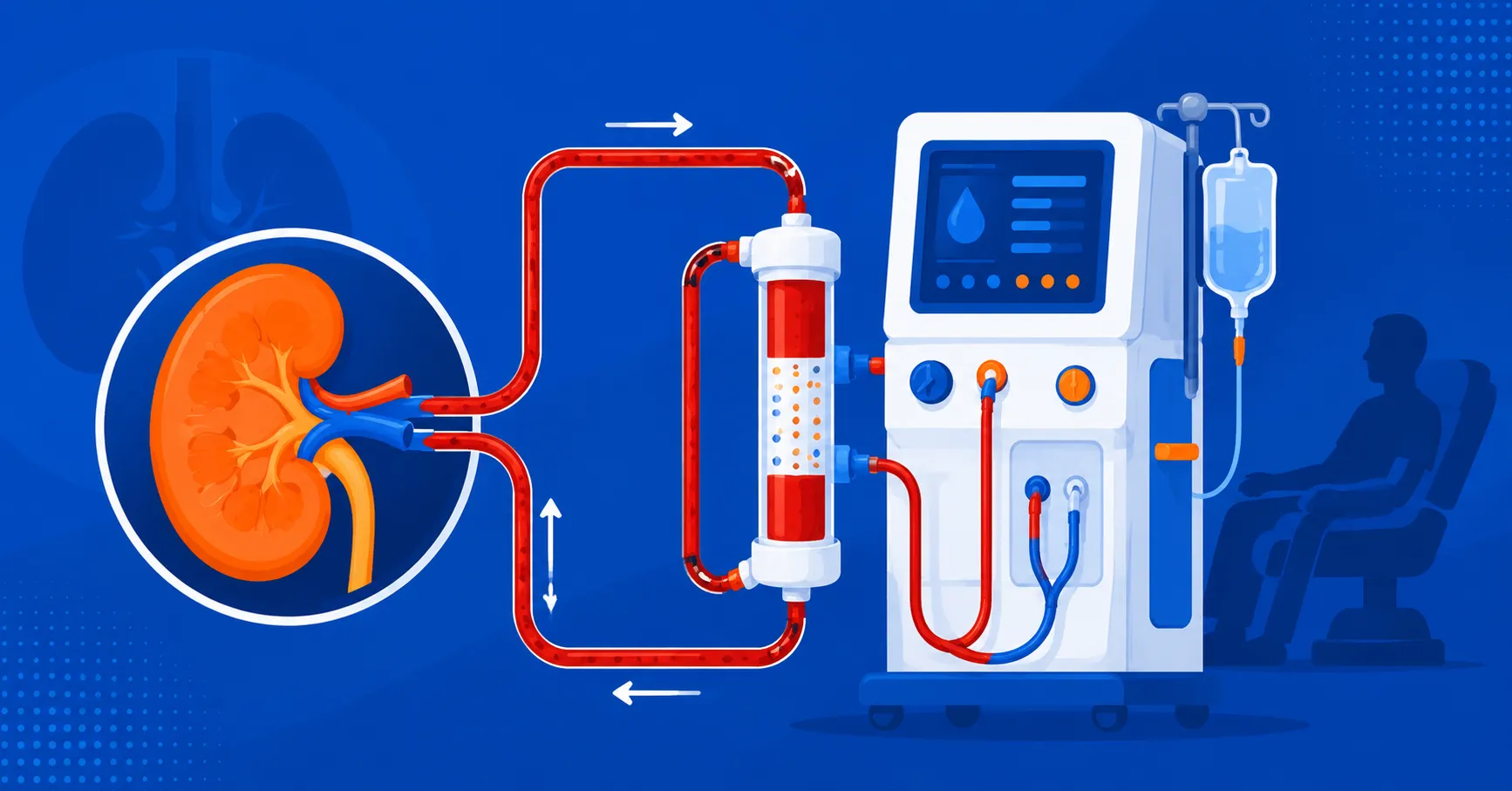
Healthy kidneys perform several critical functions every minute: they filter roughly 200 litres of blood per day, remove waste products like urea and creatinine, regulate fluid balance, maintain electrolyte levels, and produce hormones that control blood pressure and red blood cell production. When kidney function falls below approximately 10–15% of normal — a point nephrologists call end-stage renal disease — these functions must be replaced artificially.
Dialysis is the medical process that takes over these filtration and balancing tasks. It does not cure kidney disease, but it keeps the body's internal environment stable enough to sustain life. Your nephrologist will typically recommend starting dialysis when you experience symptoms such as:
Persistent fatigue and breathlessness not explained by other causes
Severe fluid retention (swelling in legs, face, or lungs)
Dangerous rises in potassium or acid levels in the blood
Uremic symptoms — nausea, confusion, or a metallic taste in the mouth
eGFR (estimated glomerular filtration rate) consistently below 10–15 mL/min/1.73m²
In acute settings — such as acute kidney injury following surgery, sepsis, or drug toxicity — dialysis may be needed urgently and temporarily, with the expectation that kidney function may partially recover.
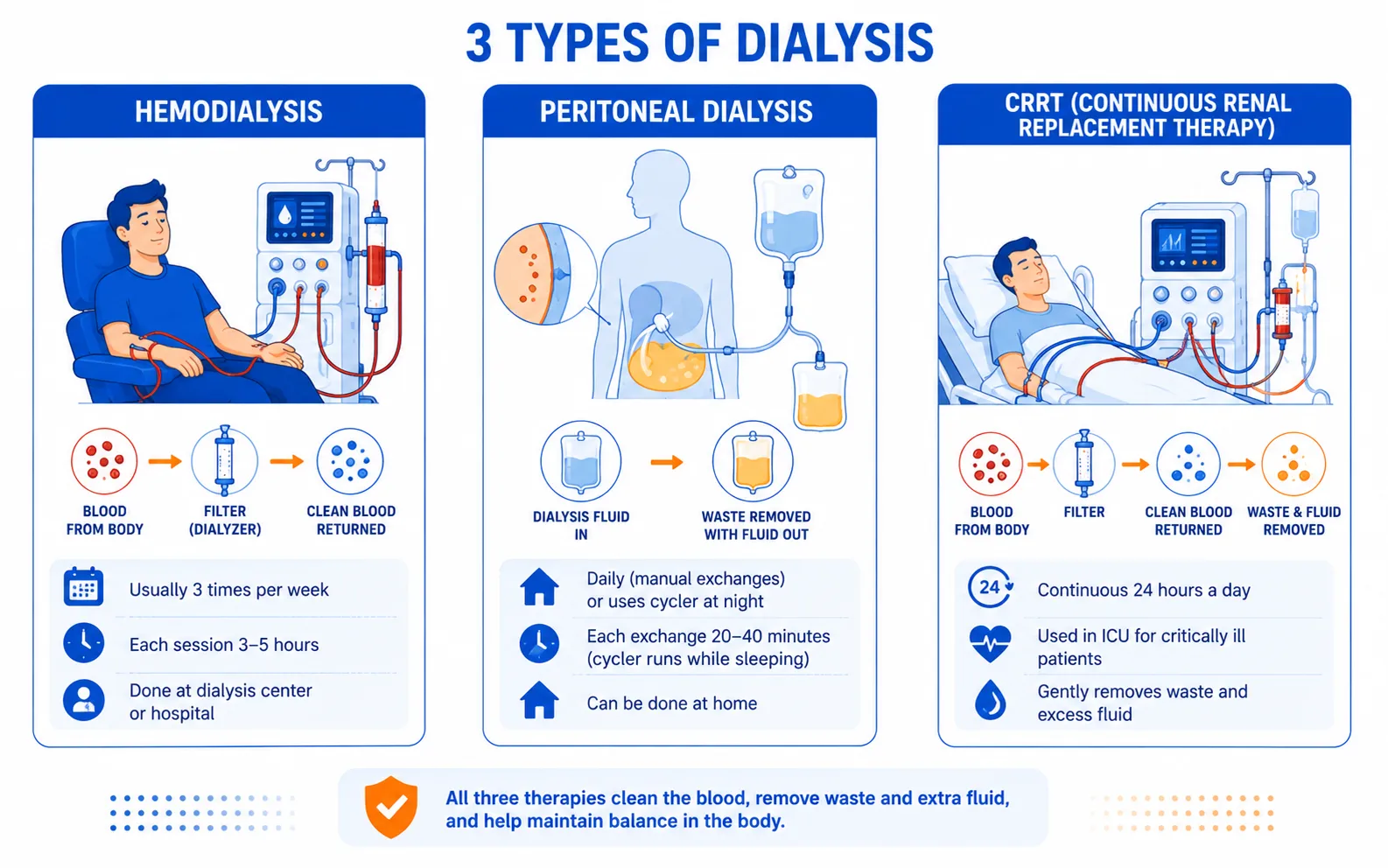
There are three main modalities of dialysis used in Indian hospitals today. Each has specific indications, advantages, and practical considerations for patients in Jaipur and across Rajasthan.
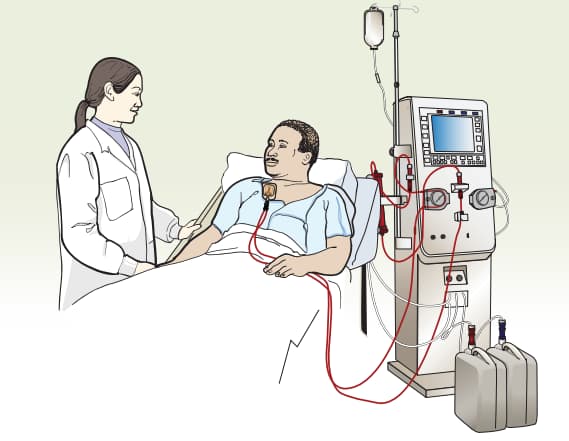
Hemodialysis is the most widely used form of dialysis in India. During a session, blood is drawn from the patient's body through a vascular access point (usually an arteriovenous fistula in the arm), passed through an external dialysis machine that filters it across a semi-permeable membrane, and returned to the body clean. A standard session lasts 3–4 hours and is typically performed three times per week.
Modern hemodialysis machines — including the advanced systems used at Apex Hospitals' nephrology unit — incorporate real-time monitoring of blood pressure, flow rates, and conductivity to ensure patient safety throughout every session. Integrated dialysis monitoring and safety systems allow clinical staff to respond immediately to any parameter change.
Peritoneal dialysis uses the patient's own peritoneal membrane — the lining of the abdominal cavity — as the filtration surface. A sterile dialysis fluid (dialysate) is introduced into the abdomen through a surgically placed catheter, left to dwell for several hours while it absorbs waste and excess fluid, and then drained. This cycle is repeated multiple times daily.
PD can often be performed at home, which makes it particularly valuable for patients in Rajasthan who live far from a dialysis centre, for working adults who cannot commit to three in-centre sessions per week, and for children with kidney failure. It requires careful training and strict hygiene to prevent peritonitis (infection of the peritoneal membrane), but for the right patient it offers significant lifestyle flexibility.
CRRT is a specialised form of dialysis designed exclusively for critically ill patients in the ICU who are haemodynamically unstable — meaning their blood pressure is too fragile to tolerate the rapid fluid shifts of conventional hemodialysis. Rather than filtering blood in concentrated bursts over a few hours, CRRT works slowly and continuously over 24 hours, mimicking the kidney's natural gradual filtration process.
CRRT machines are available in the ICU at Apex Hospitals Malviya Nagar, Jaipur, providing ICU-level renal replacement therapy for patients with acute kidney injury secondary to sepsis, multi-organ failure, or post-cardiac surgery complications. This capability is an important differentiator for a hospital managing complex, high-acuity cases.
For patients newly referred for dialysis, the process can feel overwhelming. Here is a realistic, step-by-step overview of what the care pathway typically looks like in an Indian hospital setting:
A nephrologist reviews your blood tests (serum creatinine, urea, eGFR, electrolytes), urine analysis, and imaging findings to confirm CKD stage and determine the urgency of dialysis initiation. Laboratory support for renal biomarkers — including cystatin C, urine albumin-to-creatinine ratio, and parathyroid hormone — helps the team accurately stage disease and plan treatment.
For hemodialysis, a vascular surgeon creates an arteriovenous (AV) fistula — ideally 6–8 weeks before dialysis is expected to begin, to allow the fistula to mature. In urgent situations, a temporary central venous catheter may be placed. For peritoneal dialysis, a Tenckhoff catheter is inserted into the abdomen under local anaesthesia.
First sessions are carefully supervised. Nursing staff and nephrologists monitor blood pressure, heart rate, and fluid removal rates closely. Dialysis adequacy is assessed periodically using a measure called Kt/V (a calculation of how effectively urea is being cleared), and session parameters are adjusted accordingly.
Dialysis patients require ongoing management of anaemia (with erythropoiesis-stimulating agents and iron), bone mineral disease (with phosphate binders and vitamin D), blood pressure, and nutrition. Regular follow-up with the nephrology team — supported by integrated care with cardiology and diabetology at a multi-specialty hospital — is essential to prevent complications and hospitalisations.
Dialysis replaces kidney function artificially; a kidney transplant restores it. For eligible patients, a successful kidney transplant generally offers better long-term survival, improved quality of life, and freedom from the time burden of regular dialysis sessions. However, transplantation requires a suitable donor (living or deceased), a thorough pre-transplant evaluation, major surgery, and lifelong immunosuppressive medication to prevent rejection.
Not every dialysis patient is a transplant candidate. Age, cardiovascular health, the presence of active infection, malignancy, or other systemic conditions may preclude surgery. For those who are candidates, dialysis serves as a bridge — maintaining health while awaiting a donor organ. Apex Hospitals provides pre- and post-kidney transplant management as part of its end-to-end nephrology and kidney care services.
If you or a family member is on dialysis and wondering about transplant eligibility, a formal kidney transplant evaluation — including cardiac workup, immunological matching, and surgical assessment — is the right next step. Speak with a nephrologist to understand whether you qualify and what the waiting period might look like in Rajasthan.
Dialysis removes waste, but it cannot replicate every function of a healthy kidney. Dietary discipline is therefore a non-negotiable part of dialysis management. Key principles include:
Most hemodialysis patients are advised to limit fluid intake to 500–700 mL above their daily urine output (if any). Excess fluid accumulates between sessions and strains the heart. Patients should weigh themselves daily and aim to gain no more than 1–1.5 kg between dialysis sessions.
High-potassium foods (bananas, oranges, potatoes, tomatoes) and high-phosphorus foods (dairy, nuts, cola drinks, processed foods) must be limited. Elevated potassium can cause life-threatening cardiac arrhythmias; elevated phosphorus damages blood vessels and bones over time. A renal dietitian can create an individualised meal plan suited to Indian dietary habits — including guidance on dal, rice, roti, and common vegetables.
Unlike pre-dialysis CKD patients who are often advised to restrict protein, dialysis patients actually lose protein during sessions and typically need a higher protein intake (1.0–1.2 g/kg body weight per day) to prevent malnutrition. This is a common point of confusion — always follow your nephrologist's and dietitian's specific advice rather than generic kidney diet information.
Gentle, regular physical activity — walking, light yoga, stretching — improves cardiovascular health, reduces fatigue, and supports mental wellbeing in dialysis patients. Patients should avoid strenuous activity on dialysis days but are encouraged to stay as active as their condition allows on non-dialysis days.
While dialysis is generally safe, patients and caregivers should be aware of warning signs that require prompt medical attention:
During or after a session: Sudden drop in blood pressure, severe muscle cramps, chest pain, difficulty breathing, or loss of consciousness.
Access site problems: Redness, swelling, warmth, or discharge around the AV fistula or catheter site may indicate infection. Loss of the characteristic "thrill" (vibration) in an AV fistula suggests clotting.
Between sessions: Rapid weight gain (more than 2 kg), severe breathlessness, irregular heartbeat, or confusion. These may indicate dangerous fluid overload or electrolyte imbalance.
Peritoneal dialysis patients: Cloudy dialysate drainage, abdominal pain, or fever are signs of peritonitis — a medical emergency requiring immediate hospital assessment.
If you experience any of these symptoms, contact your dialysis centre or proceed to the nearest emergency department immediately. Apex Hospitals Malviya Nagar can be reached at 098290 30011. You can also read about related conditions such as hypertension-related kidney disease and urinary tract infections that can worsen kidney function.
Dialysis technology and care protocols have advanced considerably over the past decade, and these improvements are increasingly accessible in cities like Jaipur:
High-flux dialysers: These membranes remove larger middle molecules (such as beta-2 microglobulin) more effectively than conventional low-flux membranes, potentially reducing long-term cardiovascular and bone complications.
Online haemodiafiltration (HDF): A technique that combines diffusion and convection to achieve superior clearance of uraemic toxins. Evidence suggests HDF may improve survival compared to standard hemodialysis in certain patient groups.
Remote monitoring and telenephrology: Digital platforms now allow nephrologists to review dialysis session data remotely, enabling faster adjustments to prescriptions without requiring patients to travel for every follow-up.
Wearable and portable dialysis devices: Still largely in clinical trial phases globally, but wearable kidney devices represent the next frontier — potentially allowing patients to receive gentle, continuous dialysis while going about their daily lives.
Staying informed about these advances — and asking your nephrologist whether newer modalities are appropriate for your situation — is an important part of being an active participant in your own care. Our health tips section and nephrology blog are regularly updated with evidence-based guidance for kidney patients.
Life expectancy on dialysis depends heavily on age, the underlying cause of kidney failure, and the presence of other conditions like diabetes or heart disease. Many patients live 10–20 years or more on dialysis, particularly those who start treatment early, adhere to dietary guidelines, and receive consistent medical follow-up. Younger patients with no other major health problems generally have better outcomes.
The dialysis procedure itself is generally not painful. Needle insertion into the AV fistula at the start of each session may cause brief discomfort. Some patients experience muscle cramps or low blood pressure during sessions, which can be uncomfortable. Most patients read, watch television, or sleep during their sessions. Discomfort typically decreases as patients become accustomed to the process.
Yes, with planning. Many dialysis centres in India and internationally accept visiting patients (called "holiday dialysis"). You will need to arrange sessions at your destination in advance, carry your medical records and dialysis prescription, and ensure your travel insurance covers dialysis. Peritoneal dialysis patients have more flexibility, as they can often continue their home regimen while travelling.
Acute dialysis is initiated urgently for patients with sudden kidney failure (acute kidney injury) and is often temporary — the goal is to support the patient while the kidneys recover. Chronic dialysis is long-term treatment for patients with end-stage renal disease whose kidneys will not recover. The modality (hemodialysis, PD, or CRRT) chosen depends on the clinical situation, patient stability, and available infrastructure.
Yes. The National Dialysis Programme (NDP), implemented through the National Health Mission, provides free hemodialysis at government district hospitals across Rajasthan for eligible patients. The Mukhyamantri Chiranjeevi Swasthya Bima Yojana also covers dialysis for enrolled beneficiaries. Eligibility criteria and empanelled centres vary — contact your district health office or a social worker at your hospital for guidance specific to your situation.
Ideally, transplant evaluation should begin before dialysis starts — a "pre-emptive transplant" avoids dialysis altogether and is associated with the best outcomes. For patients already on dialysis, evaluation should be initiated as soon as the patient is medically stable and a potential living donor is identified, or the patient is registered on the deceased donor waiting list. Speak with your nephrologist about the transplant evaluation process at Apex Hospitals.
Apex Hospitals' nephrology unit at SP-4 & 6, Central Marg, Malviya Nagar, Jaipur offers end-to-end kidney care under one roof — from early CKD diagnosis and management through to dialysis and kidney transplant evaluation. Key capabilities include:
Advanced hemodialysis machines with integrated monitoring and safety systems
CRRT machines for ICU patients with acute kidney injury
Dedicated laboratory infrastructure for renal biomarker testing
Integrated care with cardiology, diabetology, urology, and transplant teams
To speak with a nephrologist or schedule a kidney function assessment, call 098290 30011 or visit our specialist doctors page to learn more about our team.
Our nephrology team at Apex Hospitals Malviya Nagar, Jaipur is here to guide you — from your first consultation to long-term kidney health management.