
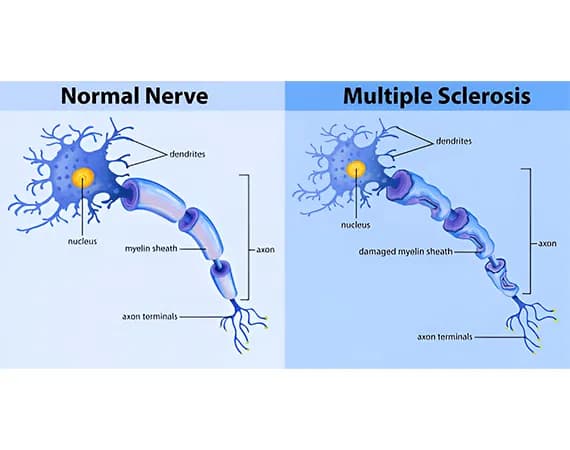
Multiple sclerosis (MS) is a long-term condition that affects the central nervous system, including the brain, spinal cord, and optic nerves. In MS, the immune system mistakenly attacks myelin, the protective sheath that covers and insulates nerve fibres. This damage disrupts the flow of signals between the brain and the rest of the body, leading to problems such as muscle weakness, numbness, visual disturbances, and issues with memory or concentration.
Although there is currently no cure for MS, modern treatments can reduce flare-ups, slow disease progression, and help people manage daily symptoms more effectively. Early diagnosis and timely treatment are crucial in preventing long-term complications and maintaining quality of life.
In this article, we’ll take a closer look at multiple sclerosis, its possible causes and risk factors, common symptoms, diagnostic methods, treatment approaches, preventive strategies, and expert recommendations.
Multiple sclerosis (MS) is a chronic autoimmune condition that affects the central nervous system (the brain, spinal cord, and optic nerves). In MS, the immune system mistakenly attacks myelin, the protective covering that surrounds nerve fibres. This damage disrupts communication between the brain and the rest of the body, leading to a wide range of symptoms, including numbness, muscle weakness, vision problems, fatigue, and difficulty walking.
Over time, the disease can also harm the underlying nerve fibres (axons) and even affect nerve cell bodies, causing long-term disability. In some individuals, the outer layer of the brain, known as the cerebral cortex, shrinks, a condition referred to as cortical atrophy. This type of damage is linked to disease progression and may overlap with other neurodegenerative disorders.
The symptoms and course of MS vary greatly from person to person. Some may experience only mild symptoms with long periods of remission (no new symptoms), while others may develop severe disability over time. Most people with MS have relapsing episodes, where symptoms flare up and then improve partially or entirely.
The term sclerosis refers to the scar-like patches (plaques or lesions) that form in the central nervous system after an immune attack on myelin. These lesions are visible on MRI scans and may range in size from tiny spots to larger areas.
Although MS has no cure, effective treatments are available to reduce relapses, slow disease progression, and manage symptoms. With proper care, most people with MS can maintain a good quality of life and have a normal life expectancy.
Multiple sclerosis (MS) does not follow the same pattern in every person. Doctors classify MS into different types based on the appearance of symptoms, the frequency of flare-ups, and the progression of the disease over time. Understanding the kind of MS helps guide treatment and long-term management.
Most common type (affects about 85% of patients at diagnosis). Characterized by relapses (flare-ups of new or worsening symptoms) followed by periods of remission, where symptoms partially or completely improve. Damage to the nervous system occurs during relapses, but remission periods may vary in length.
Many people with RRMS eventually transition to SPMS. In this type, symptoms gradually worsen over time, with or without relapses. Disability tends to increase steadily, although some patients may still experience occasional relapses.
Affects about 10–15% of people with MS. In PPMS, symptoms steadily worsen from the beginning, without distinct relapses or remissions. Progression may be slow or fast, and treatment often focuses on slowing disability progression.
This is the least common form of MS. Characterized by a steady worsening of symptoms from the start, with occasional relapses. Unlike RRMS, there are no true remissions, though temporary recovery from flare-ups may occur.
Key takeaway: Relapsing-remitting MS is the most common starting point, but the disease can shift into a progressive form over time. Identifying the type helps doctors choose the right treatment approach and monitor long-term outcomes.
The exact cause of multiple sclerosis (MS) is still unknown, but it is widely recognized as an immune-mediated disorder. Why MS develops in some individuals and not in others remains unclear. Experts believe it likely results from a combination of genetic susceptibility and environmental triggers.
Risk Factors for Multiple Sclerosis
Several factors may increase the likelihood of developing MS:
In MS, the ongoing immune attack leads to inflammation, myelin destruction, and scar formation (plaques or lesions), disrupting normal nerve signalling. Over time, this can cause both physical and cognitive disability. The interplay of genetics, environment, lifestyle, and immune dysfunction makes MS a complex condition with no single identifiable cause.
The symptoms of multiple sclerosis (MS) can vary widely from person to person, depending on which part of the central nervous system is affected and the extent of nerve damage. Symptoms may come and go, remain mild for years, or progressively worsen over time.
Common Symptoms of MS
Symptom Progression
Symptoms of MS can appear suddenly, last for days to weeks, and then improve (relapse-remitting pattern). In some cases, symptoms gradually worsen without distinct relapses (progressive forms of MS).
When to Seek Immediate Medical Help
- Seek urgent care if you notice:
Early recognition and medical attention can help slow disease progression and improve quality of life.
There is no single test that can confirm multiple sclerosis (MS). Instead, doctors use a combination of medical history, neurological examinations, and specialized tests to confirm the diagnosis while ruling out other conditions with similar symptoms. This process is known as a differential diagnosis.
Common Tests Used to Diagnose MS
The Role of the Neurologist
If MS is suspected, your primary care doctor will usually refer you to a neurologist, a specialist in conditions affecting the brain and spinal cord. The neurologist will piece together your symptoms, exam findings, and test results to make the diagnosis.
Why Diagnosis Takes Time
MS can be challenging to confirm because its symptoms overlap with many other disorders. In relapsing-remitting MS, diagnosis may be more straightforward due to a clear pattern of flare-ups and recoveries. However, in progressive forms or atypical cases, more testing and follow-up appointments are often required.
While MS has no cure, several treatments can help manage symptoms and slow disease progression.
Disease-modifying therapies (DMTs) reduce relapses and delay disability.
- Living with MS requires ongoing care and healthy habits.
- Self-care strategies:
- While MS cannot be completely prevented, certain steps may lower risk or slow progression:
- Without timely treatment, MS can lead to:
At Apex Hospitals, our neurology team specializes in diagnosing and managing multiple sclerosis with advanced imaging, personalized treatment plans, and multidisciplinary rehabilitation support. Our NABH-accredited facilities ensure evidence-based care with modern technologies like MRI, evoked potential testing, and physiotherapy units. We aim to improve patient outcomes by combining medical expertise with compassionate care.
Multiple sclerosis is a lifelong condition, but with early diagnosis, advanced therapies, and lifestyle management, patients can lead fulfilling lives. At Apex Hospitals, our experts provide comprehensive MS care, from accurate diagnosis to long-term rehabilitation. If you or a loved one shows symptoms of MS, consult our neurologists today for timely care and better outcomes.

Download Our App


Powered By Docfyn