
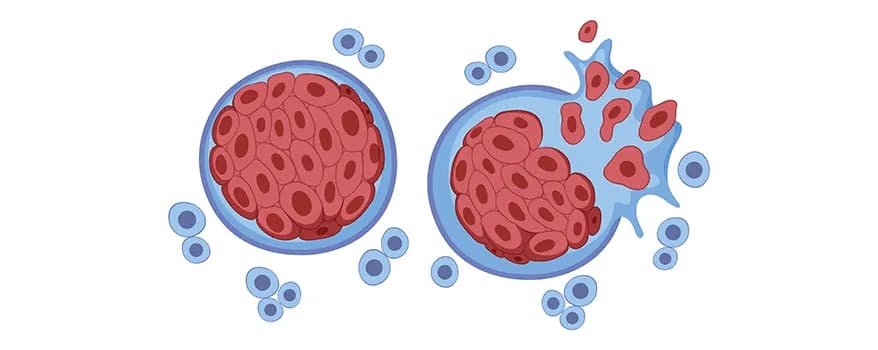
Multiple myeloma, also referred to as Kahler's disease, represents a form of blood cancer. While currently lacking a cure, various treatments exist to slow its progression and alleviate symptoms.
In multiple myeloma, a type of white blood cell known as plasma cells undergoes abnormal multiplication. These cells produce excessive amounts of protein, specifically immunoglobulin, accumulating in the bones and bloodstream, leading to organ damage.
The proliferation of plasma cells disrupts the production of normal blood cells in the bone marrow and prompts the release of chemicals that stimulate bone-degrading cells. Consequently, weakened areas known as lytic lesions form in the bones.
As the disease advances, plasma cells escape from the bone marrow and disseminate, causing further harm to organs and exacerbating the condition.
The precise cause of multiple myeloma remains uncertain. Still, several factors may increase the likelihood of developing the condition, including:
In the early stages of multiple myeloma, individuals may not experience any symptoms. However, when signs and symptoms manifest, they can encompass:
Complications associated with multiple myeloma comprise:
Your healthcare provider may suspect multiple myeloma if incidental findings from blood tests reveal:
To confirm the diagnosis, additional blood tests may be conducted, including:
Further blood and urine analyses assess if your body produces abnormal proteins, their types, and their quantities.
Your healthcare provider may recommend a bone marrow biopsy following the blood and urine test results. During this procedure, a needle is inserted into a bone, typically the hip, to obtain a sample of bone marrow. This sample is examined to determine the presence and quantity of plasma cells.
Imaging studies may also be ordered. X-rays can reveal areas of bone affected by multiple myeloma. Additionally, your doctor may recommend a CT scan, MRI, or PET scan for further evaluation.
Treatment for multiple myeloma may not be immediately necessary, especially if no symptoms are present. In such cases, a watch-and-wait approach may be adopted to monitor the progression of the disease. However, when symptoms arise, treatment typically begins with medication aimed at relieving pain, managing complications, and slowing the growth of myeloma cells.
Sometimes, multiple myeloma is asymptomatic, referred to as smouldering multiple myeloma. In such instances, immediate treatment may not be required. Instead, regular checkups are conducted to monitor the cancer's progression. Blood and urine tests are performed periodically to detect signs of worsening myeloma.
Treatment options for multiple myeloma may include:

Download Our App


Powered By Docfyn



