
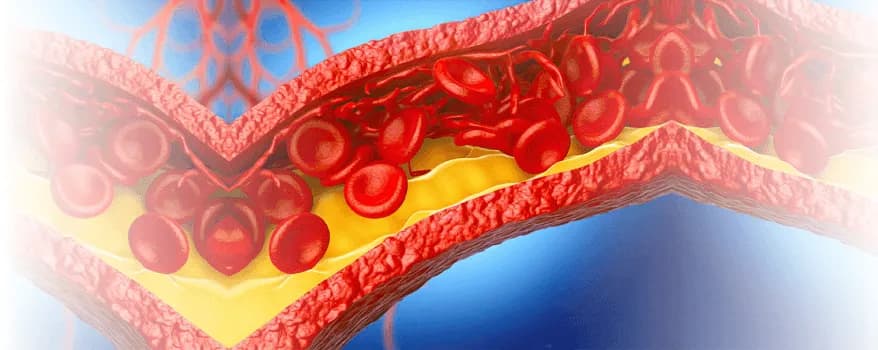
Carotid artery disease, also known as carotid artery stenosis, involves the narrowing of the carotid arteries, often due to plaque accumulation of fatty substances and cholesterol. Complete blockage of the artery, termed carotid artery occlusion, poses a significant risk for stroke.
The carotid arteries are pivotal blood vessels responsible for delivering oxygenated blood to the brain's frontal portion, which encompasses crucial functions such as cognition, speech, personality, and sensory and motor abilities. Located on either side of the neck, just below the jawline, you can detect your pulse in the carotid arteries.
Carotid artery disease is instigated by the accumulation of fatty deposits, termed plaques, within the arteries responsible for supplying blood to the brain. These plaques, comprised of cholesterol, fat, and blood cells, gradually form within the artery in a process known as atherosclerosis.
As these plaques accumulate, the carotid arteries narrow, hindering the smooth flow of oxygen and essential nutrients to the brain. This constriction in the carotid arteries poses challenges in adequately nourishing the brain.
Carotid artery stenosis can often be asymptomatic, with symptoms manifesting only when a transient ischemic attack (TIA) or stroke occurs.
A transient ischemic attack (TIA) involves a sudden, brief interruption of blood flow to a part of the brain, typically lasting a few minutes to an hour. While symptoms fully resolve within 24 hours, persistent symptoms indicate a stroke. Signs of a TIA or stroke may encompass:
Immediate medical attention is crucial if any of these symptoms occur, as a TIA may serve as a warning sign of an impending stroke. It's important to note that while TIAs precede some strokes, they don't precede all.
TIAs and strokes share identical symptoms, with the latter involving sustained blood flow deprivation leading to permanent brain damage. The extent of disability resulting from a stroke depends on the affected brain region's size and location, potentially affecting motor functions, speech, cognition, memory, and other vital bodily functions.
The recovery process is influenced by the stroke's size and location, with possible long-term consequences such as limb weakness, paralysis, speech impairment, or even fatality.
Given that symptoms of carotid artery stenosis may resemble other medical conditions, a medical evaluation is essential for an accurate diagnosis. Always consult a doctor if you experience any concerning symptoms.
If you experience any symptoms indicative of a stroke, it's imperative to seek immediate medical attention. Even if the symptoms resolve quickly and you feel normal afterwards, it's crucial to consult a healthcare provider promptly, as it could indicate a transient ischemic attack (TIA). A TIA increases the risk of a subsequent stroke.
Furthermore, discuss with your healthcare provider if you possess risk factors for carotid artery disease, regardless of whether you exhibit symptoms. Effective management of these risk factors can help mitigate the likelihood of a stroke. Seeking early medical intervention enhances the possibility of detecting carotid artery disease and initiating treatment before a stroke.

Download Our App


Powered By Docfyn