
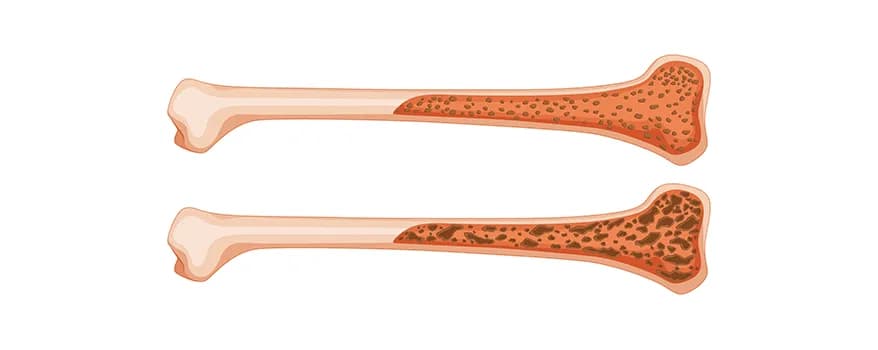
Bone marrow failure (BMF) occurs when the bone marrow, the soft centre of bones responsible for producing blood cells, malfunctions. There are three main types of blood cells produced by the bone marrow:
BMF can manifest in individuals of any age, posing severe health risks and sometimes being linked to other medical conditions, such as cancer.
Bone marrow failure (BMF) occurs when the bone marrow, the soft centre of bones responsible for producing blood cells, malfunctions. There are three main types of blood cells produced by the bone marrow:
BMF can manifest in individuals of any age, posing severe health risks and sometimes being linked to other medical conditions, such as cancer.
There are two primary categories of bone marrow failure:
Genetic mutations primarily cause inherited bone marrow failure. These mutations may be inherited from one or both biological parents or arise spontaneously.
Acquired bone marrow failure can be attributed to various factors, including:
In some cases, the cause of acquired bone marrow failure remains unknown (idiopathic).
Factors that may increase the risk of bone marrow failure include:
Symptoms associated with bone marrow failure syndromes may vary, but common manifestations include:
Initially, your healthcare provider will conduct a thorough assessment by inquiring about your symptoms, medical history, and family medical background. A physical examination will also be performed.
Subsequently, a comprehensive blood test known as a complete blood count (CBC) will be conducted to assess the levels of red blood cells, white blood cells, and platelets. In bone marrow failure (BMF) cases, these levels typically register as low.
Depending on the suspected condition, additional tests may include:
To rule out acquired bone marrow failure, your provider may:
Furthermore, genetic testing may be recommended to identify any genetic mutations contributing to the bone marrow failure syndrome.
Your treatment plan will be tailored based on various factors, including:
- The severity of bone marrow failure.
- The specific type of bone marrow failure syndrome.
- Your age.
- Any additional symptoms you may be experiencing.
It is considered a medical emergency in cases with a significantly low white blood cell count in the bone marrow (neutropenia). In such instances, your healthcare provider may recommend hospitalisation or antibiotic therapy. Antiviral or antifungal medications may also be prescribed to address potential infections if accompanied by fever.
Treatment options for bone marrow failure may involve:
However, these treatments often provide temporary relief. A bone marrow transplant, or a stem cell transplant, is the only intervention that offers long-term benefits. During this procedure, damaged cells are replaced with healthy ones obtained from a compatible donor.
You may be considered a suitable candidate for a stem cell transplant if you:
If you have any concerning symptoms, please visit our haemato-oncologist at Apex Hospitals.

Download Our App


Powered By Docfyn