
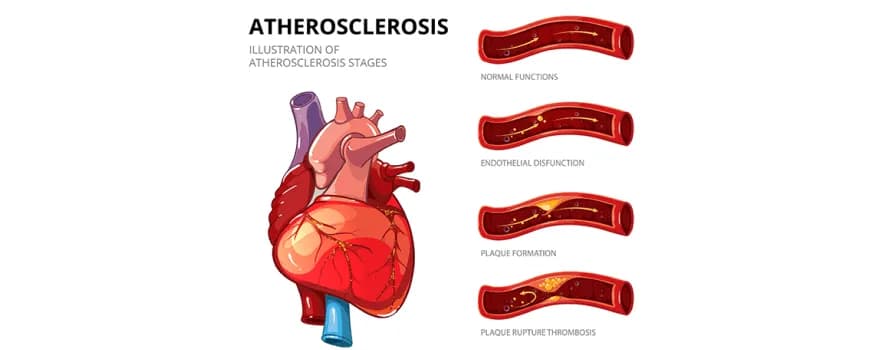
Atherosclerosis is the gradual thickening or hardening of arteries initiated by plaque accumulation along the artery walls. This plaque comprises fatty substances, cholesterol, cellular waste products, calcium, and fibrin. Over time, this buildup leads to arterial walls becoming thickened and inflexible.
Initiating possibly as early as childhood, atherosclerosis is a slow, progressive condition. However, its advancement can accelerate rapidly over time.
Physicians have yet to pinpoint the exact initiation of atherosclerosis. However, it's theorized to commence with damage to the endothelium, the delicate layer of cells lining arteries. This progressive condition may even begin during childhood.
Typical contributors to endothelium damage include:
Elevated cholesterol levels
High blood pressure
Inflammation, such as that seen in arthritis or lupus
Obesity or diabetes
Smoking
Symptoms of atherosclerosis may not manifest until an artery is significantly narrowed or until a heart attack or stroke occurs. These symptoms can vary depending on the artery affected.
Irregular heartbeat (arrhythmia)
Pain or pressure in the upper body, including the chest, arms, neck, or jaw (angina)
Shortness of breath
Numbness or weakness in the arms or legs
Difficulty speaking or understanding speech
Drooping facial muscles
Paralysis
Severe headache
Vision impairment in one or both eyes
Leg pain during walking, known as intermittent claudication
Numbness
Cold feet
Aching or burning sensation in the toes and feet while at rest
Persistent foot sores or infections that do not heal
High blood pressure
Kidney failure
Atherosclerosis often begins in youth, with research indicating that even teenagers can exhibit early signs of the condition.
By age 40, if generally healthy, individuals face approximately a 50% likelihood of developing significant atherosclerosis during their lifetime. This risk escalates with age. While most adults over 60 have some degree of atherosclerosis, many do not manifest noticeable symptoms.
Numerous factors contribute to the increased risk of atherosclerosis, with more than 90% of all heart attacks attributed to the following risk factors:
Abdominal obesity
Diabetes and insulin resistance
Family history of heart disease
High alcohol consumption (exceeding one to two drinks per day, depending on body size)
Elevated blood pressure
Elevated LDL cholesterol levels
Elevated levels of C-reactive protein (CRP) in the blood, indicating inflammation
High triglyceride levels
Inadequate consumption of fruits and vegetables
Lack of regular physical exercise
Sleep apnoea
Smoking
Chronic stress

Download Our App


Powered By Docfyn