
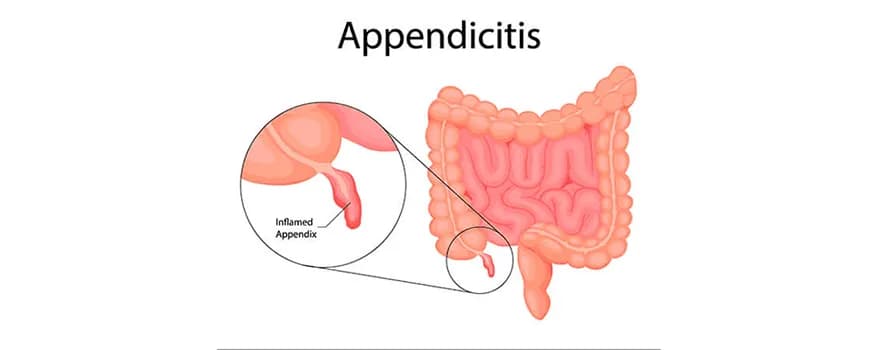
Appendicitis occurs when the appendix becomes inflamed, resulting in acute (sudden and intense) pain in the lower abdomen. The appendix, a small tubular pouch approximately the size of a finger, extends from the lower right end of the large intestine. Blockage or infection of the appendix can arise from faecal matter moving through the large intestine, leading to inflammation and subsequent swelling. If left untreated, a swollen appendix can rupture.
A ruptured appendix constitutes a medical emergency as it releases bacteria from the bowels into the abdominal cavity, causing infection (peritonitis). This infection can further spread to the bloodstream, resulting in life-threatening complications such as sepsis. Given the potential risks, the standard treatment for appendicitis involves surgical removal of the appendix (appendectomy). The appendix is considered non-essential, and its removal does not result in significant health consequences.
Acute appendicitis represents a sudden and severe form of the condition, most commonly observed in children and young adults aged 10 to 30 years, with a higher incidence among males. The onset of pain is rapid and tends to escalate within 24 hours.
Immediate medical intervention is imperative, as untreated acute appendicitis can lead to appendix rupture, a potentially life-threatening complication. Acute appendicitis is more prevalent than its chronic counterpart.
Chronic appendicitis, on the other hand, is less prevalent than acute appendicitis, occurring in only about 1.5 per cent of individuals who have previously experienced acute appendicitis.
In cases of chronic appendicitis, symptoms may be comparatively mild and often follow an episode of acute appendicitis. These symptoms may subside temporarily before recurring intermittently over weeks, months, or even years. Diagnosing chronic appendicitis can be challenging, with some cases remaining undetected until they progress to acute appendicitis. Despite its less frequent occurrence, chronic appendicitis poses inherent risks and necessitates prompt recognition and treatment.
The anatomy and position of the appendix predispose it to blockages and infections. Given its proximity to the large intestine, the appendix can quickly become obstructed and subsequently infected due to the abundance of bacteria in the colon. This infection can originate from an initial event or as a secondary consequence. Swelling within the appendix can exacerbate the situation by narrowing or closing its opening, leading to bacterial entrapment.
Common factors contributing to inflammation, obstruction, and infection in the appendix include:
Other factors that obstruct the appendix opening include tumours, parasites, and cystic fibrosis. These conditions further contribute to the susceptibility of the appendix to blockages and subsequent infections.
Symptoms associated with appendicitis can manifest as follows:
The localization of pain may vary based on factors such as age and the appendix's position. During pregnancy, the pain may be perceived in the upper abdomen due to the appendix's elevated position.
Appendicitis can lead to severe complications, including:
Appendix rupture, also known as a burst appendix, results in the spread of infection throughout the abdomen, a condition known as peritonitis. This can be life-threatening and necessitates immediate surgical intervention to remove the appendix and cleanse the abdominal cavity.
Formation of an abdominal abscess, a localized pocket of pus that develops in the abdomen following appendix rupture. In such cases, a surgeon typically drains the abscess by inserting a tube through the abdominal wall into the abscess. This tube remains in place for approximately two weeks when antibiotics are administered to eradicate the infection.
Upon clearance of the infection, surgical removal of the appendix is performed. In some instances, immediate removal of the appendix is carried out concurrently with drainage of the abscess.
Schedule an appointment with your healthcare provider promptly if you or your child experience symptoms. Severe abdominal pain warrants urgent medical attention.

Download Our App


Powered By Docfyn