
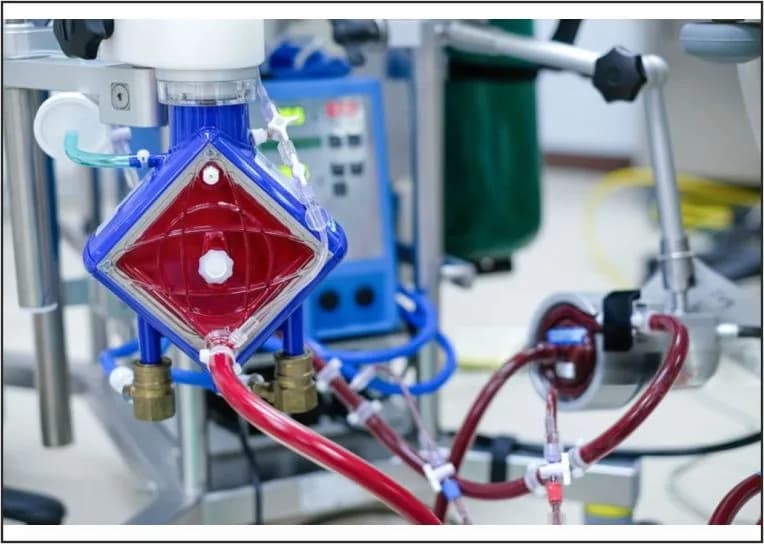
In the ever-evolving field of critical care medicine, advanced technologies are redefining what it means to save lives. One such breakthrough is Extracorporeal Membrane Oxygenation (ECMO). This sophisticated life-support system provides both cardiac and respiratory assistance when the heart or lungs are unable to function adequately.
First introduced in the 1970s, ECMO has progressed from an experimental therapy to a highly refined intervention now widely used in intensive care units across the world. Initially developed for treating severe acute respiratory distress syndrome (ARDS), cardiogenic shock, and complications following heart or lung transplantation, ECMO today plays an expanded role. It is often deployed as a backup during complex surgeries, high-risk cardiac procedures, and emergencies where traditional treatments fail.
Clinical studies show survival rates of over 60% in ECMO-assisted thoracic surgeries, highlighting its lifesaving potential. Recent innovations, such as portable ECMO systems and AI-powered monitoring tools, have further improved its safety and accessibility, even beyond traditional ICU setups. At Apex Hospitals, our critical care specialists view ECMO as a true “bridge of hope,” offering patients a second chance when other options seem limited.
Extracorporeal Membrane Oxygenation (ECMO) is an advanced life-support system used when the heart or lungs cannot function on their own. The term “extracorporeal” means “outside the body.” Essentially, ECMO temporarily takes over the job of the heart and lungs, allowing them time to rest and recover. During ECMO, blood is drawn from the body and passed through a special machine that removes carbon dioxide and adds oxygen, just like healthy lungs would. The oxygen-rich blood is then pumped back into the body, ensuring vital organs continue to receive the supply they need.
Unlike a ventilator, which only pushes air into the lungs, ECMO directly manages gas exchange in the blood, making it far more effective in critical cases. Doctors often use ECMO for patients with severe respiratory infections, cardiac arrest, shock, or trauma. While it does not cure heart or lung disease, ECMO supports the body long enough for these organs to heal or for doctors to treat the underlying condition. Think of ECMO as a “lifesaving bridge”, keeping patients alive and stable while doctors work on treating the root cause, such as severe pneumonia, COVID-19 complications, cardiac arrest, or post-surgical shock.
Doctors usually recommend ECMO when standard treatments such as ventilators or medications are no longer effective. Common indications include:
ECMO is typically performed in an ICU under expert supervision by specially trained healthcare professionals.
Throughout the treatment, critical care experts continuously monitor and adjust settings to ensure safe and effective support.
This ensures that ECMO is used only when necessary and when there is a strong chance of recovery.
At Apex Hospitals, our critical care team uses ECMO to stabilize blood circulation and oxygenation, often providing the crucial window that saves lives.
At Apex Hospitals, Jaipur, ECMO has become a symbol of hope, giving critically ill patients a second chance at life when it matters most.


Download Our App


Powered By Docfyn