
By Apex Hospitals, 22nd May, 2026
If you or a loved one is on dialysis, you already know how demanding it can be. Three sessions a week, each lasting several hours, planning your entire life around a machine, it is not a small thing. Dialysis keeps you alive, but for many patients, it is not a permanent solution. It is a bridge.
At some point, the question arises: is it time to consider a kidney transplant?
This blog is written to help you understand the difference between dialysis and kidney transplant, the signs that a transplant may be the right step, and what the process looks like, in simple, honest terms.
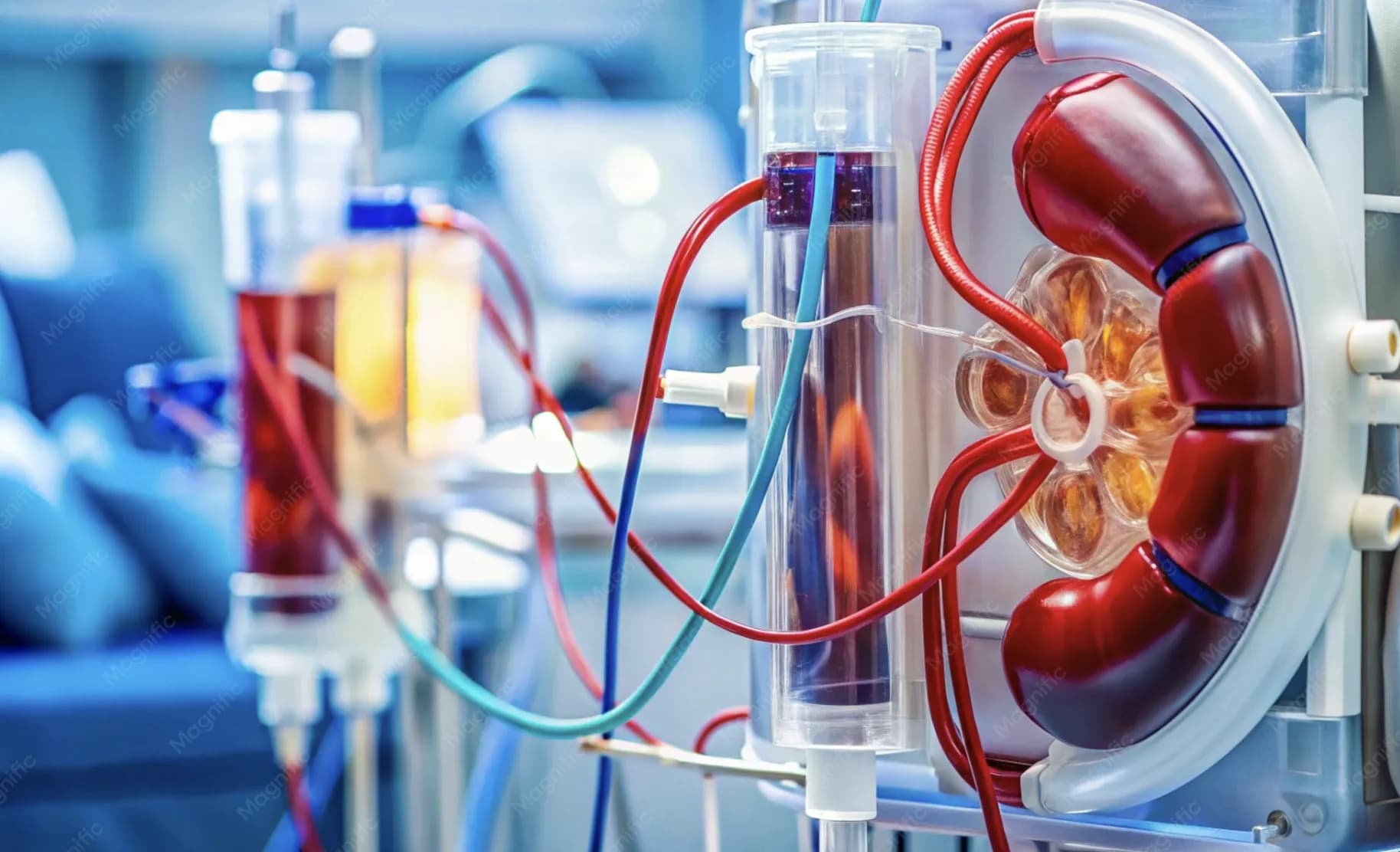
Dialysis is a life-saving treatment for kidney failure. It takes over the work that damaged kidneys can no longer do, filtering waste, balancing fluids, and managing blood pressure. There are two main types: haemodialysis (done at a centre or hospital) and peritoneal dialysis (done at home).
But dialysis has real limitations:
It performs only about 10 to 15% of normal kidney function
It does not slow or reverse kidney disease — it only manages it
Long-term dialysis can lead to complications including anaemia, bone disease, cardiovascular problems, and infections
Quality of life is significantly affected — fatigue, dietary restrictions, and the time burden of sessions
For patients with end-stage kidney disease (ESKD), dialysis is a necessary but often temporary measure.
A successful kidney transplant replaces a failed kidney with a functioning one from a donor, either a living donor (usually a family member) or a deceased donor. Once transplanted and functioning, the new kidney performs close to normal kidney function.
The benefits over dialysis are significant:
Better quality of life — more energy, fewer restrictions, no dialysis sessions
Longer survival — studies consistently show kidney transplant patients live longer than those who remain on dialysis
Fewer cardiovascular complications over time
Fewer dietary restrictions compared to dialysis
Freedom from the dialysis schedule — patients can return to work, travel, and normal daily life
Not every dialysis patient needs a transplant immediately, and not every patient is a candidate. But there are clear signs that it may be time to have a serious conversation with your nephrologist about transplantation:
You have been on dialysis for a year or more with no improvement in kidney function
Dialysis is no longer adequately controlling symptoms, persistent fatigue, fluid retention, or high blood pressure
You are experiencing increasing complications from long-term dialysis
Your quality of life has deteriorated significantly
A compatible living donor (family member) is available and willing
In some cases, doctors recommend pre-emptive transplantation, a kidney transplant before dialysis even begins, if a suitable donor is identified early enough. This is often the best outcome for the patient.
Most patients with end-stage kidney disease are potential candidates, but a thorough evaluation is done before proceeding. Your transplant team will assess:
Overall health and fitness for surgery
Absence of active infection or uncontrolled cancer
Heart and lung function
Blood group and tissue compatibility with the potential donor
Psychological readiness and post-transplant support system
Age alone is not a barrier. Many patients in their 60s and 70s have successfully undergone kidney transplants with good outcomes.
In India, the majority of kidney transplants are performed using a kidney from a living donor, typically a close family member such as a parent, sibling, or spouse. Living donor transplants have several advantages:
Surgery can be planned and scheduled rather than waiting for a deceased donor
The kidney is healthier and begins functioning more quickly
Better long-term outcomes compared to deceased donor kidneys
The donor undergoes a thorough health evaluation before being cleared. Donating one kidney does not significantly affect the donor's long-term health or life expectancy when they are in good health.
A detailed evaluation of both the recipient and donor is carried out. This includes blood tests, imaging, cardiac evaluation, and cross-matching to confirm compatibility. The process can take a few weeks.
The transplant surgery typically takes 3 to 4 hours. The new kidney is placed in the lower abdomen and connected to the blood vessels and bladder. The recipient's own kidneys are usually left in place unless they are causing specific problems.
Most patients stay in hospital for 7 to 10 days. The new kidney often begins working within hours to days. Immunosuppressant medications are started immediately and continued lifelong to prevent rejection. Regular follow-up is critical in the first year and beyond.
Apex Hospitals offers a comprehensive kidney transplant programme for patients across Rajasthan and beyond. Our nephrology and urology team works together through every stage, evaluation, surgery, and long-term follow-up.
NABH and NABL accredited facility
Dedicated transplant team with experienced nephrologists, urologists, and transplant surgeons
160+ ICU beds and advanced post-operative care
Full pre-transplant evaluation and post-transplant support programme
Dialysis is a vital treatment, but for many patients with end-stage kidney disease, a kidney transplant offers a better, longer, and fuller life. If you or someone in your family has been on dialysis for a year or more, or if a compatible donor is available, it is worth having an honest conversation with your doctor about whether transplantation is the right path.
Do not wait until a crisis. The earlier the conversation happens, the better the options.


Download Our App


Powered By Docfyn