
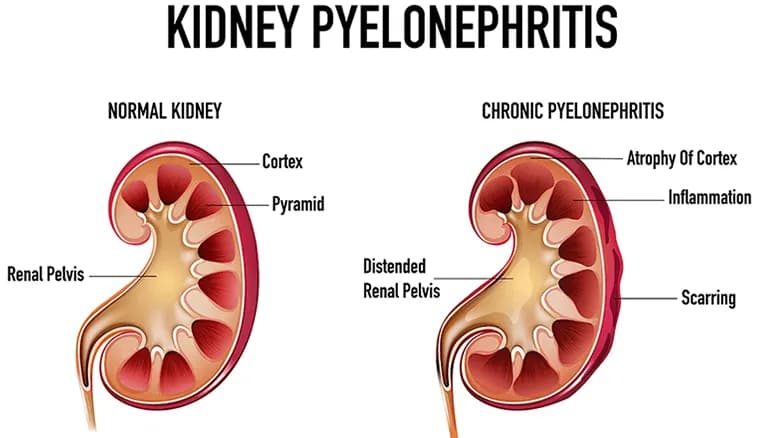
Pyelonephritis is a severe infection that affects the kidneys. It is a type of urinary tract infection (UTI) explicitly targeting the kidneys. Unlike a regular UTI, which affects the bladder or urethra, pyelonephritis can cause severe complications if left untreated. It occurs when bacteria enter the kidneys through the bloodstream or ascend from the bladder through the ureters.
A kidney infection is a type of urinary tract infection (UTI). While bacteria cause both kidney infections and UTIs, they affect different parts of the urinary system. A UTI usually starts in the lower urinary tract, which includes the bladder and urethra. If left untreated, the infection can travel to the kidneys and develop into pyelonephritis. The main difference between a kidney infection and a UTI is the severity and location of the infection. Pyelonephritis specifically targets the kidneys and requires immediate medical attention. While the symptoms of a kidney infection and a lower UTI can be similar, the kidney infection is more likely to abruptly make you feel sick, give you a fever, or cause pain in your side or lower back.
Pyelonephritis is primarily caused by bacteria, most commonly Escherichia coli (E. coli). This bacterium enters the urinary tract and reaches the kidneys, leading to infection. Other bacteria, such as Klebsiella, Proteus, and Pseudomonas, can also cause pyelonephritis, although less frequently. In some cases, the condition may be due to a structural abnormality in the urinary tract, such as a kidney stone or an obstruction, which creates an environment for bacteria to thrive.
Certain factors increase the risk of developing pyelonephritis:
Pyelonephritis symptoms including:
It is important to note that the symptoms may vary from person to person, and some individuals may have mild symptoms or be asymptomatic.
If left untreated, pyelonephritis can lead to severe complications. The infection can spread to the bloodstream, causing a condition known as sepsis, which can be life-threatening. Additionally, untreated pyelonephritis can cause kidney damage, leading to chronic pyelonephritis. Chronic pyelonephritis can result in kidney scarring, reduced kidney function, and kidney failure. Prompt diagnosis and treatment are crucial to prevent these complications.
To diagnose pyelonephritis, healthcare professionals may perform various pyelonephritis treatment and related tests.
These include:
The treatment of pyelonephritis typically involves antibiotics to eliminate the bacterial infection. The choice of antibiotics is based on the severity of the infection and the susceptibility of the bacteria. In severe cases, hospitalization may be required to administer intravenous antibiotics. Antibiotics, pain medications, and fever reducers may be prescribed to alleviate discomfort. It is essential to complete the entire course of antibiotics as prescribed to ensure the infection is entirely eradicated.
Your provider may prescribe one or a combination of antibiotics to treat a kidney infection. They may include:
You can take several measures to reduce the risk of developing pyelonephritis, such as:
Pyelonephritis is a severe infection that affects the kidneys and can lead to severe complications if left untreated. Understanding the difference between a kidney infection and a UTI is crucial for early detection and prompt treatment. Individuals can seek medical attention and receive the appropriate treatment by recognizing the symptoms and risk factors associated with pyelonephritis. It is important to remember that prevention and self-care are vital in reducing the risk of developing pyelonephritis.

Download Our App


Powered By Docfyn