
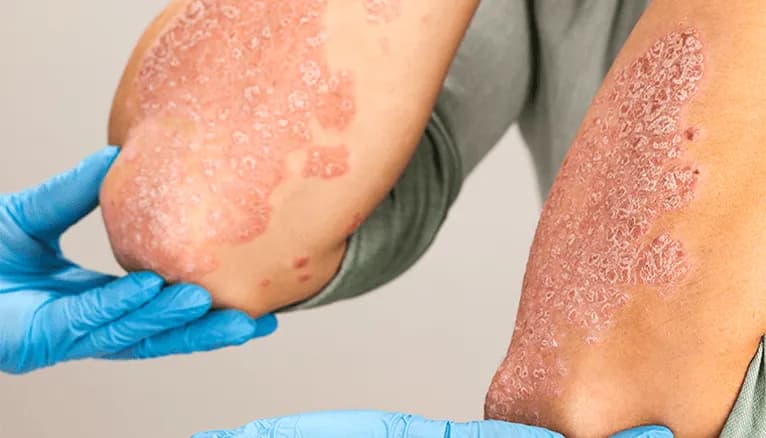
Psoriasis is a chronic autoimmune disease that affects the skin, causing red, itchy, and scaly patches to develop. It is a common condition, affecting approximately 2-3% of the global population. Living with psoriasis can be challenging, both physically and emotionally.
Psoriasis is a non-contagious skin condition characterized by rapidly producing skin cells. Skin cells mature and shed in a healthy individual every 28 to 30 days. However, this process is significantly accelerated in people with psoriasis, with skin cells growing and shedding within 3 to 4 days. As a result, the accumulation of excess skin cells leads to red, scaly patches on the skin's surface.
Inflammation and redness are relatively prevalent around the scales. Psoriatic scales are often whitish-silver and appear in dense, red patches. They can, however, appear purplish, dark brown with grey scales on darker skin tones. These patches will occasionally shatter and bleed.
Scales commonly form on joints such as the elbows and knees. They can, however, appear anywhere on your body, including the following:
Less prevalent forms of psoriasis affect:
While the exact cause of psoriasis remains unknown, it is believed to result from a combination of genetic and environmental factors. Research suggests that specific genes may play a role in developing psoriasis, as it tends to run in families. Additionally, environmental triggers, such as infections, stress, and certain medications, can exacerbate the condition in genetically predisposed individuals.
Psoriasis can manifest in several different forms, each with its unique characteristics. There are five types of psoriasis.
While the exact psoriasis causes remain unknown, it is believed to result from a combination of genetic and immune systems.
Some people inherit genes that increase their risk of developing psoriasis. If you have an immediate family member with a skin condition, you are more likely to have it yourself.
Psoriasis is an autoimmune disease. Autoimmune diseases are caused by your body attacking itself. White blood cells, known as T cells, wrongly attack your skin cells in the case of psoriasis. This produces the plaques most frequently associated with psoriasis. Attacks on skin cells also result in red, inflammatory regions of the skin.
External “triggers” may start a new bout of psoriasis. These triggers are not the same for everyone. They may also change over time for you.
The most common triggers for psoriasis include:
Psoriasis symptoms can vary from person to person. The most common symptoms of psoriasis include:
The majority of persons with psoriasis experience "cycles" of symptoms. The illness might cause severe symptoms for a few days or weeks, then clear up and become nearly unnoticed. The problem may then flare up again in a few weeks or if aggravated by a common psoriasis trigger. Psoriasis symptoms might sometimes entirely disappear.
One common misconception about psoriasis is that it is contagious. However, psoriasis is not infectious and cannot be transmitted through direct contact or sharing personal items. It is an autoimmune disease that results from an overactive immune response rather than a bacterial or viral infection.
In addition to affecting the skin, psoriasis can also have an impact on the joints, leading to a condition known as psoriatic arthritis. Approximately 30% of individuals with psoriasis develop psoriatic arthritis, which can cause joint pain, stiffness, and swelling. Psoriatic arthritis can affect any joint, including the fingers, toes, knees, and spine.
Individuals with psoriasis must know the potential risk of developing psoriatic arthritis. Early detection and treatment of psoriatic arthritis can help manage symptoms and prevent further joint damage.
To diagnose psoriasis, two tests might be necessary.
In addition to self-care strategies, various treatment options are available for individuals with psoriasis. Treatment choice depends on the severity of the condition and the individual's response to previous treatment attempts.
While there is currently no cure for psoriasis, ongoing research is being conducted to develop more effective treatments and potentially find a permanent solution. Treatment aims to manage symptoms, reduce inflammation, and improve quality of life.
It is essential to approach psoriasis treatment with realistic expectations. While it may not be possible to cure psoriasis permanently, with proper management and treatment, many individuals with psoriasis can lead fulfilling lives and keep their symptoms under control.

Download Our App


Powered By Docfyn