
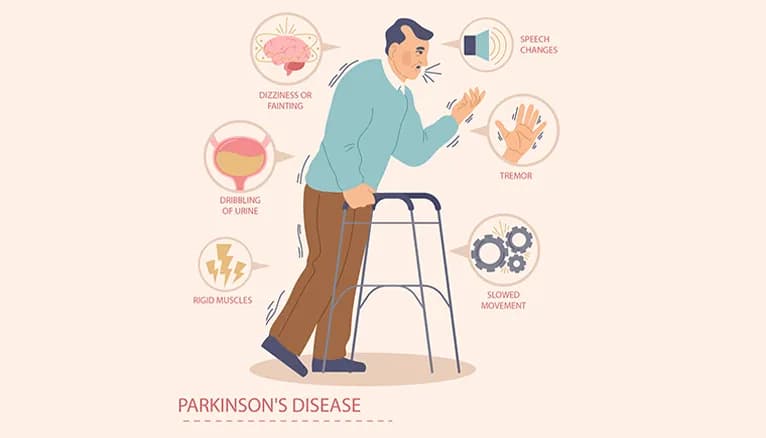
Parkinson's disease is a degenerative brain disorder affecting millions worldwide. It is a chronic condition that gradually worsens over time, leading to physical and cognitive symptoms. Understanding Parkinson's disease is crucial for patients and caregivers, as it can significantly impact the quality of life.
Parkinson's disease is a neurodegenerative disorder that primarily affects the dopamine-producing neurons in the brain. Dopamine is a neurotransmitter that is crucial in regulating movement and coordination. Dopamine is produced in a brain region termed the "substantia nigra." In Parkinson's disease, substantia nigra cells begin to die. When this occurs, dopamine levels decline. When they have decreased by 60 to 80 per cent, Parkinson's symptoms appear.
The exact parkinsons disease causes is still unknown, but researchers believe that a combination of genetic and environmental factors may contribute to its development. Some scientists believe viruses can also cause Parkinson's disease.
Parkinson's has been linked to low levels of dopamine and norepinephrine, a substance that regulates dopamine. Lewy bodies which are abnormal proteins, have also been discovered in the brains of Parkinson's patients. Scientists do not know if Lewy bodies contribute to the development of Parkinson's disease.
While there is no known cause, research has identified the following categories of individuals who are more likely to develop the condition:
However, more research is needed to fully understand the complex interplay between genetics and the environment in Parkinson's disease.
The parkinsons disease symptoms can vary from person to person, but the most common ones include:
In addition to these primary symptoms, Parkinson's disease can cause various secondary symptoms, including depression, anxiety, sleep disturbances, and cognitive changes.
Diagnosing Parkinson's disease can be challenging, as no specific test can confirm its presence. Instead, doctors rely on a combination of medical history, physical examination, and the presence of characteristic symptoms. They may also order additional tests, such as brain imaging scans such as CT Scan or MRI, to rule out other conditions that may cause similar symptoms.
Once diagnosed, Parkinson's disease is typically classified into five stages based on the severity of symptoms and their impact on daily life.
Stage 1 Parkinson’s is mildest. It's so mild you may not detect symptoms. They may not yet disrupt your routine.
Symptoms may be limited to one side of the body.
The transition between stages 1 and 2 can take months or even years. Each person will have a unique experience. At this stage, you may experience the following symptoms:
There may be symptoms on both sides of the body.
Mid-stage symptoms change. Symptoms may be more evident but unlikely to change. They can also disrupt your routine. Slower movements slow activities. Falls increase when balance issues worsen. Stage 3 Parkinson's patients may usually execute tasks independently.
Stage 3 through 4 varies significantly. Without a walker, you'll have trouble standing. Muscles and reactions slow down too. Living alone can be unsafe.
In this final stage, the symptoms are severe and require constant care. Standing may be impossible. Wheelchairs are always needed. Parkinson's patients may also have disorientation, delusions, and hallucinations.
While there is no cure for Parkinson's disease, various management strategies can help control symptoms and improve quality of life. These strategies typically involve a combination of medications, surgical parkinson's disease treatments, lifestyle changes, and therapies.
While there is no cure, advancements in research and treatment options offer hope for better symptom management and improved quality of life. By staying informed, seeking appropriate medical care, and implementing lifestyle changes, individuals with Parkinson's disease can optimize their well-being and lead fulfilling lives.

Download Our App


Powered By Docfyn



