
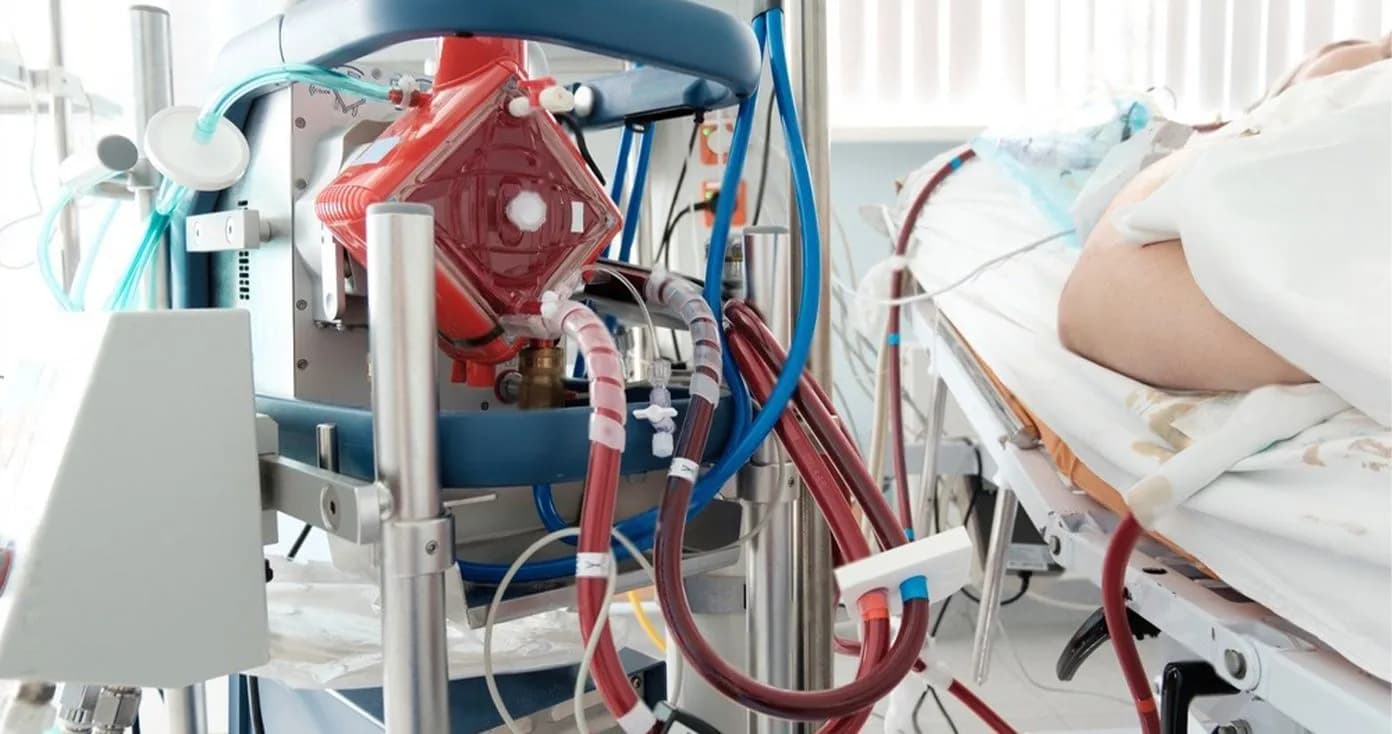
Extracorporeal Membrane Oxygenation (ECMO) is a life-saving medical therapy used when a patient’s heart and lungs are unable to function adequately on their own. Essentially a sophisticated heart-lung bypass machine, ECMO takes over the critical tasks of oxygenating the blood and removing carbon dioxide, allowing the heart and lungs time to rest and recover. Unlike traditional heart-lung machines used during surgeries for short durations, ECMO is designed to provide long-term support, often for days or weeks. This advanced therapy is applicable across all age groups, from newborns to adults, and is typically reserved for cases where other treatments have not succeeded in stabilizing heart or lung function. In this blog, we will understand all about ECMO, how it works, and under what circumstances it is needed.
Extracorporeal Membrane Oxygenation (ECMO) is a form of life support that is used for individuals facing life-threatening conditions that compromise the function of their heart or lungs. This advanced therapy is particularly vital when conventional treatments fail to maintain adequate oxygenation and blood circulation. ECMO plays a crucial role in keeping blood flowing through the body while ensuring that essential gases, such as oxygen and carbon dioxide, remain balanced within the bloodstream.
Although ECMO does not directly treat the underlying failure of the heart or lungs, it serves as a temporary substitute for these organs, effectively taking over their responsibilities. This allows the heart and lungs to rest and recover by reducing their workload. The ECMO process involves an extracorporeal (outside the body) circuit, where blood is drawn from the patient's body and passed through a machine that mimics the functions of both the heart and lungs. In ECMO, the blood is typically drawn from the right side of the heart and directed to the heart-lung machine. Once inside the machine, carbon dioxide is removed, and oxygen is added to the blood. The oxygen-rich blood is then rewarmed and returned to the patient’s body, ensuring that tissues and organs continue to receive the oxygen they need for proper function. This continuous circulation and gas exchange support the patient’s body while the underlying cause of heart or lung failure is addressed.
ECMO is often utilized to treat severe respiratory and cardiac conditions, including those associated with COVID-19, acute respiratory distress syndrome (ARDS), and other serious infections.
Here are some specific conditions and scenarios where ECMO might be used:
1. Severe Respiratory Failure:
ECMO is often used in cases of severe respiratory failure, where the lungs are unable to provide sufficient oxygen to the blood or remove carbon dioxide. This can occur in conditions such as:
2. Severe Cardiac Failure:
ECMO can also be used to support the heart in cases where it is unable to pump blood effectively. This might include:
3. Bridge to Transplant:
ECMO can serve as a temporary measure for patients awaiting a lung or heart transplant. It helps maintain oxygenation and circulation while the patient waits for a suitable organ donor.
4. Refractory Cardiac Arrest:
In some cases, ECMO is used during prolonged cardiac arrest (when the heart stops beating and resuscitation efforts are not successful) as part of an effort to stabilize the patient and allow further treatment options to be explored.
5. Severe Infections:
Conditions like sepsis (a severe body-wide infection) can lead to multiple organ failure, including the heart and lungs. ECMO may be used to support these organs while treating the underlying infection.
6. Neonatal and Paediatric Support:
ECMO is also used in newborns and children with severe respiratory or cardiac conditions, such as congenital heart defects, meconium aspiration syndrome, or persistent pulmonary hypertension of the newborn (PPHN).
ECMO is typically considered only when less invasive treatments have been exhausted. It is used in Apex Hospitals, where our experienced teams can manage the complex care it requires. The goal of ECMO is to stabilize the patient and provide a critical window of time during which the underlying condition can be treated, with the hope of eventually restoring the heart and lungs to normal function.
The two main types of ECMO are:
Healthcare professionals decide whether to use ECMO based on the patient's condition. Since ECMO is a life-support procedure, it is generally performed in an emergency care setting, where the medical team, including doctors and trained respiratory therapists, prepares the patient.
Connecting a patient to an ECMO machine involves a surgical procedure. The ECMO machine is linked to the patient via plastic tubes known as cannulas. Before the procedure, the patient is given an anticoagulant to prevent blood clotting. Cannulas are then inserted into large arteries and veins, typically in the chest, neck, or legs.
Once connected, the ECMO machine extracts blood from the patient through these cannulas and directs it to an artificial lung within the machine. Here, the blood is oxygenated and carbon dioxide is removed. The treated blood is then warmed to body temperature and returned to the patient. If the patient’s heart is unable to pump blood effectively, a mechanical pump within the ECMO system takes over this function.
Post-procedure, doctors administer sedatives and pain relief to keep the patient comfortable. The ECMO team, comprising doctors, nurses, and other healthcare professionals, monitors the patient closely. They perform routine chest X-rays to assess the health of the heart and lungs and conduct regular blood tests to measure oxygen and carbon dioxide levels and check for potential infections.
Discontinuing ECMO involves a surgical procedure to remove the cannulas, the tubes used for blood circulation. Before stopping ECMO, several tests are conducted to ensure that the heart and lungs are functioning adequately on their own.
Once the cannulas are removed, the insertion sites in the blood vessels need to be repaired. This repair can be performed either at the patient's bedside or in the operating room. The doctor will close the incisions with tiny stitches. Throughout this process, the patient remains under anaesthesia and is closely monitored.
Even after ECMO is stopped, patients might still require ventilator support to assist with breathing.
The duration of ECMO support varies depending on the patient's condition and the underlying reasons for its use. Typically, ECMO is used as a temporary measure to support the patient long enough for their heart or lungs to recover or until a more permanent solution, such as a transplant, can be implemented.
Our medical team's decision to continue or discontinue ECMO is based on regular assessments, which monitor the patient's progress and response to treatment.
ECMO (Extracorporeal Membrane Oxygenation) is a life-saving procedure but comes with several potential risks and complications. These include:
At Apex Hospitals, our critical care experts are well-versed in ECMO and various intensive care techniques. Our physicians and nurses stay current with the latest practices and research related to ECMO. Our team comprises specialists in cardiac surgery, critical care, heart failure cardiology, and pulmonary critical care. They collaborate closely to ensure that each patient receives the most advanced and effective treatment available. Book your appointment now.


Download Our App


Powered By Docfyn