
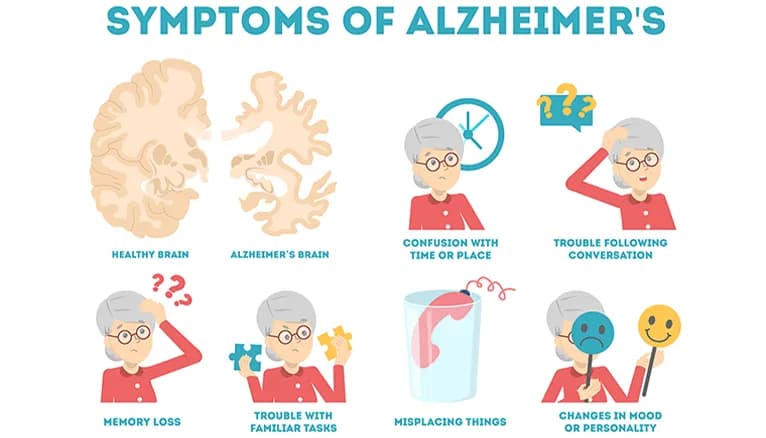
Alzheimer's disease is a progressive neurodegenerative disorder that primarily affects older individuals. Alzheimer's is a brain disorder that causes a gradual decline in memory, cognition, learning, and organisational abilities. Eventually, it impairs a person's ability to perform fundamental daily tasks. It is the most common cause of dementia, accounting for approximately 60-80% of all cases. Alzheimer's disease symptoms worsen over time. Researchers believe the disease process may begin at least 10 years before the onset of symptoms.
Alzheimer's disease and dementia are often used interchangeably, but they are not the same. Dementia is an umbrella term that describes symptoms affecting memory, thinking, and social abilities severe enough to interfere with daily functioning. Alzheimer's disease, on the other hand, is a specific type of dementia. While Alzheimer's disease is the most common cause of dementia, there are other types, such as vascular dementia, Lewy body dementia, and frontotemporal dementia.
Alzheimer's disease, like other forms of dementia, is caused by the demise of brain cells. It is a neurodegenerative disorder, which means brain cell death occurs gradually. In Alzheimer's disease, the brain tissue contains fewer and fewer nerve cells and connections, and microscopic plaques and tangles accumulate on the nerve tissue. Plaques form between brain cells that are decaying. They are composed of the protein beta-amyloid. Meanwhile, the tangles exist within the nerve cells. They are composed of a different protein termed tau.
Researchers do not entirely comprehend the causes of these changes. Multiple variables may be implicated, such as a combination of genetic, lifestyle, and environmental factors that may contribute to its development. One of the primary risk factors for Alzheimer's disease is age, with the majority of cases occurring after age 65. Other factors, such as family history, certain genetic mutations, cardiovascular disease, and head injuries, may also increase the risk of developing the disease.
Identifying the first signs of Alzheimer's disease can be challenging, as they may be subtle and easily dismissed as normal ageing. However, early detection allows for early intervention and better management of the disease. Some early signs of Alzheimer's disease include:
The severity of Alzheimer's disease rangeMild Alzheimer’s disease:
Individuals with mild Alzheimer's disease may experience the following memory and cognitive difficulties:
The brain regions responsible for language, senses, reasoning, and consciousness are damaged in moderate Alzheimer's disease. This can result in the subsequent symptoms:
Plaques and tangles are present throughout the brain in severe Alzheimer's disease, causing the tissue to diminish significantly. This can result in:
Various methods determine the diagnosis of Alzheimer's disease in a patient with memory problems. This is because many other conditions, particularly neurological conditions, can induce dementia and other Alzheimer's symptoms.
A doctor will ask about your health and lifestyle while diagnosing Alzheimer's. Your doctor may question a family member or carer about your symptoms.
A provider will also perform:
While there is currently no cure for Alzheimer's, several treatment and management approaches can help alleviate symptoms and improve quality of life. These may include:
Medication: Medications such as cholinesterase inhibitors and memantine can help manage cognitive symptoms and slow down the progression of the disease.
Therapy: Cognitive stimulation therapy, occupational therapy, and speech therapy can help individuals with Alzheimer's disease maintain cognitive function, independence, and communication skills.
Supportive Care: Assisted living facilities, memory care units, and in-home caregivers can provide necessary support and supervision for individuals with Alzheimer's.
Caregiver Support: Caregivers play a vital role in managing Alzheimer's disease. Support groups, respite care, and caregiver education programs can provide valuable resources and support for caregivers.
Research and Clinical Trials: Participation in clinical trials and research studies can contribute to advancements in Alzheimer's disease treatment and management.
Understanding Alzheimer's disease is crucial for caregivers and loved ones supporting individuals with this condition. Caregivers can provide the best possible care and support by recognizing the early signs, understanding the causes, and learning about available treatment and management options.

Download Our App


Powered By Docfyn