
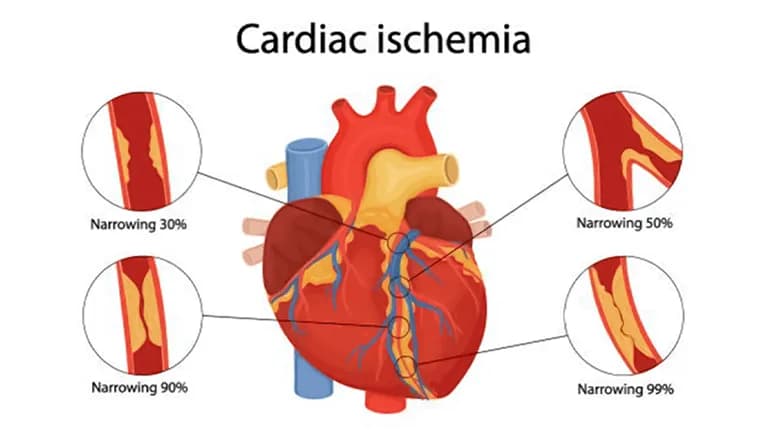
Ischemic heart disease, or coronary artery disease, is a silent threat affecting millions worldwide. It occurs when the blood vessels supplying the heart become narrowed or blocked, reducing blood flow and oxygen to the heart muscle.
Ischemic heart disease is a condition that develops when the coronary arteries, which supply the heart muscle with oxygen and nutrients, become narrowed or blocked. The most common underlying cause of ischemic heart disease is coronary atherosclerosis, characterized by the buildup of fatty deposits, cholesterol, and other substances within the arterial walls. This buildup, known as plaque, can gradually restrict blood flow to the heart, leading to various complications.
Ischemic heart disease is often used interchangeably with coronary heart disease, as they are closely related. Coronary heart disease refers to the narrowing or blockage of the coronary arteries. In contrast, ischemic heart disease encompasses a broader range of conditions that result from reduced blood supply to the heart. Understanding this relationship is crucial for managing and preventing the progression of both conditions.
Several factors contribute to the development of ischemic heart disease, such as:
It is essential to be aware of these risk factors and take proactive steps to address them through lifestyle changes and medical interventions to reduce the risk of developing ischemic heart disease.
The symptoms of ischemic heart disease can vary depending on the severity of the condition. Common symptoms include:
It is essential to seek medical attention if experiencing any of these symptoms, as they may indicate an underlying heart problem that requires prompt diagnosis and treatment.
Diagnosing ischemic heart disease involves a comprehensive evaluation of medical history, physical examination, and diagnostic tests.
Some of the tests that can help in diagnosing ischemic heart disease are:
These tests are crucial for accurately diagnosing ischemic heart disease and formulating an appropriate treatment plan.
iischemic heart disease management involves lifestyle changes, medications, and, in severe cases, surgical interventions.
Making positive lifestyle changes is crucial for preventing and managing ischemic heart disease, such as:
Medications play a vital role in managing ischemic heart disease.
Your healthcare provider will determine the most appropriate medications based on your needs and medical history.
In severe cases of ischemic heart disease, surgical interventions may be necessary to restore blood flow to the heart.
These surgical interventions are typically performed when lifestyle changes and medications alone cannot manage the condition.
Ischemic heart disease is a significant health concern that requires careful management to ensure a healthy heart. By understanding the causes, symptoms, and risk factors associated with ischemic heart disease, individuals can take proactive steps to prevent its development and manage the condition effectively.

Download Our App


Powered By Docfyn



