
By Apex Hospitals 20th May, 2025
If you have been told that you need a knee replacement, chances are you have a lot of questions. Will it be painful? How long will recovery take? How long will the new knee last? These are all fair concerns, and the answers depend significantly on how the surgery is performed.
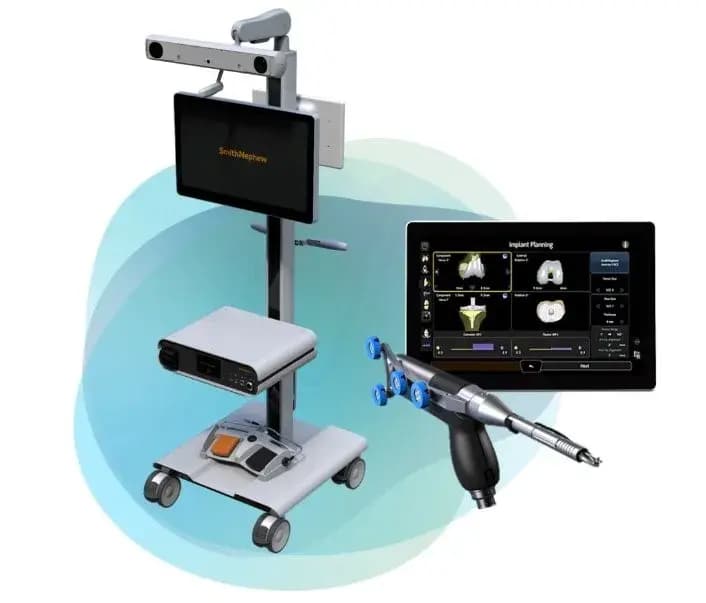
Traditional knee replacement has been around for decades and has helped millions of people. But robotic-assisted knee replacement, and specifically the CORI Surgical System, takes the procedure to a level of precision that was not possible before. At Apex Hospitals, we use the CORI system to give our patients better alignment, less pain, and faster recovery.
Here is what makes it different.
The CORI Surgical System, developed by Smith+Nephew, is an advanced robotic platform designed specifically for knee replacement surgeries. Unlike older robotic systems that require a pre-operative CT scan, CORI works without one.
Instead, it builds a real-time, three-dimensional map of each patient's knee using data collected during the surgery itself. This means the surgeon has a highly accurate, personalised picture of your anatomy, without any additional radiation exposure from a CT scan before you even enter the operating room.
Here is a simplified picture of what happens during a CORI-assisted knee replacement:
The surgeon maps your knee in real time using CORI's imaging system, creating a 3D model unique to your anatomy.
A surgical plan is created based on your specific bone structure, alignment, and movement.
The robotic arm then assists the surgeon in executing that plan with precision, guiding the cuts and implant placement to match the plan exactly.
Only diseased bone is removed. Healthy bone tissue is preserved.
The surgeon is in control throughout. The robot does not operate independently, it is a tool that enhances what the surgeon can do, not a replacement for surgical judgment.
Many robotic systems in use today require a CT scan before surgery to create the surgical plan. CORI does not. It builds a full 3D map of your knee during the surgery using real-time data. This reduces radiation exposure, cost, and inconvenience for the patient.
In traditional surgery, implant positioning depends on the surgeon's experience, pre-operative measurements, and judgement in the moment. With CORI, the robotic guidance ensures that the implant is placed at exactly the right angle and depth — matched to your body's specific anatomy. Better positioning means the implant functions more naturally and lasts longer.
Because the surgical plan is so precise, the cuts made during surgery can be smaller and more targeted. Less disruption to surrounding tissue means less bleeding, less swelling, and less post-operative pain.
One of the important advantages of robotic assistance is that it removes only the diseased or damaged bone — no more, no less. This bone conservation matters especially if a revision surgery is ever needed in the future.
Most patients who undergo robotic knee replacement with CORI are walking within 24 hours of surgery. Hospital stays are typically 2 to 3 days. Because there is less tissue trauma, the body recovers more quickly, and physiotherapy tends to be a shorter, more manageable course.
Precise alignment directly affects how much wear the implant experiences over time. When a knee implant is positioned correctly, the forces during walking and movement are distributed evenly across the joint. This reduces wear significantly, which means the replacement can last longer.
Robotic knee replacement is suitable for most patients who are candidates for conventional total knee replacement. This includes people with:
Severe osteoarthritis of the knee that has not responded to medication, physiotherapy, or injections
Significant loss of cartilage causing bone-on-bone friction
Chronic knee pain that interferes with daily activities such as walking, climbing stairs, or sleeping
Joint deformity such as varus (bowlegged) or valgus (knock-kneed) alignment
Your orthopaedic surgeon will evaluate your X-rays, overall health, and symptoms before recommending whether robotic-assisted surgery is appropriate for you.
Apex Hospitals is among the first hospitals in Rajasthan to offer robotic knee replacement using the CORI Surgical System. Our orthopaedic team has performed this procedure successfully across patients with varying degrees of knee damage and health conditions.
NABH and NABL accredited facility
160+ ICU beds and 850+ bed capacity across 8+ locations
Dedicated joint replacement and orthopaedic team
Comprehensive rehabilitation support post-surgery
Robotic knee replacement is not a new concept in name, but in practice, the CORI Surgical System represents a meaningful step forward in what knee surgery can deliver. Better precision, less pain, faster recovery, and longer-lasting results are not marketing promises. They are the direct outcome of a more accurate, more personalised surgical process.
If you have been living with knee pain and weighing your options, speak with our orthopaedic team at Apex Hospitals. We will assess your condition thoroughly and give you an honest picture of whether robotic knee replacement is the right step for you.

Download Our App


Powered By Docfyn