
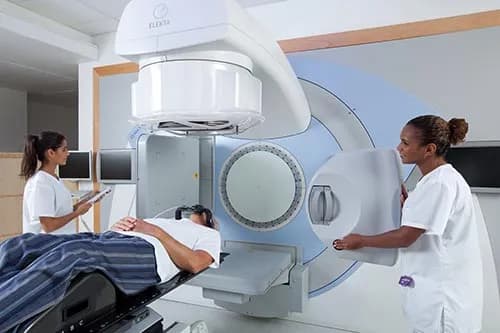
Radiation therapy (also called radiotherapy) is a medical treatment that uses high-energy radiation to destroy cancer cells or slow their growth. It is one of the three main pillars of cancer treatment—alongside surgery and systemic therapies such as chemotherapy and immunotherapy—and is used with curative, adjuvant, neoadjuvant, and palliative intent depending on the specific diagnosis. Radiation works by damaging the DNA inside cancer cells; when the damage is significant enough, the cells lose their ability to replicate and eventually die. Normal tissues can also be affected, but modern techniques aim to minimise this through precise targeting and careful planning.
Worldwide, roughly 50% of all people diagnosed with cancer will receive radiation therapy during their course of care, and radiotherapy contributes to about 40% of curative cancer treatments. In India and specifically in Rajasthan, access to advanced radiation oncology services in cities like Jaipur, Bikaner, Udaipur, and Sri Ganganagar has become a priority as cancer incidence rises and more patients seek high-quality, local care. At Apex Hospitals, our radiation oncology teams across Jaipur, Malviya Nagar, Mansarovar, Bikaner, Udaipur, Sawai Madhopur, Jhunjhunu, and Sri Ganganagar provide comprehensive radiotherapy services, from consultation to survivorship support.
Radiation therapy can be delivered in different ways depending on tumour type, location, stage, and patient health. The main categories include external beam radiotherapy (EBRT), brachytherapy (internal radiation), and systemic radiotherapy. Each method has specific indications and advantages which will be discussed in detail later. Patients often ask whether radiation therapy is painful — the treatment itself is painless; discomfort usually arises from positioning, skin reactions, or effects on nearby organs. Modern technology and expert supportive care keep those effects to a minimum.
The primary goal of radiation therapy is to deliver a lethal dose of ionising radiation to cancer cells while sparing surrounding healthy tissue. At the cellular level, radiation causes breaks in DNA strands—single and double strand breaks. Cells can repair some damage, but when the damage is too extensive or the repair mechanisms fail (common in rapidly dividing tumour cells), cellular death follows either through apoptosis, mitotic catastrophe, or senescence.
Radiation oncologists use several strategies to maximise tumour control and limit toxicity:
The balance between tumour control probability (TCP) and normal tissue complication probability (NTCP) guides planning decisions. For some cancers, higher dose per fraction delivered in fewer sessions is effective and convenient—this is the principle behind stereotactic treatments (SBRT or SRS). For others, conventional fractionation remains the safer option.
In practical terms, a patient’s treatment is not only about physics and biology but also about personalisation. Radiation oncologists at Apex Hospitals work closely with medical oncologists, surgical teams, and diagnostic radiology to create an integrated plan. This multidisciplinary coordination reduces delays, improves outcomes, and ensures that considerations such as combined chemo-radiation or timing relative to surgery are optimally addressed.
Understanding the different types of radiation therapy helps patients and families make informed decisions with their care teams. The most commonly used categories are external beam radiotherapy, brachytherapy, and systemic radiopharmaceuticals. Each modality offers unique advantages and is chosen based on tumour location, size, spread, and the patient’s overall health.
External beam radiotherapy (EBRT) is the most widely used method. It delivers radiation from a machine outside the body (linear accelerator). EBRT includes advanced forms such as IMRT, IGRT, and stereotactic radiotherapy (SBRT/SRS). Brachytherapy places radioactive sources inside or next to the tumour, commonly used for cervical, prostate, and certain head & neck cancers. Systemic radiotherapy uses radioactive drugs (e.g., radioactive iodine for thyroid cancer, radium-223 for bone metastases) to target disease throughout the body.
| Procedure type | Benefits | Typical recovery/time |
|---|---|---|
| External beam (IMRT/IGRT) | Highly targeted, fewer side effects, adaptable to complex shapes | Daily treatments over weeks; minimal immediate recovery |
| Stereotactic (SBRT/SRS) | Very high precision; few high-dose sessions; excellent for small lesions | 1–5 sessions; quick return to normal activity |
| Brachytherapy | Delivers high dose close to tumour, sparing surrounding tissue | May require short hospital stay; recovery varies by site |
| Systemic radiopharmaceuticals | Treats disease throughout the body (useful for metastases) | Usually outpatient; side effects depend on drug |
Apex Hospitals in Jaipur and other centres in Rajasthan offer many of these advanced modalities, including IMRT, IGRT, and stereotactic radiotherapy. While proton therapy and certain particle therapies are highly precise and reduce dose to normal tissues, they are less widely available in India and typically offered in specialised centres; we continuously evaluate and expand access to advanced options to ensure our patients receive the most appropriate technology for their needs.
Radiation therapy is indicated across a broad spectrum of cancers and clinical scenarios. It may be used to:
Common cancers frequently treated with radiation include breast, prostate, lung, head and neck, cervical, rectal, and central nervous system tumours. For example, early-stage breast cancer often receives breast-conserving surgery followed by radiotherapy to reduce local recurrence. In head and neck cancers, combined modality treatment with surgery, chemotherapy and radiotherapy is common to improve cure rates. Stereotactic radiotherapy (SBRT) is increasingly used for early-stage lung cancers in patients who are not surgical candidates.
In Rajasthan, patients from Jaipur, Bikaner, Udaipur, Sawai Madhopur, Jhunjhunu, and Sri Ganganagar often rely on regional radiation oncology centres like Apex Hospitals for timely treatment. The choice to use radiation depends on factors such as cancer type, stage, previous treatments, performance status, and patient preference. Multidisciplinary tumour boards at Apex Hospitals review each case to personalise the treatment plan—ensuring whether an approach is curative, consolidative, or palliative.
Special considerations apply to paediatric patients, pregnant patients, and patients with significant comorbidities. In these groups, radiation plans are tailored with additional safeguards and alternative strategies when needed. Radiation oncologists discuss the goals, benefits, and risks in simple language so patients and families can make informed decisions.
Before the first therapeutic radiation dose is delivered, a careful planning process called simulation and treatment planning takes place. This phase is essential for safe, effective, and personalised radiotherapy. It typically includes several steps completed over one or more visits:
Patients often worry about claustrophobia during simulation imaging or discomfort from immobilisation devices. Our teams at Apex Hospitals in Rajasthan are experienced in managing these concerns—using gentle coaching, short breaks, or mild anxiolytics if necessary. Simulation typically takes 30–90 minutes depending on complexity. Some advanced cases require respiratory gating or motion management for tumours that move with breathing; technologies like IGRT and 4D-CT are used to track and accommodate motion.
Clear communication during planning is vital. Be sure to inform the team about any allergies, implanted devices, prior surgeries, or pregnancy. Bring a list of medications and your concerns. Apex Hospitals also offers patient-centric counselling and survivorship education to prepare you and your caregivers for the entire treatment journey.
Most people ask, "What will the daily radiation sessions be like?" The answer depends on the type of radiotherapy, but the general experience is predictable, painless, and efficient. External beam radiotherapy sessions are typically outpatient and follow this pattern:
Stereotactic sessions (SBRT) may require longer time on the table because of the higher precision and additional imaging. Brachytherapy can be inpatient and may involve anaesthesia and short recovery. Systemic radiopharmaceuticals are usually given as outpatient infusions with short post-procedure observation.
At Apex Hospitals across Rajasthan—particularly our radiation oncology centres in Jaipur—we use advanced systems to deliver IMRT, IGRT, and SBRT, which translate into more effective tumour control and fewer side effects. Specific technologies such as image-guided linear accelerators, respiratory gating, and dedicated stereotactic platforms are part of our service offerings. If you are searching for "radiation oncologist near me Jaipur" or "best radiation therapy hospital Jaipur," Apex Hospitals provides experienced radiation oncologists who explain each step and support you throughout the course.
Radiation therapy can cause side effects because normal tissues near the treatment area receive some dose. Side effects are typically classified as acute (during or shortly after treatment), subacute (weeks to months), and late (months to years). The nature and severity depend on the treatment site, dose, and individual patient factors.
Common acute side effects include:
Late effects might include fibrosis, changes in skin texture, or, in rare cases, organ dysfunction depending on location. Modern approaches like IMRT, IGRT, and proton therapy aim to reduce these risks by minimising dose to normal tissues.
Management strategies include:
Apex Hospitals emphasises comprehensive survivorship support, including rehabilitation, counselling, and long-term follow-up. We also provide insurance, TPA & government scheme assistance to help with financial counselling. If you live in Jaipur, Malviya Nagar, Mansarovar, or surrounding districts such as Bikaner and Udaipur, you can access local side-effect management clinics and supportive care services designed to keep you comfortable and treatment-compliant.
Radiation therapy is often part of a multimodality treatment plan. Combining treatments can improve outcomes in many cancers but requires careful coordination to manage toxicity. Common combinations include:
| Treatment approach | Benefit | Typical situations |
|---|---|---|
| Radiation alone | Less systemic toxicity; effective for localised disease | Early-stage prostate, some lung tumours |
| Concurrent chemoradiation | Higher cure rates in certain locally advanced cancers | Head & neck, cervical, oesophageal cancers |
| Radiation + immunotherapy | Potential systemic anti-tumour effects; research ongoing | Selected metastatic and trial contexts |
Alternative options depend on tumour biology and patient factors. For operable disease, surgery may be preferred; for widespread metastatic disease, systemic therapies might be more appropriate. Clinical trials are also an important option and can provide access to novel combinations such as targeted agents with radiotherapy.
At Apex Hospitals, integrated care under one network ensures seamless coordination between medical, surgical, radiation, and robotic oncology teams. This integrated approach helps determine whether radiation alone, combined modality treatment, or an alternative strategy is best for each patient.
Choosing the right radiation oncology centre involves evaluating technology, expertise, supportive services, logistics, and cost. Many patients and families search for phrases like "best radiation therapy hospital Jaipur", "radiation therapy near me Rajasthan", or "radiation oncologist in Jaipur". Here are practical considerations to guide your decision:
Preparing for radiation therapy can reduce anxiety and logistical barriers:
If you are located in Malviya Nagar, Mansarovar, or other neighbourhoods in Jaipur, Apex Hospitals radiation oncology centres are accessible with appointment options for radiation oncology consultation Jaipur and easy follow-up. For those from farther districts such as Bikaner, Udaipur, Sawai Madhopur, Jhunjhunu, or Sri Ganganagar, our network ensures coordinated care and local assistance with travel and lodging when needed.
Being empowered with questions helps you make informed choices and manage expectations. Consider asking:
In closing, radiation therapy is a powerful, evidence-based treatment used by oncologists worldwide and in Rajasthan to treat many cancers effectively. With modern imaging, precise delivery techniques, and multidisciplinary coordination, outcomes are improving and side effects are more manageable than ever before. Apex Hospitals offers patient-centred radiotherapy services across Jaipur, Bikaner, Udaipur, Sawai Madhopur, Jhunjhunu, and Sri Ganganagar with access to advanced radiotherapy systems, integrated cancer care, and comprehensive survivorship support. Whether you are searching for the best radiation oncology hospital in Jaipur, radiation therapy cost in Jaipur, or a trusted radiation oncologist near me Jaipur, our team is here to guide you through every step with compassion and expertise.
If you or a loved one are considering radiation treatment for cancer in Rajasthan, contact Apex Hospitals to schedule a radiation oncology consultation. Our team will review your case, explain options like IMRT treatment Jaipur, IGRT treatment Jaipur, SBRT Jaipur, and plan the safest, most effective approach tailored to you. We also provide assistance with insurance, TPA, and government scheme documentation to help ease the financial process.
This article was written by Dr. Sonu Goyal MBBS , MD - Radiotherapy , sharing insights based on professional experience in the field.

Download Our App


Powered By Docfyn



