
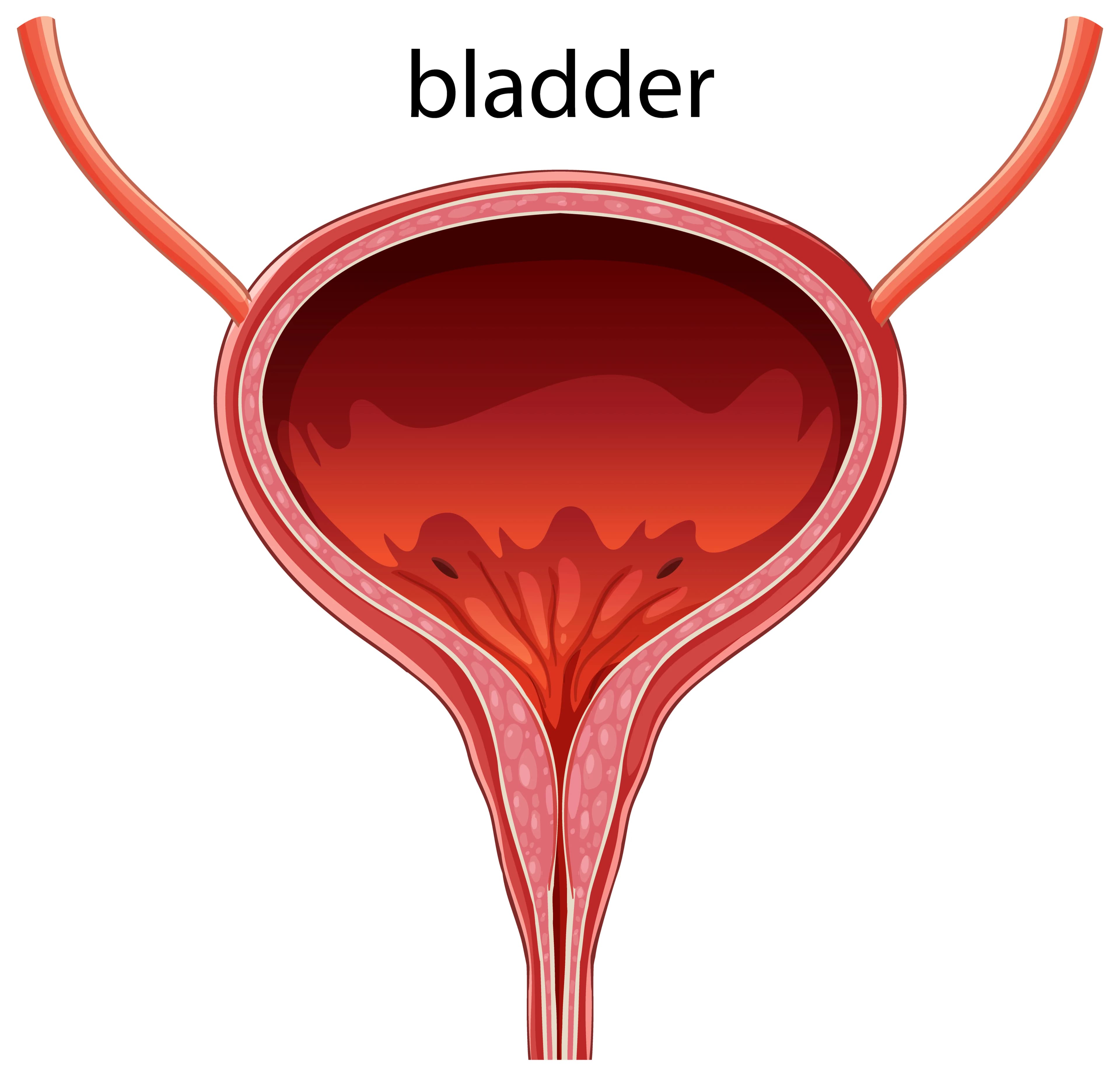
By Apex Hospitals, 15th May, 2026
There are medical conditions people live with for years without ever mentioning them to a doctor. Overactive bladder is one of them.
The urgency to urinate that strikes without warning. The frequent trips to the bathroom, sometimes every hour. The anxiety of being too far from a toilet. The disrupted sleep. The quiet adjustments people make to their daily lives, avoiding long drives, skipping social events, planning every outing around where the nearest bathroom is.
Overactive bladder, or OAB, affects an estimated 500 million people worldwide. In India, studies suggest that nearly 1 in 5 adults experiences symptoms, yet the majority never seek treatment. Not because effective treatment does not exist, but because most people either assume it is a normal part of ageing, feel too embarrassed to bring it up, or simply do not know that it is a recognised, treatable medical condition.
This article is an attempt to change that.
Overactive bladder is a condition characterised by a sudden, compelling urge to urinate that is difficult or impossible to control. This urgency may occur with or without leakage of urine, and it happens frequently, often more than 8 times in a 24-hour period.
OAB occurs when the bladder muscle, the detrusor, contracts involuntarily, even when the bladder is not full. Instead of waiting until a comfortable volume has been reached, the bladder sends urgent signals to the brain that demand immediate action.
It is important to understand what OAB is not. It is not the same as stress urinary incontinence, which is leakage caused by physical pressure, coughing, sneezing, or exercise. OAB is driven by urgency, not pressure. The two conditions can coexist, but they are distinct and managed differently.
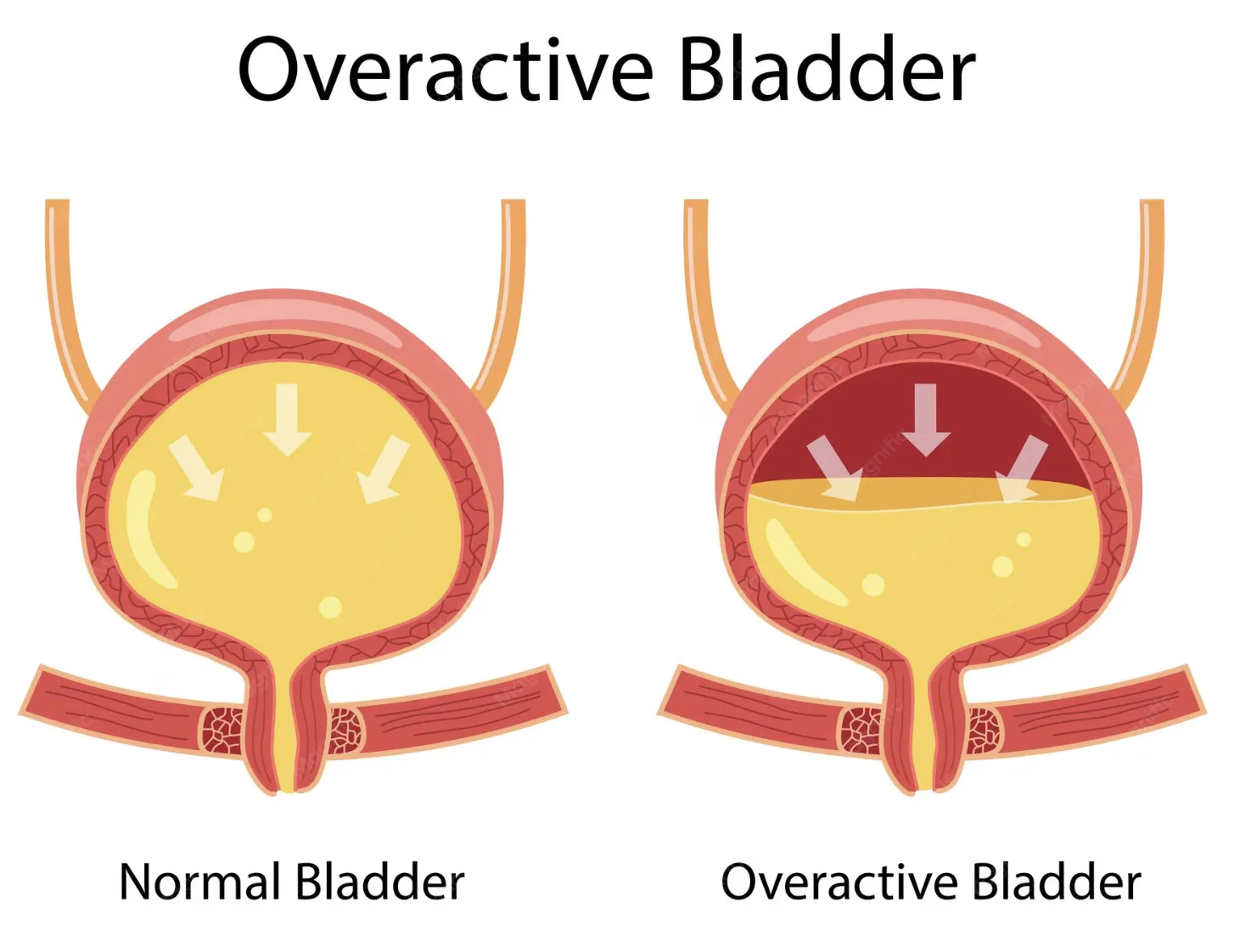
OAB presents as a cluster of symptoms. A person may experience one or several:
A sudden, intense urge to urinate that is difficult to defer
Urinating more than 8 times in a day (urinary frequency)
Waking up two or more times at night to urinate (nocturia)
Involuntary leakage of urine immediately following the urgent sensation (urgency incontinence)
The hallmark symptom is urgency, the sudden, cannot-wait quality of the need to urinate. Frequency and nocturia may follow from this, as the person attempts to keep the bladder empty to avoid the sensation.
OAB does not discriminate by gender, though its presentation differs between men and women.
In women, OAB is closely linked to hormonal changes, particularly the drop in oestrogen around menopause, which affects the health of the bladder lining and pelvic floor muscles. Pregnancy and childbirth can also affect the pelvic floor in ways that contribute to bladder urgency later in life.
In men, OAB frequently coexists with benign prostatic hyperplasia (BPH), an enlarged prostate. The enlarged gland can obstruct urine flow and irritate the bladder, triggering OAB-like symptoms. It is important that men with OAB symptoms are also evaluated for BPH, as the two conditions require different elements of treatment.
Age is a risk factor for both sexes, OAB becomes more common after 40 and significantly more prevalent after 60. However, it is not an inevitable or untreatable consequence of ageing, and this distinction matters.
Other contributing factors include obesity, diabetes, neurological conditions such as Parkinson's disease or multiple sclerosis, certain medications, high caffeine and fluid intake, and chronic urinary tract infections.
This is perhaps the most important part of this discussion.
In clinical practice, it is common to meet patients who have been managing OAB symptoms quietly for five, seven, or even ten years before walking into a urology clinic. By that point, many have already restructured their lives around their bladder, limiting fluids, avoiding travel, withdrawing from social situations, and accepting poor sleep as normal.
Several factors drive this delay. Embarrassment is significant, urinary symptoms carry social stigma, and many patients, particularly older women, believe it is simply something they must endure. There is also a widespread assumption that bladder problems are an unavoidable part of getting older, rather than a condition with identifiable causes and effective treatments.
In men, there is often reluctance to discuss any symptom related to the lower urinary tract, out of concern that it might indicate something more serious, leading to avoidance rather than assessment.
The reality is that OAB is highly treatable, especially when addressed early. Waiting does not make it better. For most patients, a combination of relatively simple interventions can produce significant, lasting improvement.
Diagnosis of OAB is primarily clinical, based on the pattern of symptoms. A urologist will take a detailed history, ask about symptom frequency and severity, and rule out other conditions that can cause similar presentations, such as urinary tract infection, bladder stones, or in men, BPH.
Investigations typically include:
Urine analysis and culture — to exclude infection
Post-void residual measurement — to check how much urine remains after voiding
Bladder diary — a 2–3 day record of fluid intake, voiding frequency, urgency episodes, and leakage
Uroflowmetry — measurement of urine flow rate
In selected cases, urodynamic studies to assess bladder function and pressure
The good news is that OAB responds well to treatment, and management is stepwise, starting with the least invasive approaches and progressing if needed.
These are the foundation of OAB management and often produce meaningful improvement on their own:
Bladder training — gradually extending the time between voids to retrain the bladder to hold more urine
Fluid management — optimising fluid intake timing and reducing bladder irritants such as caffeine, alcohol, and carbonated drinks
Pelvic floor exercises — strengthening the pelvic floor to improve urge suppression
Weight management — reducing excess body weight, which places pressure on the bladder
When lifestyle measures alone are insufficient, medications are added. The main classes used in OAB are:
Antimuscarinics — reduce involuntary bladder contractions by blocking the nerve signals that trigger them. Commonly used agents include oxybutynin, solifenacin, and tolterodine
Beta-3 agonists — relax the detrusor muscle during bladder filling, increasing capacity and reducing urgency. Mirabegron is the most widely used agent in this class
Both classes are effective. The choice depends on the individual patient's profile, other medications, and tolerability.
For patients who do not respond adequately to medication, further options exist:
Botulinum toxin (Botox) bladder injections — injected cystoscopically into the bladder wall, Botox temporarily reduces detrusor overactivity. Effects typically last 6–12 months and the procedure can be repeated
Sacral neuromodulation — a device implanted near the sacral nerve modulates the nerve signals between the bladder and brain, reducing urgency and frequency
Percutaneous tibial nerve stimulation (PTNS) — a minimally invasive outpatient procedure that delivers nerve stimulation through the ankle to modulate bladder control
Surgical intervention is reserved for severe, refractory cases and is rarely the first or second line of management.
If you are experiencing urgency to urinate that is difficult to control, visiting the bathroom more than 8 times a day, waking at night two or more times to urinate, or have had any episode of involuntary leakage, it is time to speak to a urologist.
There is no threshold of severity that must be crossed before seeking help. If the symptoms are affecting your sleep, your work, your social life, or your confidence, that is reason enough.
OAB is not something you have to accept. It is not an inevitable part of ageing. And it is not something to be embarrassed about. It is a medical condition with a clear mechanism, a clear diagnostic pathway, and a range of effective treatments, most of which are straightforward and well-tolerated.
Overactive bladder affects a significant proportion of the adult population, yet remains one of the most underreported conditions in clinical practice. The gap between prevalence and treatment rates exists not because of a lack of solutions, but because of silence, a silence driven by stigma, misinformation, and the mistaken belief that nothing can be done.
If this article describes symptoms you recognise in yourself or in someone you care for, the right next step is a consultation with a urologist.
At Apex Hospitals, our urology team evaluates and manages the full spectrum of lower urinary tract conditions, including overactive bladder, in a confidential and supportive setting.