

Neurological Disorders Symptoms: How to Recognise Stroke, Epilepsy, Parkinson's, and More
Neurological Disorders Symptoms: How to Recognise Stroke, Epilepsy, Parkinson's, and More
A practical guide to spotting the warning signs of common neurological conditions — because early recognition can save lives and preserve function.
By the Apex Hospitals Medical Editorial Team · Published July 2026
Why Recognising Neurological Symptoms Early Matters
The brain and nervous system govern everything — movement, speech, memory, sensation, and emotion. When something goes wrong, the signs can be subtle at first, or they can arrive without warning. Neurological disorders are among the most common causes of disability and death worldwide, yet many people in Jaipur and across Rajasthan delay seeking care simply because they do not recognise the symptoms for what they are.
According to the World Health Organization, neurological disorders affect up to one billion people globally and are the leading cause of disability-adjusted life years. In India, stroke alone accounts for nearly 1.8 million new cases every year, making awareness of early symptoms a genuine public-health priority.
This guide walks through the key warning signs of the most prevalent neurological conditions — stroke, epilepsy, Parkinson's disease, brain tumours, and migraine — and explains what to do when you or someone you love experiences them. For specialist evaluation, the neurology team at Apex Hospitals, Jaipur is available around the clock.
What Are the Symptoms of a Neurological Disorder?
Neurological symptoms arise when the brain, spinal cord, or peripheral nerves are damaged, inflamed, or deprived of blood supply. While each condition has its own signature presentation, several symptoms cut across multiple disorders and should always prompt medical attention:
Sudden, severe headache — especially one described as the worst headache of your life
Weakness or numbness in the face, arm, or leg, particularly on one side of the body
Confusion or difficulty understanding speech
Vision disturbances — blurred, double, or lost vision in one or both eyes
Loss of coordination or balance
Unexplained seizures or convulsions
Tremors or involuntary movements
Memory loss or personality changes that are new or progressive
Difficulty swallowing or speaking
If any of these symptoms appear suddenly or worsen rapidly, treat it as a medical emergency. Time is tissue — particularly in stroke care.
How Do I Know If I Am Having a Stroke?
A stroke occurs when blood supply to part of the brain is cut off — either by a clot (ischaemic stroke, approximately 85% of cases) or a burst blood vessel (haemorrhagic stroke). Every minute without treatment, approximately 1.9 million neurons die, which is why the global medical community uses the phrase time is brain.
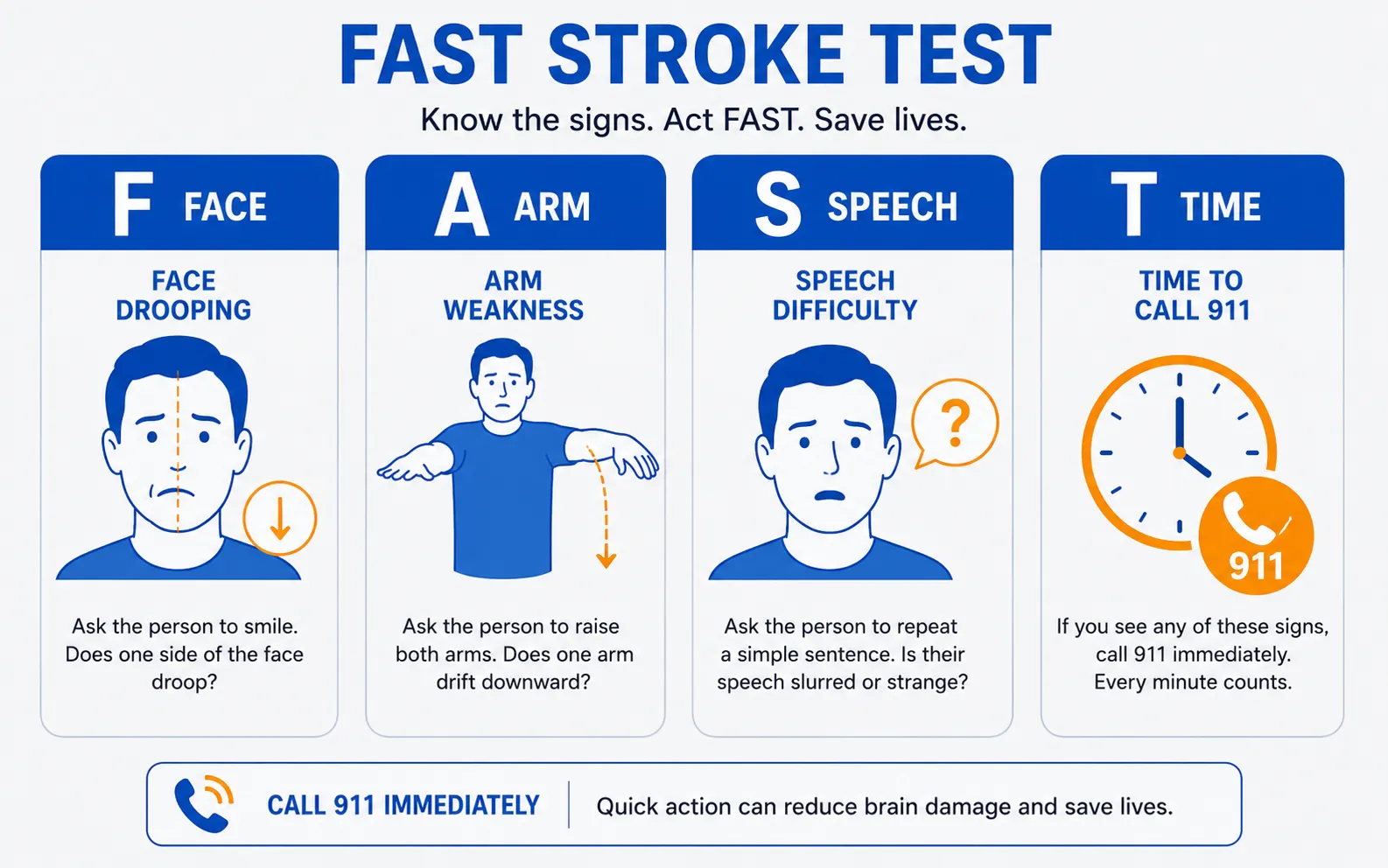
The fastest way to identify a stroke is the FAST acronym:
F — Face drooping: Ask the person to smile. Does one side droop?
A — Arm weakness: Can they raise both arms? Does one drift downward?
S — Speech difficulty: Is their speech slurred, garbled, or impossible to understand?
T — Time to call emergency services immediately.
Additional stroke warning signs include sudden severe headache with no known cause, sudden loss of vision in one eye, and sudden difficulty walking or loss of balance. A TIA (transient ischaemic attack) — sometimes called a mini-stroke — produces the same symptoms but resolves within minutes to hours. It must never be ignored; a TIA is a strong predictor of a full stroke within days.
Apex Hospitals' dedicated Neuro ICU and critical care unit is equipped for round-the-clock stroke management, including thrombolysis and interventional procedures, supported by on-site CT and MRI imaging available at all hours.
Epilepsy: Symptoms, Triggers, and What a Seizure Looks Like
Epilepsy is a chronic neurological disorder characterised by recurrent, unprovoked seizures caused by abnormal electrical activity in the brain. It affects approximately 50 million people worldwide, according to the World Health Organization, and around 12 million of those live in India.
Types of Seizures and Their Presentations
Generalised tonic-clonic seizures: The person loses consciousness, their body stiffens, then jerks rhythmically. They may bite their tongue, lose bladder control, and be confused or sleepy afterwards.
Absence seizures: Common in children. The person briefly stares blankly, blinks rapidly, or makes small repetitive movements. Episodes last seconds and may be mistaken for daydreaming.
Focal seizures: Affect one part of the brain. Symptoms depend on the region involved — twitching of one limb, unusual smells or tastes, deja vu, or emotional changes. The person may remain conscious or lose awareness.
Common Triggers
Sleep deprivation or irregular sleep patterns
Stress and emotional upset
Flashing or flickering lights
Missed anti-epileptic medication doses
Fever or illness
Alcohol or certain medications
Most people with epilepsy can achieve good seizure control with medication. For those with drug-resistant epilepsy, surgical evaluation is an important option. The neurosurgery specialists at Apex Hospitals, Jaipur assess candidates for epilepsy surgery using advanced neuro-navigation and intraoperative neuromonitoring systems.
Early Signs of Parkinson's Disease
Parkinson's disease is a progressive neurodegenerative disorder caused by the loss of dopamine-producing neurons in the substantia nigra region of the brain. It is the second most common neurodegenerative disease after Alzheimer's, and its early signs are frequently overlooked or attributed to normal ageing.
The Four Cardinal Motor Signs
Resting tremor: A rhythmic shaking — often starting in one hand — that is most noticeable when the limb is at rest and reduces with intentional movement.
Rigidity: Stiffness and resistance to movement in the limbs or trunk, sometimes causing aching muscles or a reduced arm swing when walking.
Bradykinesia: Slowness of movement — taking longer to initiate actions, smaller handwriting, reduced facial expression, and a shuffling gait.
Postural instability: Impaired balance and coordination, increasing the risk of falls. This typically appears in later stages.
Non-Motor Early Warning Signs
Parkinson's disease often announces itself years before motor symptoms appear through non-motor signs that are easy to miss:
Loss of sense of smell (anosmia)
REM sleep behaviour disorder — acting out dreams physically during sleep
Constipation that is new and persistent
Depression or anxiety without a clear cause
Soft or muffled voice
Reduced blinking rate
If you or a family member notice a combination of these signs, an early neurology consultation is strongly advisable. Early diagnosis allows medication to be started at the optimal time and enables access to physiotherapy and rehabilitation programmes that significantly slow functional decline.
Brain Tumour Symptoms — and Can They Be Treated Without Surgery?
Brain tumours — whether primary or secondary (metastases from cancers elsewhere) — produce symptoms by pressing on or invading brain tissue. The symptoms depend heavily on the tumour's location and size.
Common Brain Tumour Symptoms
Persistent or progressive headaches — often worse in the morning or when lying down
New-onset seizures in an adult with no prior history of epilepsy
Cognitive or personality changes — memory problems, confusion, mood swings
Weakness or numbness in one side of the body
Speech or language difficulties
Vision or hearing changes
Nausea and vomiting unrelated to gastrointestinal illness
Can a Brain Tumour Be Treated Without Surgery?
Yes — in select cases. Treatment decisions depend on tumour type, grade, location, and the patient's overall health. Options include watchful waiting for slow-growing asymptomatic tumours, targeted radiotherapy for surgically difficult locations, and chemotherapy for certain tumour types. Surgical resection remains the first-line treatment for most accessible tumours, with Apex Hospitals using advanced operating microscopes and neuro-navigation systems to maximise safe tumour removal.
The oncology team at Apex Hospitals works in close collaboration with neurosurgeons to develop personalised treatment plans for every brain tumour patient.
Migraine vs. Headache: Knowing the Difference
Migraine is far more than a bad headache. It is a complex neurological condition that affects approximately 15% of the global population and is three times more common in women than men. A migraine attack typically progresses through up to four phases: prodrome (mood changes, food cravings, neck stiffness), aura (visual disturbances, tingling, speech difficulty — in about 25-30% of patients), the headache phase itself (moderate-to-severe throbbing pain, usually one-sided, with nausea and light sensitivity), and postdrome (fatigue and difficulty concentrating for up to 24 hours after).
A headache that is sudden and explosive in onset, accompanied by fever and neck stiffness, or associated with neurological symptoms should be evaluated urgently — these features can indicate subarachnoid haemorrhage or meningitis rather than migraine.
Other Neurological Conditions to Know
Multiple Sclerosis
MS is an autoimmune condition in which the immune system attacks the myelin sheath protecting nerve fibres. Symptoms include fatigue, vision problems, numbness or tingling, muscle weakness, coordination problems, and bladder dysfunction. Symptoms often come and go in relapses and remissions.
Guillain-Barre Syndrome
GBS is a rare but serious condition in which the immune system attacks the peripheral nervous system, typically following a viral or bacterial infection. It presents as rapidly ascending weakness — starting in the feet and legs and moving upward — and can progress to paralysis of the breathing muscles, requiring intensive care.
Dementia and Alzheimer's Disease
Early signs of dementia include forgetting recently learned information, asking the same questions repeatedly, difficulty completing familiar tasks, confusion about time or place, and withdrawal from social activities. The neurology specialists in Jaipur at Apex Hospitals conduct comprehensive cognitive assessments for patients and families concerned about memory changes.
When to See a Neurologist in Jaipur
You should seek a neurology consultation promptly if you experience a first-ever seizure at any age, sudden weakness or speech difficulty (call emergency services immediately), headaches that are new or progressive, a tremor interfering with daily activities, unexplained memory or cognitive changes, or persistent pins and needles in the hands or feet.
Apex Hospitals, Malviya Nagar, Jaipur, is a NABH-accredited multi-specialty hospital with a dedicated Neuro ICU, advanced operating microscopes, neuro-navigation systems, and intraoperative neuromonitoring. The neurosurgery department in Jaipur handles complex brain and spine cases, while the ICU and critical care team manages acute neurological emergencies including stroke, GBS, and status epilepticus. On-site CT scan, MRI, and emergency labs ensure that diagnosis is never delayed.
For patients in remote parts of Rajasthan, Apex's HOPE Tele-ICU Command Centre connects 18 partner sites across the state to super-specialty neurology expertise — reducing the need for long-distance transfers in critical situations.
Frequently Asked Questions
What are the most common symptoms of a neurological disorder?
Common symptoms include persistent or severe headaches, weakness or numbness in the limbs, seizures, tremors, memory loss, difficulty speaking or understanding language, vision changes, and loss of balance or coordination. Because many of these overlap across conditions, a neurologist's evaluation — including imaging and neurological examination — is essential for accurate diagnosis.
How do I know if I am having a stroke?
Use the FAST test: Face drooping, Arm weakness, Speech difficulty — Time to call emergency services. Other signs include sudden severe headache, sudden vision loss, and sudden loss of balance. Do not wait to see if symptoms improve — call for emergency help immediately and get to the nearest stroke-capable hospital.
What are the early signs of Parkinson's disease?
Early motor signs include a resting tremor (often in one hand), muscle stiffness, slowness of movement, and reduced arm swing when walking. Non-motor signs that may appear years earlier include loss of smell, constipation, REM sleep behaviour disorder, and depression. If you notice these signs, consult a neurologist for a formal assessment.
What does an epileptic episode look like?
It depends on the seizure type. A generalised tonic-clonic seizure involves loss of consciousness, body stiffening, and rhythmic jerking, followed by confusion. Absence seizures look like brief blank staring. Focal seizures may cause twitching in one limb, unusual sensations, or altered awareness. If someone has a seizure, protect them from injury, do not restrain them, time the episode, and call for emergency help if it lasts more than five minutes.
Can a brain tumour be treated without surgery?
Yes, in some cases. Slow-growing tumours may be monitored with active surveillance. Radiotherapy can target tumours in surgically difficult locations. Chemotherapy is used for certain tumour types. However, surgical removal remains the primary treatment for most accessible tumours. The decision is made by a multidisciplinary team based on tumour type, location, and patient health.
References
Concerned About a Neurological Symptom?
Apex Hospitals' neurology and neurosurgery team in Jaipur is available to evaluate your symptoms, provide an accurate diagnosis, and guide you toward the right care — without delay.