
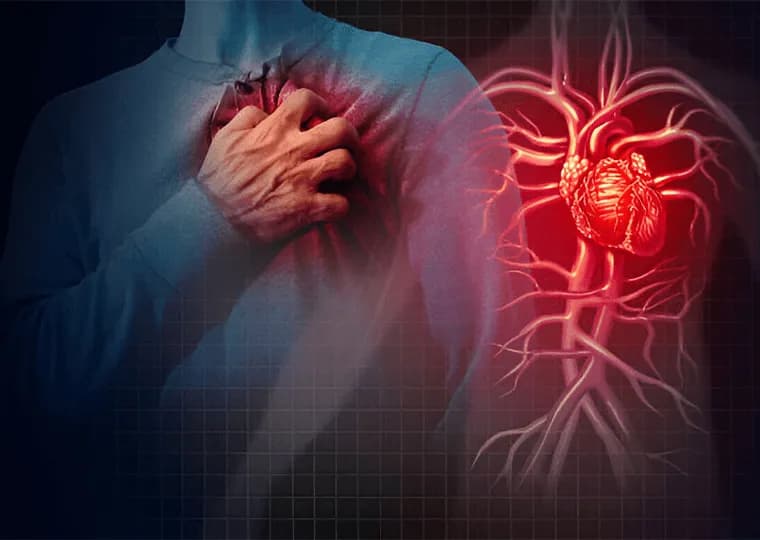
Have you ever experienced an uncomfortable tightness or heaviness in your chest and caught yourself wondering, “Is this something serious, or just a passing pain?” Moments like these can be worrying. Chest pain is one of those symptoms that should never be ignored. While not every episode means you’re having a heart attack, it can still signal that your heart needs attention.
Two common heart conditions often linked with chest pain are angina and a heart attack. At first, they may feel alike, but what’s happening inside the body is very different. More importantly, the urgency of treatment isn’t the same.
Knowing how to tell the difference between angina and a heart attack can make a world of difference; it can guide you to the right action at the right time and may even save your life or that of someone you care about.
Angina, also called angina pectoris, is not a disease on its own but a warning sign of an underlying heart problem, most commonly coronary artery disease (CAD). It happens when the heart muscle doesn’t receive enough blood and oxygen due to narrowing or blockage in the heart’s arteries.
People often describe angina as a tightness, heaviness, squeezing, burning, or pressure in the chest. Sometimes, it may feel like indigestion or heartburn. Apart from chest discomfort, angina can also show up as shortness of breath, fatigue, dizziness, or pain in the shoulders, arms, neck, jaw, or back. Interestingly, symptoms can differ between men and women; women are more likely to experience shortness of breath, nausea, or unusual fatigue instead of just chest pain.
Doctors classify angina into a few different types, depending on when and how it appears:
In simple terms, Angina is your heart’s way of saying, “I’m not getting enough blood.” It should never be ignored because it often points to underlying coronary artery disease, which needs medical attention and lifestyle management.
A heart attack, medically known as myocardial infarction, happens when the blood flow carrying oxygen to the heart muscle is suddenly blocked. Without oxygen, that part of the heart starts to get damaged, and if treatment is not given immediately, the muscle tissue can begin to die. This is why a heart attack is considered a serious, life-threatening medical emergency.
In simple words, A heart attack is your heart’s cry for help when blood flow is completely blocked. Unlike angina, rest won’t make it better; you need urgent medical attention.
Angina Symptoms (Warning Signals)
Heart Attack Symptoms (Medical Emergency)
Knowing how to tell the difference between angina and a heart attack can make all the difference in responding quickly during a critical situation. While both conditions affect the heart and may cause chest pain, what’s happening inside the body, and how urgently you need treatment, are very different.
In simple terms, Angina is your heart’s “warning sign” that blood flow is restricted but temporary, while a heart attack is a medical emergency where blood flow is cut off and damage is happening to the heart muscle.
At Apex Hospital, our cardiologists use advanced diagnostic tools to quickly determine whether you’re experiencing angina or a heart attack:
For Angina
For Heart Attack
If you or your loved one is experiencing chest discomfort, don’t delay. Book your heart check-up at Apex Hospital, Jaipur, today.

Download Our App


Powered By Docfyn