
By Apex Hospitals, 16th June, 2026
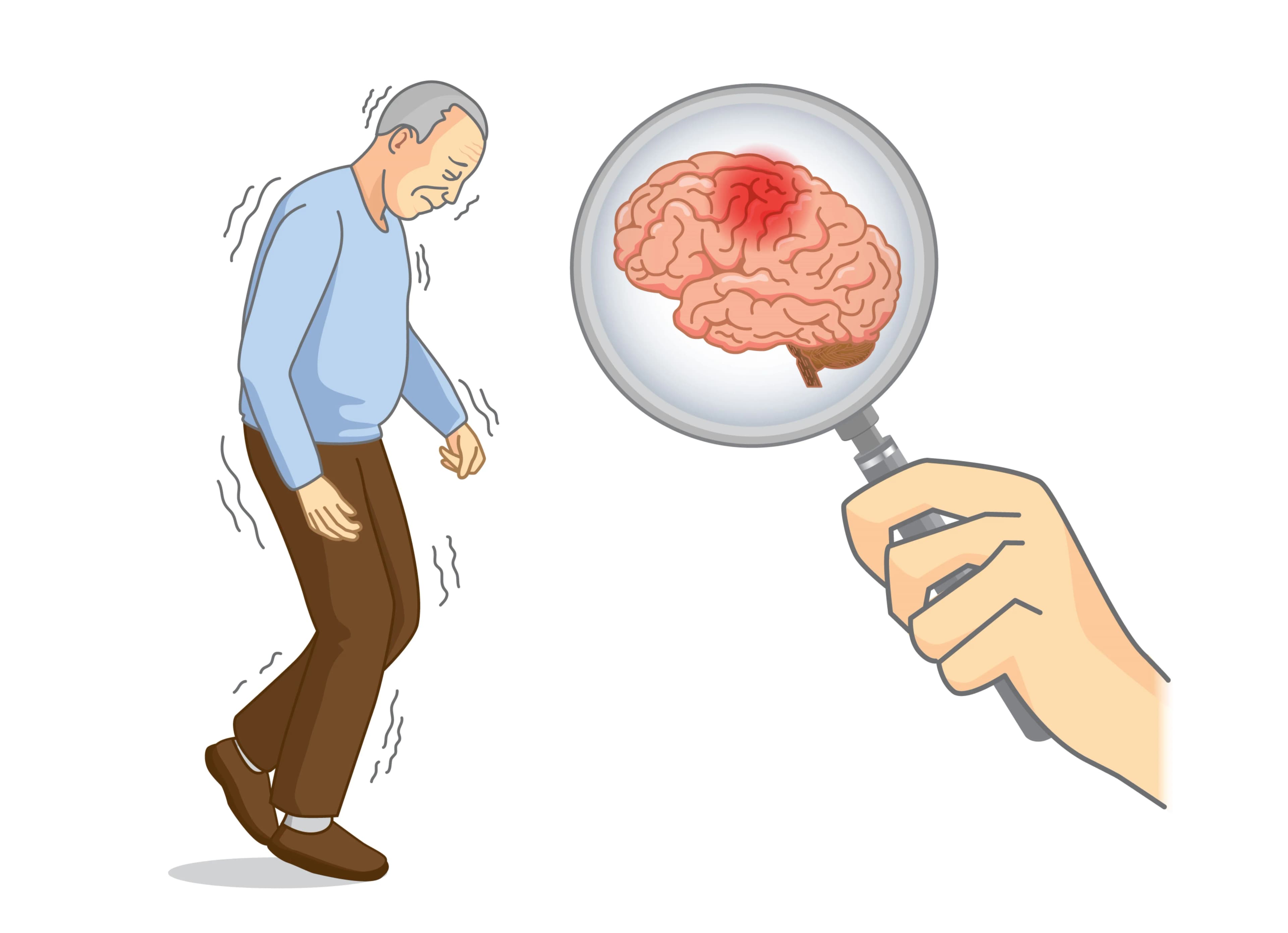
A trembling hand is alarming to notice, whether it happens to you or someone you love. The first thought for many people is Parkinson's disease. That fear is understandable. But trembling hands have many possible causes, and not all of them are Parkinson's.
What matters most is understanding the difference, and knowing when a tremor needs to be evaluated by a neurologist. Because when it is Parkinson's, early diagnosis genuinely changes the course of the condition.
What is Parkinson's Disease? Parkinson's disease is a progressive neurological condition caused by the gradual loss of dopamine-producing cells in a part of the brain called the substantia nigra. Dopamine is the chemical messenger responsible for smooth, coordinated movement. As dopamine levels fall, movement becomes slower, stiffer, and less controlled. |
A tremor is an involuntary, rhythmic shaking of a body part. It is one of the most common movement-related complaints seen at a neurology hospital. But there are several types of tremor, each with a different cause:
Type | When It Occurs | Common Cause |
Rest tremor | When the hand is relaxed and not in use | Parkinson's disease (characteristic sign) |
Essential tremor | During action — writing, holding a cup | Essential tremor (most common tremor disorder) |
Intention tremor | When reaching for something | Cerebellar conditions |
Physiological tremor | Stress, anxiety, caffeine, thyroid overactivity | Often temporary and reversible |
Parkinson's tremor has a specific character: it is a resting tremor, typically affecting one hand first, described as a 'pill-rolling' movement where the thumb and forefinger move against each other. It usually worsens when the hand is at rest and improves when the person is actively using it.
The tremor is the most visible sign, but Parkinson's disease begins long before a visible tremor appears. Many of the earliest symptoms are easily attributed to other causes, which is why years can pass before a diagnosis is made.
• Resting tremor — usually begins in one hand or finger
• Slowness of movement (bradykinesia) — tasks that used to be quick now take longer
• Muscle stiffness or rigidity — arms feel heavy, shoulder aches without clear cause
• Reduced arm swing while walking
• Smaller, more cramped handwriting (micrographia)
• Shuffling gait — shorter steps, feet barely clearing the floor
• Difficulty with balance — mild at first, may lead to falls later
These can appear years before the motor symptoms and are frequently misdiagnosed:
• Loss of sense of smell (anosmia) — one of the earliest signs
• Constipation that is new or progressively worsening
• Acting out dreams during sleep (REM sleep behaviour disorder)
• Soft or monotone voice
• Reduced facial expression (masked face)
• Depression or anxiety with no clear life cause
• Excessive daytime sleepiness
When Should You See a Neurologist in Jaipur? See a neurologist if you notice a resting tremor, significant slowdown in movement, stiffness in limbs or shoulders, changes in handwriting, or a combination of the non-motor symptoms listed above, especially if they have come on gradually over months. Early evaluation at the best neurology hospital in Jaipur can make a meaningful difference to long-term outcomes. |
There is no single blood test or scan that diagnoses Parkinson's disease. Diagnosis is clinical, based on a detailed neurological examination, the pattern of symptoms, and how they evolve over time. A neurologist will assess:
An MRI of the brain may be ordered to rule out other causes.
Parkinson's disease cannot currently be cured, but it can be managed very effectively, particularly when diagnosed early. The goal of treatment is to maintain quality of life, independence, and movement for as long as possible.
• Dopamine agonists: mimic the action of dopamine in the brain
• MAO-B inhibitors: slow the breakdown of dopamine
Regular physiotherapy significantly improves balance, posture, and gait. Speech therapy helps patients who develop soft or slurred speech. These are core to a good Parkinson's care plan, not optional extras.
In selected patients where medicines no longer provide adequate control, deep brain stimulation, a surgical procedure that implants electrodes in specific brain regions, can dramatically improve motor symptoms. It is not a cure, but can give years of improved function.
The earlier Parkinson's is diagnosed, the more time there is to establish effective treatment, maintain function, plan for the future, and begin physiotherapy before significant disability sets in. Patients diagnosed early do markedly better in the long term.
If someone in your family has noticed a tremor, a change in walking, or a slowdown in daily tasks, do not dismiss it as aging. A consultation with a neurologist in Jaipur takes less than an hour and can provide clarity that changes everything.
Concerned about a tremor or movement change? Consult the neurologists at Apex Hospitals, Malviya Nagar — Jaipur's trusted neurology centre. |
No. The most common cause of trembling hands in adults is essential tremor — a separate, benign condition. Parkinson's tremor has specific characteristics (resting, one-sided, pill-rolling) that a neurologist can identify with a clinical examination.
Yes. Early-onset Parkinson's — diagnosed before age 50 — accounts for around 10% of cases. It is less common but does occur and should not be dismissed in younger patients with appropriate symptoms.
Most cases of Parkinson's are not directly inherited. However, certain gene mutations are associated with higher risk. Having a parent with Parkinson's does not mean you will develop it.
Parkinson's disease itself does not significantly shorten life expectancy for most patients. Quality of life depends greatly on how well the condition is managed — which is why early diagnosis and consistent medical care matter.

Download Our App


Powered By Docfyn