By Apex Hospitals, 26th March, 2025
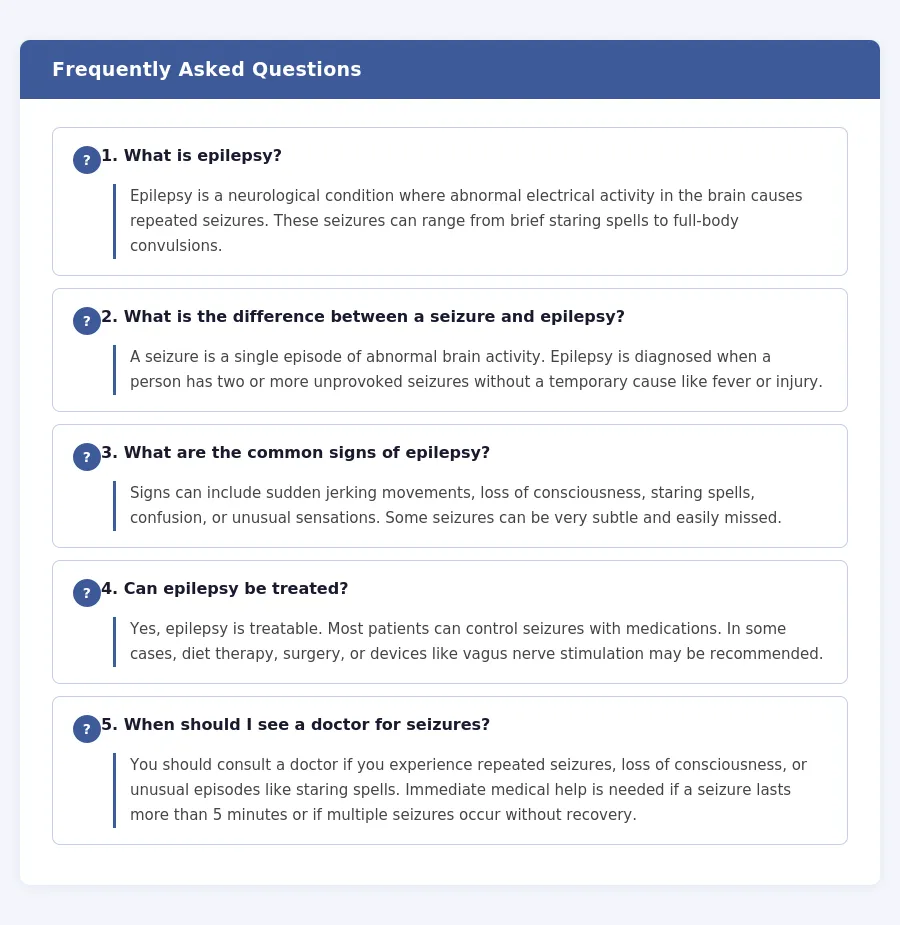
Epilepsy is a neurological condition in which the brain’s electrical activity becomes disrupted, leading to repeated, unprovoked seizures. It can affect people of all ages and is one of the most common neurological disorders worldwide.
A seizure can appear in different ways, from full-body convulsions to brief staring spells or sudden confusion. While it can be alarming, epilepsy is treatable and manageable with the right care.
How common is it? Epilepsy affects around 50 million people globally, with nearly 10–12 million cases in India. Despite this, awareness and timely diagnosis remain limited.
|
A seizure is a sudden surge of electrical activity in the brain. It can cause a wide range of symptoms, from brief staring spells and muscle twitches to full convulsions with loss of consciousness.
Having one seizure does not automatically mean someone has epilepsy. Epilepsy is diagnosed when a person has two or more unprovoked seizures, meaning seizures that occur without a clear, temporary cause like fever, low blood sugar, or a head injury.
Epilepsy is a condition of the brain’s electrical system, think of it like a wiring issue where circuits occasionally misfire. It is not contagious, and it is not a sign of intellectual disability.
Seizures can look very different from one another. Understanding the type helps doctors choose the right treatment. The two main categories are:
These start in one specific area of the brain. The person may remain conscious but experience unusual movements, sensations, or emotions. In some cases, focal seizures can spread to involve the whole brain.
These involve both sides of the brain from the start. They include:
Tonic-clonic seizures (previously called grand mal) — the most well-known type. The person loses consciousness, the body stiffens (tonic phase), and then jerks rhythmically (clonic phase). Usually lasts 1–3 minutes.
Absence seizures — brief episodes where the personal suddenly stops, stares blankly, and is unresponsive for a few seconds. Often mistaken for daydreaming.
Myoclonic seizures — sudden, brief muscle jerks, often in the arms or legs. May happen just after waking up.
Atonic seizures (drop attacks) — sudden loss of muscle tone causing the person to collapse or drop suddenly. Can cause injuries from falls.
Tonic seizures — sudden stiffening of muscles, usually the arms and legs, often causing a fall.
Easy to miss: Absence seizures are frequently overlooked because they look like the person is simply daydreaming or not paying attention, leading to delayed diagnosis |
Epilepsy does not always look the way it does in movies. The signs can be subtle. Here is what to look out for:
Repeated staring spells that last a few seconds and interrupt normal activity
Sudden, brief jerking movements of the arms, legs, or head
Sudden falling or collapsing without warning
Unusual repetitive movements — lip smacking, hand rubbing, or picking at clothes
Temporary confusion or disorientation after a spell
Brief periods of unresponsiveness
Stiffening of the body followed by rhythmic jerking and loss of consciousness
Complaints of unusual sensations, tingling, visual changes, or a rising feeling in the stomach, before a seizure
When to call emergency services: Call an ambulance immediately if a seizure lasts more than 5 minutes, if the person does not regain consciousness after the seizure, if a second seizure follows quickly, or if the person is injured during the seizure. |
In many cases, the exact cause of epilepsy cannot be identified. When no cause is found, it is called idiopathic epilepsy, which often has a genetic basis and tends to respond well to treatment.
When a cause is identified, common ones include:
• Genetic factors
• Brain infections — meningitis, encephalitis, or cerebral malaria
• Head injury — significant trauma to the head
• Brain tumors or structural abnormalities
• Metabolic disorders — conditions affecting the brain’s chemistry
• Stroke or bleeding in the brain
Diagnosis is based on clinical history and supported by investigations such as:
EEG (Electroencephalogram) — records the brain’s electrical activity. It is completely painless and involves small sensors placed on the scalp. An EEG can detect abnormal electrical patterns associated with epilepsy.
MRI of the brain — provides detailed images of the brain’s structure to check for tumours, malformations, or areas of damage that may be causing seizures
Blood tests — to check for metabolic or genetic causes, and to assess overall health before starting medication.
It is important to note that a normal EEG does not rule out epilepsy. The diagnosis is made based on the full clinical picture, not on a single test result.
The goal of epilepsy treatment is to control seizures as completely as possible while minimizing side effects.
These are the first line of treatment. Most patients respond well when medication is taken regularly and consistently.
The ketogenic diet, a high-fat, low-carbohydrate diet, has been shown to reduce seizures in people, particularly those who do not respond well to medication. It is always supervised by a medical team and a dietitian.
For people with drug-resistant epilepsy where seizures originate from a specific, identifiable area of the brain, surgery may be an option. Epilepsy surgery in carefully selected patients can significantly reduce or eliminate seizures.
A small device is implanted under the skin that sends regular electrical impulses to the brain via the vagus nerve. It is used in people who are not suitable for surgery and have not responded to medication.
The good news: Around 70% of people with epilepsy achieve good seizure control with medication. |
A diagnosis of epilepsy can feel overwhelming. With proper treatment and follow-up, most people with epilepsy can live normal, active lives. Managing triggers like lack of sleep, stress, and missed medication plays a key role.
Immediate medical help is required if:
A seizure lasts more than 5 minutes
Multiple seizures occur without recovery
There is injury during a seizure
The person does not regain consciousness
At Apex Hospitals, Jaipur, people with seizures and epilepsy are evaluated and managed by an experienced neurology team equipped with advanced diagnostic facilities including EEG, brain MRI, and neuropsychological assessment. From first seizure evaluation to long-term epilepsy management, families receive comprehensive, specialist-led care.
Is someone you know having seizures?
Get a specialist evaluation at Apex Hospitals, Jaipur.
Book a Consultation
Medically Reviewed By
Dr. Vipin Ola
Director – Neurology
Apex Hospitals, Malviya Nagar Jaipur