
By Apex Hospitals 26th May, 2026
There are moments in critical care when a ventilator is not enough. When the heart is too weak to pump blood, or the lungs too damaged to transfer oxygen, doctors need something more. That something is ECMO.
ECMO, Extracorporeal Membrane Oxygenation, is one of the most advanced forms of life support available in medicine today. It takes over the work of the heart and lungs temporarily, giving the body time to recover, respond to treatment, or prepare for a procedure.
It is not a common treatment. It is not used in every ICU. But for patients in the most critical stages of heart or lung failure, it can be the difference between life and death.
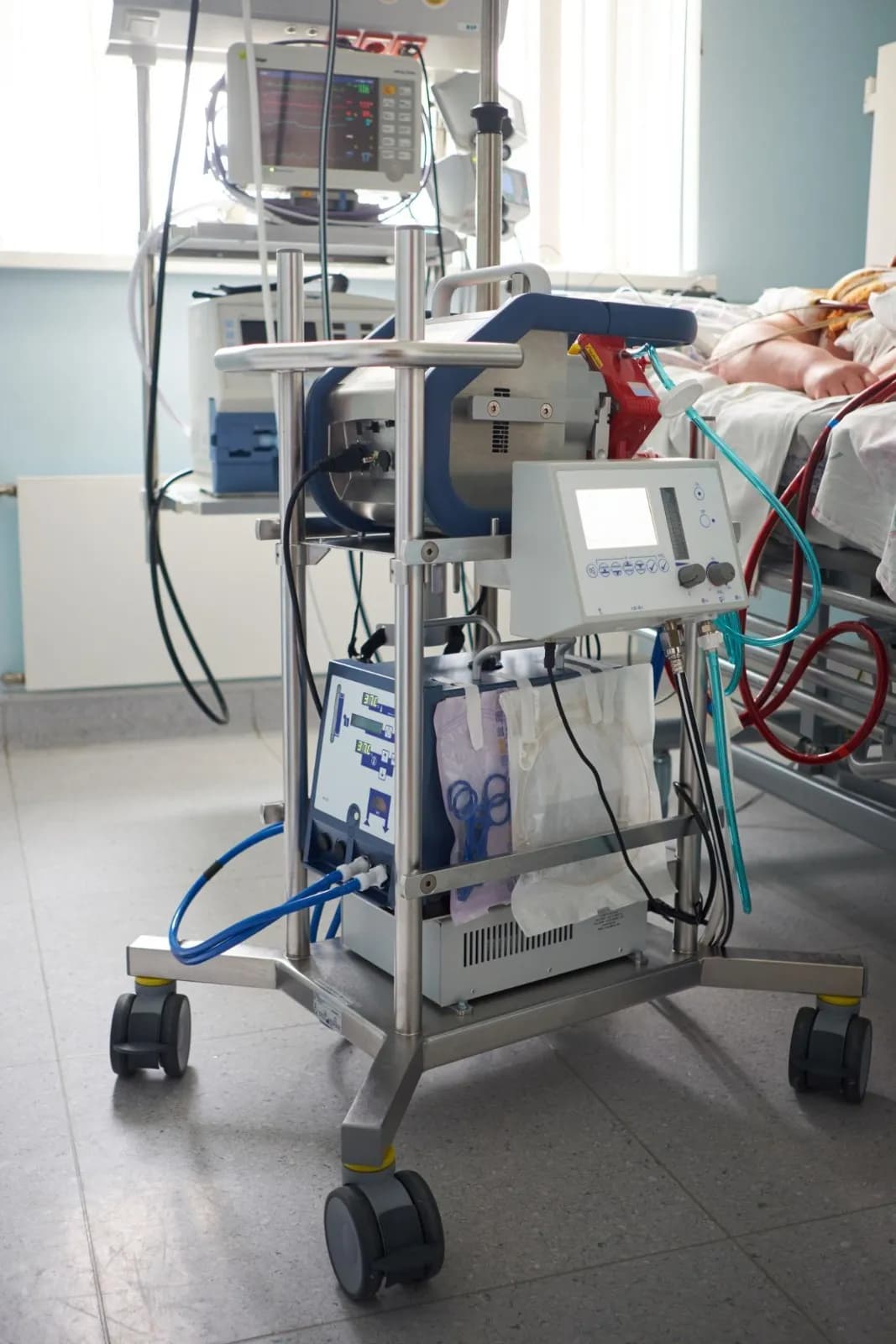
ECMO stands for Extracorporeal Membrane Oxygenation. The word 'extracorporeal' means outside the body. In simple terms, ECMO is a machine that does the job of the heart and lungs when these organs are unable to function on their own.
The machine draws blood out of the body, removes carbon dioxide, adds oxygen to it, and returns it to circulation. This happens continuously, around the clock, while the patient's own organs rest and recover.
ECMO is typically used in the ICU and requires a specialised team of doctors, perfusionists, and nurses trained specifically in ECMO management.
There are two main types:
1. VV ECMO (Veno-Venous ECMO) Used when the lungs are failing but the heart is still functioning. Blood is drawn from a vein, oxygenated, and returned to another vein. This is commonly used in cases of severe ARDS (Acute Respiratory Distress Syndrome), COVID-19 pneumonia, or other serious lung infections.
2. VA ECMO (Veno-Arterial ECMO) Used when both the heart and lungs are failing. Blood is drawn from a vein, oxygenated, and returned directly to an artery, bypassing the heart entirely. This is used in cardiac arrest, cardiogenic shock, and severe heart failure.
ECMO is considered when standard treatments, ventilators, medications, oxygen therapy, are no longer sufficient. Conditions that may require ECMO include:
The patient remains sedated during ECMO. The medical team monitors organ function, blood parameters, and the ECMO circuit continuously.
The duration depends entirely on the underlying condition. Some patients are on ECMO for a few days while a reversible condition is treated. Others may need it for several weeks, for example, as a bridge while waiting for a donor heart.
Once the heart or lungs show signs of recovery, the ECMO team gradually reduces support, a process called weaning, to see if the organs can manage independently.
ECMO is a high-risk intervention used only when the alternative is near-certain death. Possible complications include:
The decision to initiate ECMO is made carefully by the ICU team, taking into account the patient's overall condition, age, diagnosis, and likelihood of recovery.
A ventilator supports breathing by pushing air in and out of the lungs. It helps when the lungs can still exchange some oxygen but need mechanical support to do so.
ECMO, on the other hand, bypasses the lungs entirely. It oxygenates blood outside the body, which means it can support patients even when the lungs have almost completely stopped working.
In some cases, a patient on ECMO may still be on a ventilator at low settings, to keep the lungs gently inflated and prevent them from collapsing during recovery.
Apex Hospitals has been running an active ECMO programme since 2021. With over 50 ECMO cases and an 80% survival rate, the programme is one of the most established in Rajasthan.
The Critical Care team at Apex manages ECMO as part of a comprehensive ICU setup that includes 160+ ICU beds across units, NABH-accredited care protocols, and specialists in pulmonology, cardiology, cardiac surgery, and critical care medicine.
For families facing an ECMO situation, the team at Apex provides detailed counselling, round-the-clock monitoring, and transparent communication throughout the process.
If you have a family member in a critical condition and need guidance on ECMO or advanced ICU care, the team at Apex Hospitals is available to help. Book your appointment now.
1. Is ECMO painful for the patient?
Patients on ECMO are typically sedated and on pain management, so they do not experience discomfort from the machine or the cannulas.
2. Can a patient survive on ECMO?
Yes. ECMO is a supportive treatment, not a cure. Its purpose is to keep the patient alive and stable while the underlying condition is treated. Survival depends on the diagnosis, the patient's overall health, and how quickly ECMO is initiated.
3. Who decides if a patient needs ECMO?
The decision is made by the treating critical care specialist, usually in consultation with cardiologists and cardiac surgeons, based on the patient's clinical condition and response to standard treatments.

Download Our App


Powered By Docfyn