
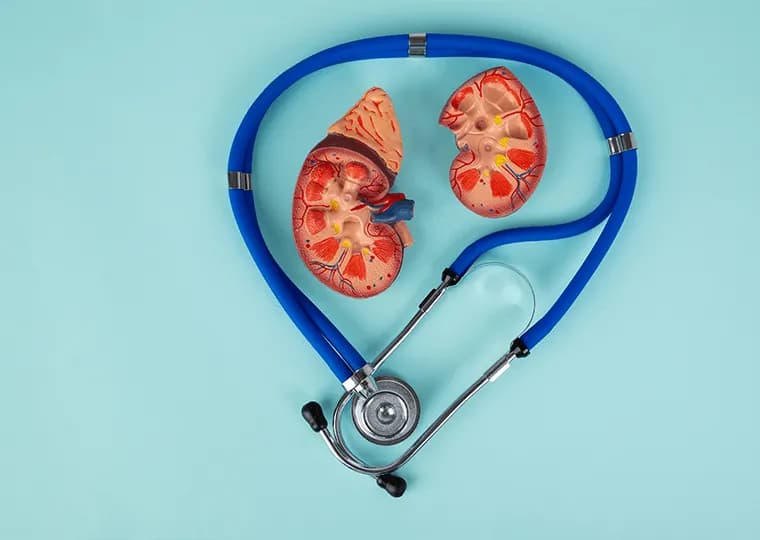
Kidney failure, also known as end-stage renal disease (ESRD), occurs when the kidneys lose their ability to filter waste and excess fluids from the blood. This is often the final stage of chronic kidney disease (CKD), a condition that affects nearly 10–15% of adults worldwide, many of whom are unaware of their illness. Risk factors like diabetes, high blood pressure, obesity, smoking, and family history increase the chances of developing CKD. In fact, one in three people with diabetes and one in five with high blood pressure will develop kidney disease at some point. Women are slightly more likely to experience CKD than men, and the condition is particularly common in older adults.
When kidneys can no longer function properly, treatment becomes essential to sustain life. The two primary options are dialysis and kidney transplantation. Dialysis can be of two types: haemodialysis, which uses a machine to filter the blood, and peritoneal dialysis, which uses the lining of the abdomen as a natural filter. Both help remove waste products, balance electrolytes, and control fluid buildup, but they only partially replace kidney function and usually require lifelong sessions unless a transplant is performed. A kidney transplant, on the other hand, offers a more complete restoration of kidney function, though it involves surgery, donor availability, and long-term use of immunosuppressant medicines.
Choosing between dialysis and transplant depends on various factors, including age, overall health, medical history, and lifestyle preferences. While dialysis can manage symptoms effectively, transplantation often provides a better quality of life and long-term outcomes for suitable patients. It’s important to discuss both options with your healthcare provider, weigh the pros and cons, and decide on the treatment that best fits your condition and personal circumstances.
Kidney failure, also called renal failure or end-stage renal disease (ESRD), is a serious medical condition where the kidneys lose their ability to do their main job, filtering waste products, toxins, and excess fluids from the blood. In a healthy body, the kidneys:
When the kidneys fail, these functions are disrupted. Waste and fluid build-up in the body can lead to symptoms such as swelling in the legs and feet, fatigue, nausea, confusion, and changes in urination. Kidney failure can happen suddenly (acute kidney failure) due to severe injury, infection, or certain medications, or it can develop slowly over time (chronic kidney disease) caused by conditions like diabetes or high blood pressure. In advanced stages, treatment such as dialysis or a kidney transplant becomes necessary to keep the patient alive.
You may need dialysis or a transplant if you have:
Dialysis
A treatment that filters waste and excess fluids from the blood when the kidneys stop working.
Two types: Haemodialysis (machine-based) and Peritoneal dialysis (using abdominal lining).
Done multiple times a week, either at a hospital or at home.
Less invasive compared to surgery, but requires ongoing sessions.
Helps manage symptoms but does not cure kidney failure.
May cause side effects like fatigue, low blood pressure, or infections.
Kidney Transplant
- Surgical procedure where a healthy kidney from a donor is placed in the patient’s body.
- Can fully restore kidney function if successful.
- Considered the best long-term treatment for end-stage kidney disease.
- Requires lifelong medicines to prevent organ rejection.
- Involves surgical risks and waiting time for a suitable donor.
- Offers a better quality of life compared to dialysis for most patients.
At Apex Hospital, the process begins with:
As Dr. Ajay Pal, Director- Nephrology & Renal Transplant at Apex Hospital, explains:
“Every patient is different. Some may do well on dialysis for years, while others are better candidates for an early transplant.”
1. Dialysis
Types of Dialysis:
Haemodialysis: Blood is filtered using a machine.
Peritoneal dialysis: Uses the lining of your abdomen to filter blood.
Advantages: Readily available, life-saving, and can be started quickly.
Challenges: Time-consuming, dietary restrictions, long-term fatigue.
2. Kidney Transplant
Procedure: A healthy kidney is transplanted from a donor (living or deceased).
Advantages: Better quality of life, fewer dietary restrictions, improved longevity.
Challenges: Surgery risks, finding a suitable donor, lifelong use of anti-rejection medicines.
While dialysis and transplant are treatments, caring for your kidneys early can delay or prevent severe damage. Here are some habits to adopt:
If you experience persistent swelling, extreme fatigue, or changes in urination, don’t ignore them. Early consultation can save your kidney health. Don’t delay making the right choice for your kidney health. Call us today at +91-9829030011 or book your consultation online with Apex Hospitals.


Download Our App


Powered By Docfyn