
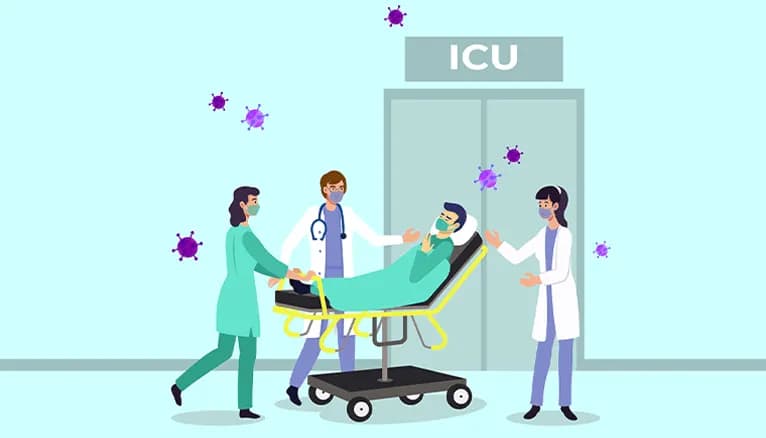
Nosocomial infections, or healthcare-associated infections (HAIs), occur during a patient's stay in a healthcare facility, such as a hospital or an intensive care unit (ICU).
These infections are not present or incubating at admission and are typically caused by microorganisms resistant to antibiotics. Nosocomial infections pose a significant risk to patients in ICUs, as they can lead to prolonged hospital stays, increased healthcare costs, and even death. Therefore, it is crucial to understand the definition of nosocomial infections and their impact on patients in the ICU.
Nosocomial infections are defined as infections that are acquired in a healthcare facility and are not related to the patient's original condition. They can be caused by bacteria, viruses, fungi, or parasites and are often associated with invasive procedures, the use of medical devices, or the transmission of pathogens from healthcare workers to patients. Both patients and medical staff spread germs among themselves inside hospitals. Sometimes, even when feeling unwell, people carry these viruses, which means they unknowingly distribute them to others.
The most common types of nosocomial infections include:
Nosocomial infections occur when you become ill within 48 hours of checking into the hospital due to these microorganisms. These infections are a significant concern in ICUs, where patients are critically sick and have weakened immune systems, making them more susceptible to infections.
Nosocomial infections can have a severe impact on patients in the ICU. They can lead to extended hospital stays, increased healthcare costs, and even death. Patients in the ICU are already critically ill and have compromised immune systems, making them more vulnerable to infections. Nosocomial infections can also delay recovery and increase the risk of developing complications. In addition to the physical impact, these infections can also affect patients' and their families' mental and emotional well-being.
Diagnosing nosocomial infections in ICUs can be challenging, as many symptoms are similar to those of the underlying illness. However, healthcare providers use various diagnostic tests, such as blood cultures, urine cultures, and imaging studies, to identify the causative organisms. Once the infection is diagnosed, appropriate treatment is initiated. This may include antibiotics, antifungal medications, or antiviral drugs, depending on the type of infection. In some cases, surgical intervention may be necessary to remove infected tissue or drain abscesses.
Preventing nosocomial infections in ICUs requires a multi-faceted approach that involves healthcare providers, patients, and their families.
Implementing best practices for infection control in ICUs is essential to reduce the risk of nosocomial infections. This includes:
Reducing nosocomial infections in ICUs requires collaborative efforts from healthcare providers, administrators, and policymakers. This includes implementing evidence-based practices, providing education and training to healthcare workers, and promoting a culture of safety and accountability. It is also essential to establish robust surveillance systems to monitor infection rates, identify outbreaks, and track the effectiveness of prevention strategies. Collaborating with other healthcare facilities and organizations can foster the exchange of best practices and facilitate the implementation of standardized infection control measures.
Nosocomial infections pose a significant threat to patients in ICUs, leading to increased morbidity, mortality, and healthcare costs. Defining and understanding these infections is crucial to effectively prevent, diagnose, and treat them. By implementing best practices for infection control and promoting collaborative efforts, healthcare facilities can reduce the incidence of nosocomial infections and improve patient outcomes. Addressing nosocomial infections in ICUs requires a comprehensive approach that prioritizes patient safety, quality care, and the well-being of healthcare workers. Only through these efforts can we minimize the impact of nosocomial infections and provide the best possible care to patients in the ICU.

Download Our App


Powered By Docfyn