
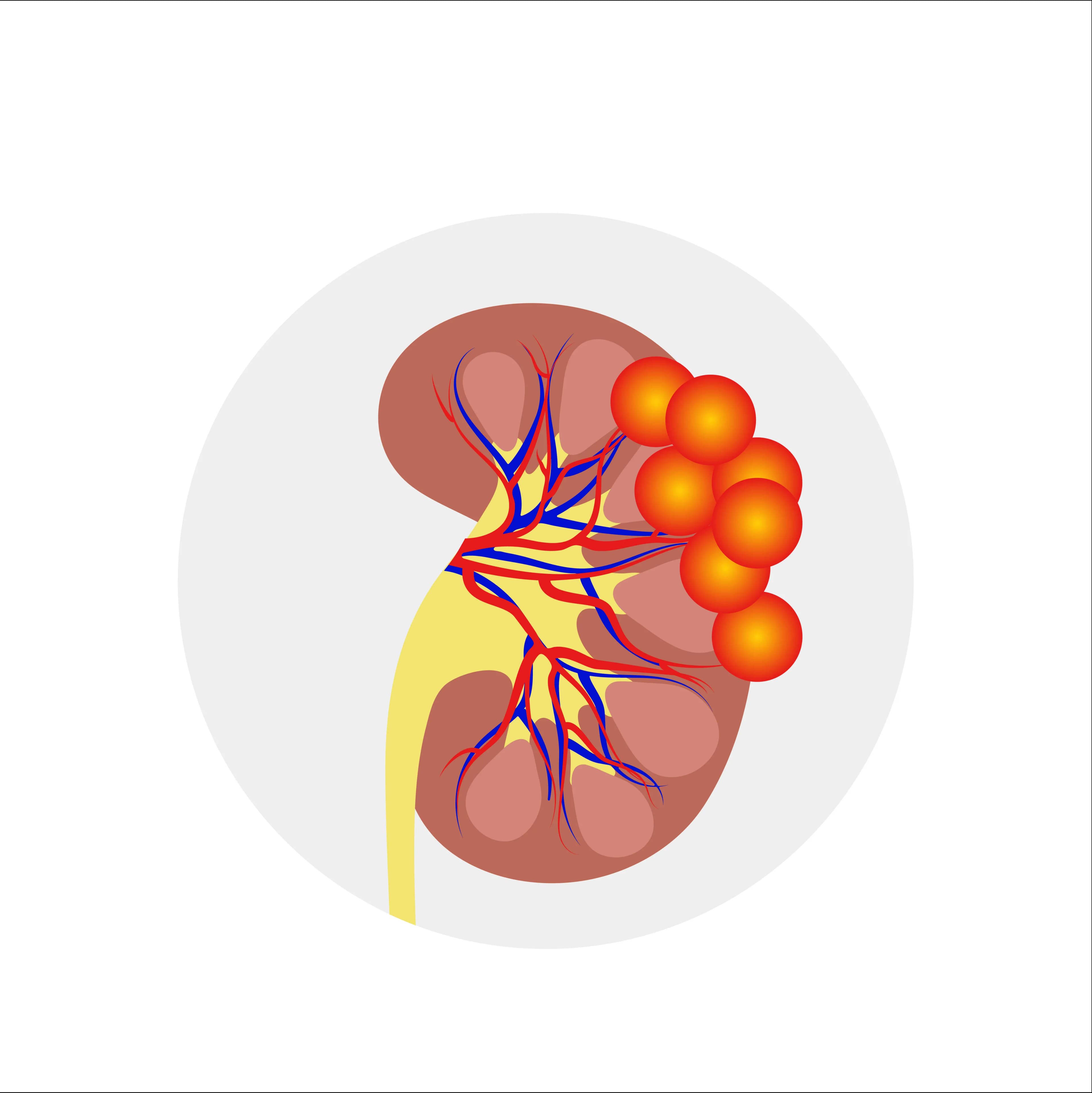
Not all kidney cancers are the same. While many cases are detected early and treated with standard surgery, some present at an advanced stage, with the tumor growing beyond the kidney and into the body’s major blood vessels. This is one such case.
A 50-year-old patient diagnosed with a right kidney tumor extending into the Inferior Vena Cava (IVC) underwent a rare and highly complex surgical procedure at Apex Hospitals, Jaipur, resulting in a full recovery.
To understand why this case was so serious, it helps to know what the IVC is. The Inferior Vena Cava is the large vein responsible for carrying blood from the lower half of the body back up to the heart. It runs right next to the kidney.
The Inferior Vena Cava (IVC) is the large vein that carries oxygen-depleted blood from the lower body back to the heart. In some cases of kidney cancer (renal cell carcinoma), the tumor does not stay confined to the kidney, it grows into the renal vein and can extend further up into the IVC.
This extension is called a tumor thrombus. Unlike a regular blood clot, a tumor thrombus is living cancer tissue. And it was moving closer to the heart.
Why this is dangerous: If a tumor thrombus reaches the heart, it can cause sudden cardiac arrest or fatal complications. Immediate surgical intervention is the only option.
This condition is rare, occurring in approximately 4–5% of kidney cancer cases.
In this patient’s case, the kidney tumor had not stayed where it started. It had grown into the renal vein and then pushed further up into the IVC itself. This growing mass of tumor tissue inside the blood vessel is called a tumor thrombus.
The patient came in with symptoms that raised concern. After detailed imaging, the scans told a clear story, the tumour in the right kidney had already spread into the IVC. It was a finding that immediately changed the nature of the treatment required.
This was no longer a straightforward kidney removal. The team, led by Dr. Saurabh Jain, Additional Director – Urology and Kidney Transplant, sat down to plan every step of the surgery carefully before a single incision was made. Four hours. That’s how long the surgical team worked to give this patient a second chance
“The surgery involved a high risk of severe blood loss, which could have been life-threatening. However, with coordinated teamwork and precise surgical planning, we were able to manage the situation successfully.” — Dr. Saurabh Jain, Additional Director – Urology & Kidney Transplant, Apex Hospitals Jaipur |
Removing a kidney is a known procedure. But when a tumor has grown into one of the body’s largest blood vessels, the difficulty increases dramatically. Here’s why:
· The IVC carries a very high volume of blood. Opening it carries the risk of rapid, massive blood loss.
· The tumor must come out in one piece. If it fragments, cancer cells can spread.
· Repairing the IVC after tumor removal requires precision, the blood vessel must be restored perfectly.
· The heart is right there. Any complication can turn cardiac within seconds.
This kind of surgery is only possible where everything is in place, urological expertise, vascular surgical support, advanced ICU care, and blood management protocols
Following the surgery, the patient was closely monitored in the Intensive Care Unit at Apex Hospitals. Recovery was smooth and the patient was discharged in stable condition.
Dr. Jain credited the outcome to the availability of advanced medical infrastructure at Apex Hospitals and the coordinated effort of the multidisciplinary surgical team.
Kidney cancer often develops without noticeable symptoms in its early stages. By the time symptoms appear, the disease may have already progressed. Knowing the warning signs can make a critical difference.
· Blood in the urine (hematuria) — even if painless or occasional
· Persistent pain or a dull ache in the side or lower back
· A lump or mass felt in the abdomen or flank
· Unexplained weight loss or loss of appetite
· Persistent fatigue or anemia
· Fever that recurs without an obvious cause
If you or a family member experiences any of these symptoms, consult a urologist promptly. Early-stage kidney cancer is far more treatable and carries significantly better outcomes.
Apex Hospitals, Jaipur is equipped with state-of-the-art surgical infrastructure to handle the most complex urological and oncological cases. The hospital's urology and kidney transplant program is supported by:
· Advanced robotic surgery systems for precision oncological procedures
· A dedicated Urology and Kidney Transplant department with 200+ successful transplants
· High-dependency ICU and critical care units for post-operative monitoring
· A multidisciplinary team of urologists, vascular surgeons, oncologists, and anesthesiologists
· Comprehensive pre- and post-operative care protocols
Concerned about kidney health or urological symptoms?
Early evaluation can be life-changing. Don't wait. Book your appointment.
Dr. Saurabh Jain
Additional Director – Urology & Kidney Transplant
MS – General Surgery, DNB- Urology


Download Our App


Powered By Docfyn