
By Apex Hospitals 9th May, 2026
A procedure that was once only available in metro cities- now in Rajasthan.
When a patient is told they need a bone marrow transplant, the first question is almost always, is there a matching donor? And for many patients, the answer is no. That wait for a matched donor can stretch into months. For someone with a serious blood disorder, those months matter enormously.
At Apex Hospitals, Jaipur, a patient with exactly this problem got a second chance. The hospital has successfully performed a Half-Match Bone Marrow Transplant, medically known as a Haploidentical BMT; for a patient suffering from Myelodysplastic Syndrome, a serious blood disorder that can turn into blood cancer if left untreated. The procedure was performed by Dr. Ashish Verma, Consultant – Haemato-Oncology, along with the BMT team at Apex Hospitals, Malviya Nagar, Jaipur.
This is one of the few times this procedure has been performed in Rajasthan.
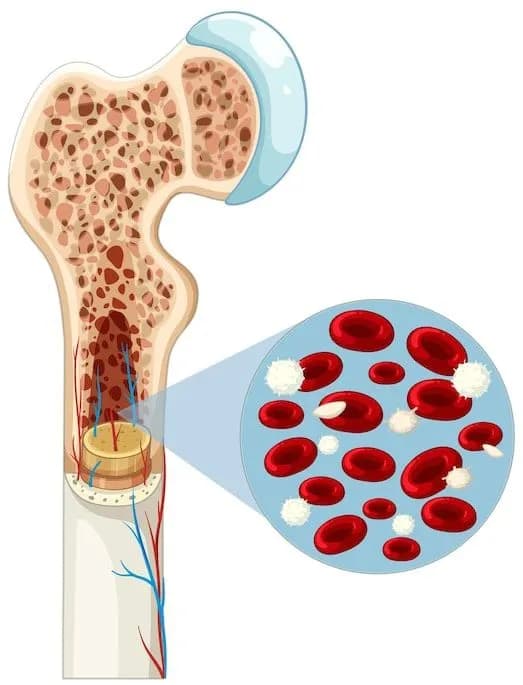
Most of us know that bone marrow is responsible for making blood cells. In a healthy body, the bone marrow continuously produces red blood cells, white blood cells, and platelets, each with their own job to do.
In Myelodysplastic Syndrome, or MDS, this process breaks down. The bone marrow starts producing blood cells that are either too few or not working properly. The patient feels constantly tired, falls sick more often than usual, and may bleed or bruise easily. What makes MDS dangerous is that over time, it can develop into acute myeloid leukaemia, a form of blood cancer. According to published haematology data, approximately 30% of MDS cases progress to acute leukaemia if not treated in time.
For many MDS patients, a bone marrow transplant is the only treatment that offers a real chance at recovery.
A bone marrow transplant works by replacing the patient's diseased bone marrow with healthy stem cells from a donor. But for this to work, the donor's tissue type, called HLA or Human Leukocyte Antigen, needs to closely match the patient's.
The closest match usually comes from a sibling. But even then, a full match is found in only about 25 to 30 percent of cases, according to data from the Indian Council of Medical Research (ICMR). For everyone else, the search goes to national or international donor registries, and that search can take months, sometimes longer.
For a patient whose condition is progressing, waiting that long is simply not an option.
A Haploidentical BMT or Half-Match transplant works differently. Instead of needing a fully matched donor, the patient can use a family member who is only a 50 percent match. That could be a parent, a child, or a brother or sister.
Almost every patient has at least one such family member. Which means the wait for a donor becomes much, much shorter.
This sounds straightforward, but medically it is anything but. A half-match transplant carries a higher risk of complications, most significantly, a condition called Graft-versus-Host Disease (GvHD), where the donor's immune cells begin attacking the patient's body after the transplant. Managing this requires real expertise, careful monitoring, and a team that knows what to watch for and when to act.
The patient, a father, came in with a diagnosis of Myelodysplastic Syndrome. A fully matched donor was not available. In a deeply personal act of care, his son stepped forward as the donor, a half-match, but enough. Dr. Ashish Verma and the BMT team carefully evaluated the son as a donor and proceeded with the Haploidentical BMT. The transplant was successful.
This outcome did not happen by chance. It required careful donor evaluation, precise preparation of the patient before the transplant, skilled execution of the procedure itself, and close monitoring during recovery. Every step of the way, the team managed the risks that come with a half-match transplant and the patient came through.
"In cases like these, the biggest barrier is often the assumption that treatment isn't possible without a perfect donor match. Haploidentical BMT changes that. Almost every patient has a half-matched family member- a parent, a child, a sibling. In this case, it was a son who gave his father a second chance at life. With the right preparation and post-transplant care, outcomes can be very good. Our goal at Apex Hospitals is to make sure patients in Rajasthan don't have to travel to another city to access this kind of care."
— Dr. Ashish Verma, Consultant – Haemato-Oncology, MBBS, MD (Immuno-Haematology), PDF (Clinical Haematology), Apex Hospitals, Malviya Nagar, Jaipur.
Until recently, patients in Rajasthan who needed a bone marrow transplant, especially one as specialised as a haploidentical BMT, had little choice but to travel to Delhi, Mumbai, or another major city. That meant leaving home, arranging accommodation for family members, and managing all of this while dealing with a serious illness.
Apex Hospitals is changing that. This successful transplant is proof that advanced blood cancer and bone marrow transplant care is now available within Rajasthan. Patients do not have to go far. They do not have to wait as long. And they can recover closer to their families.
Apex Hospitals has a dedicated bone marrow transplant unit with HEPA-filtered rooms, strict infection control protocols, and round-the-clock monitoring. The programme is led by Dr. Ashish Verma, who completed his fellowship in Clinical Haematology at Christian Medical College (CMC) Vellore, one of India's top institutions for haematology and stem cell transplantation, and has trained in Stem Cell Harvest and Cryopreservation at Medanta, Gurgaon.
The programme covers all types of transplants, autologous (using the patient's own stem cells), allogeneic (fully matched donor), and now haploidentical (half-match family donor).
If you or someone in your family has been diagnosed with MDS, leukaemia, lymphoma, or aplastic anaemia, and a bone marrow transplant has been recommended, our team can help you understand your options, including whether a half-match family donor could work for you.
Medically Reviewed by:
Dr. Ashish Verma, Consultant – Haemato-Oncology
MBBS, MD (Immuno-Haematology, SGPGI), PDF (Clinical Haematology, CMC Vellore)
Apex Hospitals, Malviya Nagar, Jaipur

Download Our App


Powered By Docfyn