
By Apex Hospitals 11th May, 2026
A 74-year-old woman came to Apex Hospitals, Malviya Nagar, Jaipur with a problem that had been building for 10 years. Both her knees had given up on her. She could not walk 100 metres without stopping. Climbing stairs was out of the question. Even moving around her own home had become a daily struggle.
She had previously been treated for breast cancer. She had undergone a hysterectomy, gallbladder surgery, and bariatric surgery. Her weight was significantly high. Any one of these factors alone would make a surgeon pause. Together, they made this one of the more complex cases our orthopaedic team had taken on.
But pain that has lasted 10 years deserves a real answer, not just management.
Both knees had severe osteoarthritis, a condition where the cartilage that cushions the knee joint wears away completely, leaving bone rubbing against bone. It is one of the most common causes of chronic pain and disability in older adults, and when it reaches this stage, no amount of physiotherapy or medication can reverse it.
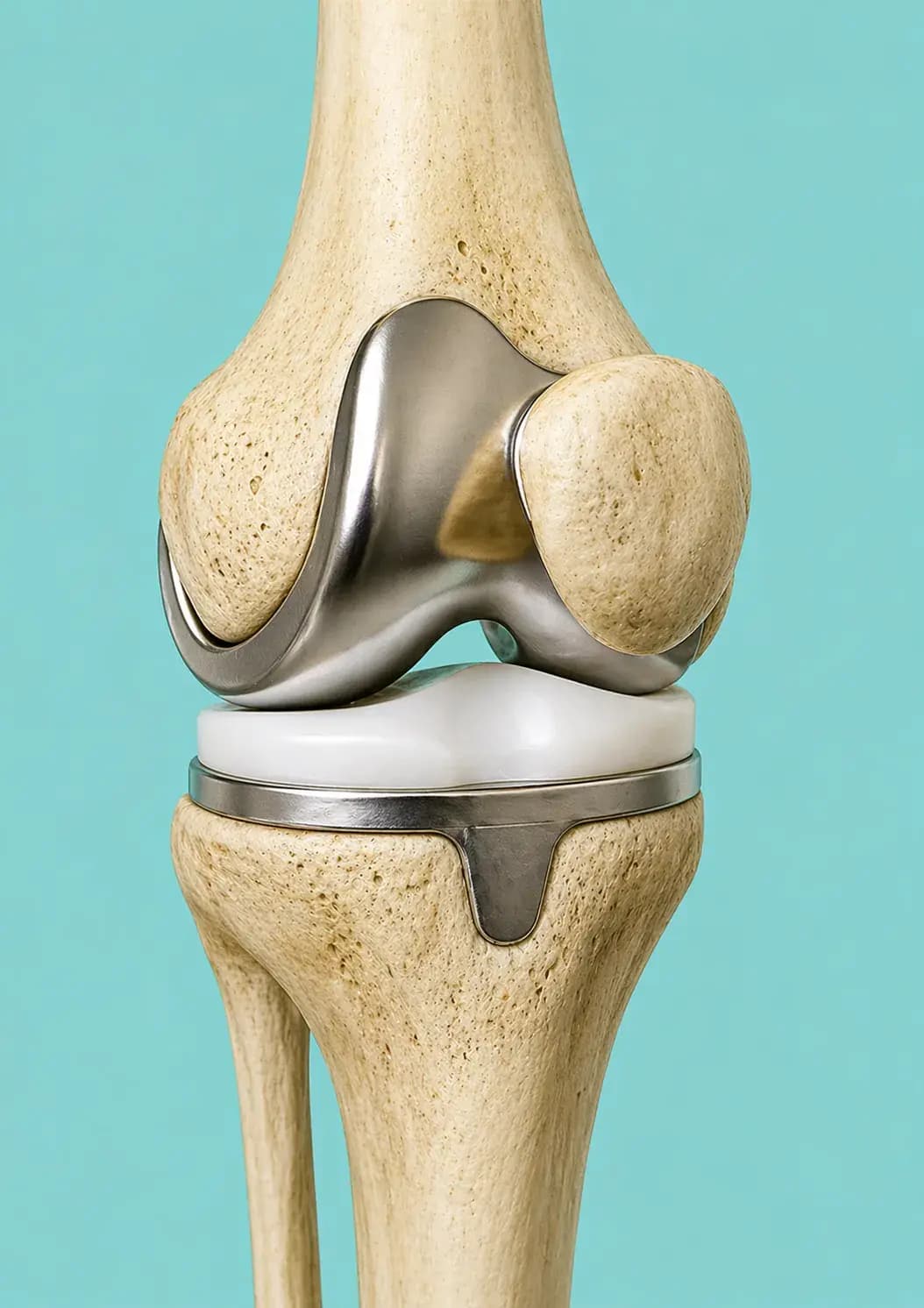
The only real solution is knee replacement, replacing the damaged joint with an artificial one that functions like a healthy knee.
In her case, both knees needed to be replaced. That meant a bilateral total knee replacement, both knees done together in a single surgery.
For a patient with her history, this was not a decision taken lightly.
Standard knee replacement surgery is a well-established procedure. But when a patient has multiple previous surgeries, significant weight, and a history of serious illness, the margin for error becomes very narrow. You need to get the implant positioning exactly right. You need to minimise blood loss. You need to cause as little disruption to the surrounding tissue as possible.
This is exactly where robotic-assisted surgery changes the outcome.
At Apex Hospitals, Malviya Nagar, Jaipur, bilateral knee replacement is performed using the CORI Surgical System by Smith+Nephew. This is a handheld robotic platform that works without pre-operative CT scans, it maps the patient’s knee in real time during the procedure and guides the surgeon with live data throughout.
What this means in practice is precise bone preparation, accurate implant alignment, and significantly less trauma to the soft tissue around the joint. For a patient who had already been through multiple major surgeries, less trauma meant faster healing and a much lower risk of complications.
The procedure went well. Both knees were replaced in a single surgery.
Within 24 hours, she was on her feet and walking.
By Day 3, she was climbing stairs.
On Day 4, she went home.
For a 74-year-old patient with her medical background, this recovery timeline is not something that happens by accident. It is the direct result of a precise surgical technique, the right technology, and a team that managed every risk carefully, before, during, and after the procedure.
“This was a patient who had lived with pain for 10 years and had been told surgery was too risky. Her history was genuinely complex, multiple previous surgeries, high BMI, and age. But when you have the right tools and you plan carefully, complex does not have to mean impossible. Robotic surgery gave us the accuracy we needed to do this safely. Seeing her walk the next day, that is why we do this work.”
— Dr. Himanshu Khichar, Senior Consultant – Orthopaedics, Joint Replacement & Sports Injury, MBBS, MS-Orthopaedics, FJRS (Fellowship in Robotic Joint Replacement Surgeries), Apex Hospitals, Malviya Nagar, Jaipur
Robotic knee replacement is suitable for most patients who need a knee replacement, but it is particularly valuable for patients who are older, have a higher body weight, have complex anatomy, or have undergone previous surgeries around the joint.
The common concerns patients have before surgery are usually about pain during recovery, how long they will be in hospital, and whether they will be able to walk normally again. Robotic surgery addresses all three, the precision of the procedure means less post-operative pain, shorter hospital stays, and a more natural feeling knee after recovery.
If you have been putting off knee replacement because you were told you are not a good candidate, or because you are worried about the risks, it is worth getting a second opinion. Especially if you are in significant daily pain.
Dr. Himanshu Khichar holds a Fellowship in Robotic Joint Replacement Surgeries (FJRS), a specialised qualification that goes beyond standard orthopaedic training to focus specifically on robotic-assisted procedures. He leads the joint replacement programme at Apex Hospitals, Malviya Nagar, where robotic knee and hip replacement surgeries are performed using the CORI Surgical System.
The programme is built for patients who need more than a routine procedure, those with complex histories, multiple risk factors, or cases that have been turned down elsewhere.
If you or someone in your family is dealing with chronic knee pain and has been told that surgery is too risky, our team is happy to evaluate the case and give you an honest assessment of your options.
Medically Reviewed by:
Senior Consultant – Orthopaedics, Joint Replacement & Sports Injury
MBBS, MS-Orthopaedics, FJRS (Fellowship in Robotic Joint Replacement Surgeries)
Apex Hospitals, Malviya Nagar, Jaipur

Download Our App


Powered By Docfyn