

Aplastic Anemia Treatment: What Are Your Options in India?
Aplastic Anemia Treatment: What Are Your Options in India?
A comprehensive guide to understanding aplastic anemia, its diagnosis, and the full spectrum of treatment pathways available in India — from immunosuppressive therapy to bone marrow transplantation.
What Is Aplastic Anemia?
Aplastic anemia is a rare but serious blood disorder in which the bone marrow stops producing enough new blood cells — red blood cells, white blood cells, and platelets. Unlike nutritional anemias caused by iron or vitamin deficiency, aplastic anemia results from damage to the stem cells inside the bone marrow itself. The condition can develop at any age, though it is more common in young adults and the elderly.
According to data published by the National Institutes of Health (NIH), the incidence of aplastic anemia in Asia — including India — is two to three times higher than in Western countries, making it a clinically significant concern for Indian patients and their families.
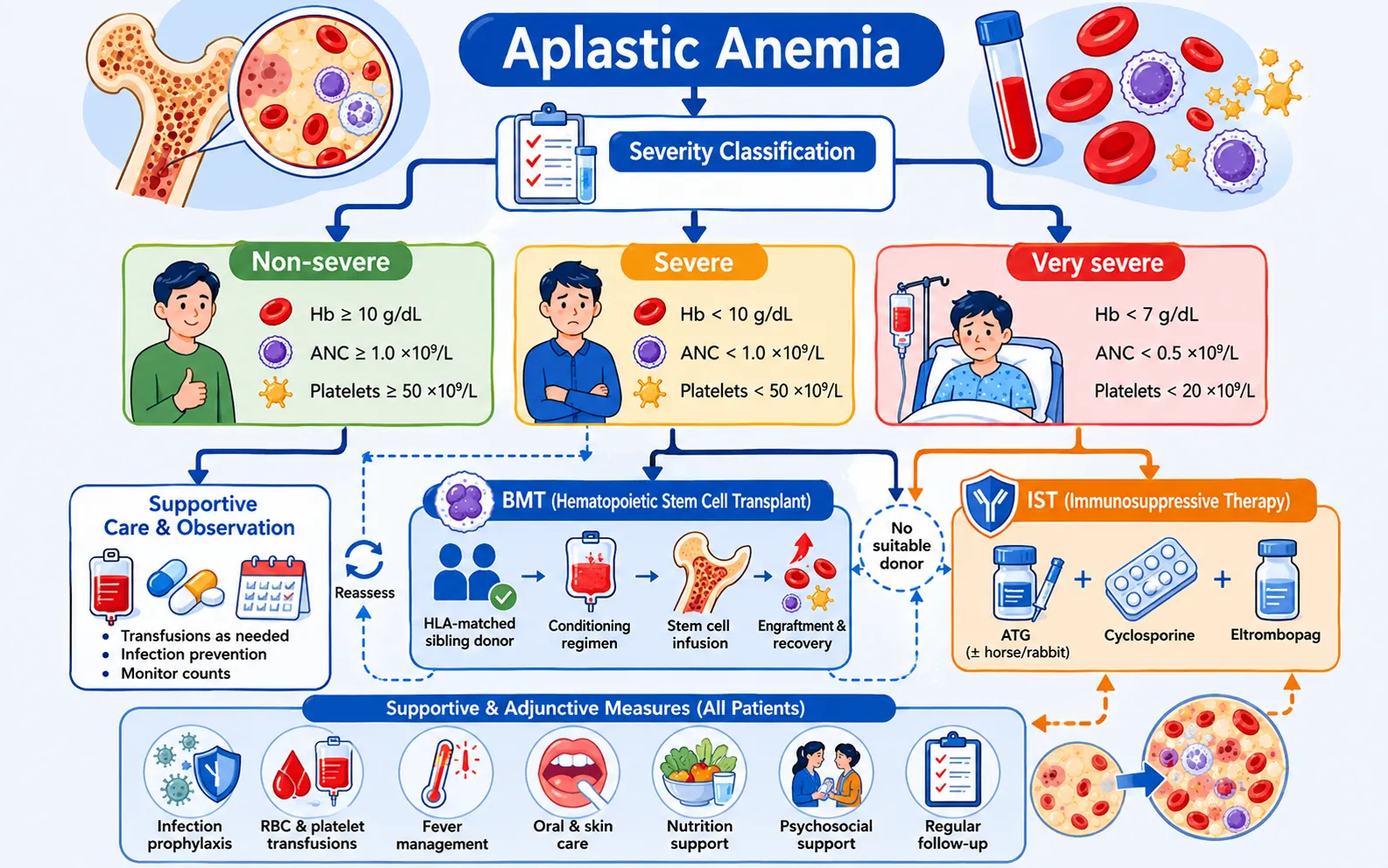
The condition is classified as non-severe, severe (SAA), or very severe aplastic anemia (vSAA) based on blood cell counts. This classification directly determines the treatment approach, urgency, and prognosis. Early, accurate diagnosis is therefore critical to achieving the best possible outcome.
First Signs of Aplastic Anemia: When to Seek Help
Because aplastic anemia affects all three blood cell lines, its early symptoms can be subtle and are often mistaken for general fatigue or a viral illness. Recognising these warning signs early can make a significant difference in outcomes.
Persistent fatigue and weakness — caused by a falling red blood cell count (anaemia)
Frequent or prolonged infections — due to low white blood cell (neutrophil) counts
Unexplained bruising or bleeding — including nosebleeds, bleeding gums, or tiny red spots on the skin (petechiae) from low platelet counts
Shortness of breath on mild exertion
Pale skin, rapid or irregular heartbeat
If you or a family member experiences a combination of these symptoms, a complete blood count (CBC) and bone marrow biopsy are the essential first diagnostic steps. The haemato-oncology specialists at Apex Hospitals are experienced in evaluating these presentations and guiding patients through the diagnostic process promptly.
Is Aplastic Anemia a Type of Blood Cancer?
This is one of the most common questions patients ask after receiving a diagnosis. Aplastic anemia is not a cancer. It is a bone marrow failure disorder — the marrow is damaged or suppressed, but the cells it does produce are not malignant. However, in a small proportion of cases, untreated or long-standing aplastic anemia can evolve into myelodysplastic syndrome (MDS) or acute myeloid leukaemia (AML) over time, which is why treatment should not be delayed.
Distinguishing aplastic anemia from conditions like MDS, paroxysmal nocturnal haemoglobinuria (PNH), and hypoplastic MDS requires expert haematological assessment, including bone marrow trephine biopsy, cytogenetics, and flow cytometry — all available at Apex Hospitals.
How Is Aplastic Anemia Diagnosed?
Accurate diagnosis involves a structured sequence of investigations:
Complete Blood Count (CBC): Reveals pancytopenia — low counts across all three blood cell lines.
Peripheral Blood Smear: Confirms the morphology of circulating cells.
Bone Marrow Aspiration and Trephine Biopsy: The definitive test — shows a hypocellular marrow with replacement by fat cells.
Cytogenetics and FISH: Rules out chromosomal abnormalities associated with MDS.
Flow Cytometry for PNH Clone: Detects paroxysmal nocturnal haemoglobinuria, which coexists in up to 50% of aplastic anemia cases.
HLA Typing: Performed early in younger patients to identify potential bone marrow donors.
The pathology department at Apex Hospitals is equipped with advanced laboratory infrastructure to support this full diagnostic workup, including renal biomarker panels and specialised haematological assays.
Aplastic Anemia Treatment Options in India
The treatment of aplastic anemia in India has advanced significantly over the past decade. The two primary curative or disease-modifying strategies are bone marrow transplantation (BMT) and immunosuppressive therapy (IST). The choice between them depends on the patient's age, disease severity, availability of a matched donor, and overall health status.
1. Bone Marrow Transplantation (BMT) — The Preferred Curative Option
For patients under 40 years of age with severe or very severe aplastic anemia who have a matched sibling donor, allogeneic bone marrow transplantation is the treatment of choice. It offers the highest chance of long-term cure — with survival rates exceeding 80–90% in younger patients with matched sibling donors, according to published data from the European Blood and Marrow Transplantation (EBMT) registry.
In India, matched unrelated donor (MUD) transplants and haploidentical (half-matched) transplants are increasingly performed at specialised centres, expanding access to BMT for patients without a sibling donor. The transplant programme at Apex Hospitals reflects the institution's commitment to complex, life-saving procedures requiring multidisciplinary coordination.
The BMT process involves conditioning chemotherapy to suppress the patient's immune system, followed by infusion of donor stem cells. Recovery and engraftment monitoring typically require a hospital stay of four to six weeks, followed by close outpatient follow-up for at least one year.
2. Immunosuppressive Therapy (IST) — For Patients Without a Matched Donor
For patients who are older, have significant comorbidities, or lack a suitable bone marrow donor, immunosuppressive therapy (IST) is the standard first-line treatment. The classic IST regimen combines:
Anti-thymocyte globulin (ATG) — horse or rabbit ATG, administered intravenously over several days
Cyclosporine A (CsA) — an oral immunosuppressant continued for 12–24 months
Eltrombopag — a thrombopoietin receptor agonist now added to standard IST to improve response rates, particularly in severe cases
Supportive care: Growth factors (G-CSF), blood and platelet transfusions, and prophylactic antibiotics and antifungals during the period of severe cytopenias
The addition of eltrombopag to horse-ATG and cyclosporine has significantly improved overall response rates in severe aplastic anemia, with studies showing complete response rates of up to 58% at six months — a meaningful advance over the historical standard of care.
Patients who do not respond to first-line IST may be candidates for a second course of IST, a matched unrelated donor transplant, or newer agents such as luspatercept or eltrombopagin combination regimens being evaluated in clinical trials.
3. Supportive and Symptomatic Care
While definitive treatment is being planned or initiated, supportive care is essential to prevent life-threatening complications:
Red blood cell transfusions to manage symptomatic anaemia
Platelet transfusions to prevent or control bleeding
Broad-spectrum antibiotics and antifungals for febrile neutropenia
Iron chelation therapy for patients receiving repeated transfusions
Protective isolation in severely neutropenic patients
The ICU and critical care team at Apex Hospitals works closely with haematologists to manage patients with very severe aplastic anemia who require intensive monitoring and rapid intervention during the early treatment phase.
Can Aplastic Anemia Be Cured Without a Bone Marrow Transplant?
Yes — for many patients, immunosuppressive therapy can achieve durable remission. Approximately 60–70% of patients with severe aplastic anemia respond to horse-ATG plus cyclosporine plus eltrombopag, and a meaningful proportion achieve complete responses that are sustained long-term.
However, IST is not without risks. Relapse occurs in roughly 30–40% of responders, and there is a small but real risk of late clonal evolution to MDS or AML. For this reason, patients treated with IST require lifelong haematological surveillance, even after achieving remission.
For younger patients with a matched sibling donor, BMT remains the preferred option because it offers a higher probability of durable cure with lower relapse risk. The decision between BMT and IST should always be made by an experienced haemato-oncology specialist in consultation with the patient and family, weighing all clinical and personal factors.
How Long Does Aplastic Anemia Treatment Take?
Treatment duration varies considerably by modality and individual response:
BMT: The transplant hospitalisation phase is typically 4–6 weeks. Full immune reconstitution and recovery take 6–12 months, with close follow-up continuing for at least 2 years post-transplant.
IST with horse-ATG: The ATG infusion course takes 4–5 days in hospital. Cyclosporine is continued for 12–24 months. Initial blood count response is assessed at 3 and 6 months. Eltrombopag is typically continued for 6 months.
Non-severe aplastic anemia: Some patients with non-severe disease are managed with cyclosporine alone or with supportive care and close monitoring, with treatment adjusted based on response.
Patients and families should be prepared for a treatment journey measured in months to years, not weeks. Psychological support, nutritional guidance, and rehabilitation are important components of holistic care. The dietetics and nutrition team at Apex Hospitals works alongside haematologists to support patients through the physical demands of treatment.
Why India Is a Growing Destination for Aplastic Anemia Treatment
India has emerged as a significant centre for haematological care, combining internationally trained specialists, modern transplant infrastructure, and treatment costs that are a fraction of those in Western countries. Several factors make India — and Jaipur in particular — an increasingly viable destination for patients seeking aplastic anemia treatment:
Availability of experienced haemato-oncologists and transplant physicians
Access to horse-ATG, rabbit-ATG, and eltrombopag as part of standard protocols
Growing unrelated donor registries, improving access to MUD transplants
Comprehensive multidisciplinary support — including internal medicine, physiotherapy and rehabilitation, and psychological support
Significantly lower cost of BMT and IST compared to the US, UK, or Singapore
Apex Hospitals in Jaipur, Rajasthan, is one of the region's leading multispeciality institutions, offering integrated haematology and oncology services supported by advanced diagnostic infrastructure. The hospital's haemato-oncology department manages the full spectrum of bone marrow failure disorders, including aplastic anemia, MDS, and related conditions.
Frequently Asked Questions
What is the best treatment for aplastic anemia?
For young patients (under 40) with severe aplastic anemia and a matched sibling donor, allogeneic bone marrow transplantation offers the highest chance of long-term cure. For older patients or those without a suitable donor, immunosuppressive therapy with horse-ATG, cyclosporine, and eltrombopag is the standard first-line approach. The "best" treatment is always individualised based on age, disease severity, donor availability, and overall health.
Can aplastic anemia be cured without a bone marrow transplant?
Yes. Immunosuppressive therapy (IST) can achieve durable remission in 60–70% of patients with severe aplastic anemia. However, relapse rates are higher with IST than with BMT, and long-term follow-up is essential to monitor for relapse or clonal evolution.
How long does aplastic anemia treatment take?
BMT requires 4–6 weeks of hospitalisation followed by 6–12 months of recovery and close monitoring. IST with ATG involves a 4–5 day inpatient infusion, with cyclosporine continued for 12–24 months. Overall, treatment and follow-up is measured in months to years depending on the approach and individual response.
Is aplastic anemia a type of blood cancer?
No. Aplastic anemia is a bone marrow failure disorder, not a cancer. The bone marrow fails to produce enough blood cells, but the cells produced are not malignant. However, a small proportion of untreated or long-standing cases can evolve into myelodysplastic syndrome (MDS) or acute myeloid leukaemia (AML), making timely treatment important.
What are the first signs of aplastic anemia?
The earliest signs include persistent unexplained fatigue, frequent infections that are slow to resolve, unusual bruising or bleeding (including nosebleeds and bleeding gums), pale skin, and shortness of breath on mild exertion. These symptoms reflect low counts of red blood cells, white blood cells, and platelets respectively. A complete blood count (CBC) is the first step in evaluation.
How is aplastic anemia different from other types of anemia?
Most common anemias (iron deficiency, B12 deficiency) affect only red blood cells and are caused by nutritional deficiencies. Aplastic anemia is a bone marrow failure disorder affecting all three blood cell lines simultaneously (pancytopenia) and requires specialist haematological management rather than nutritional supplementation.
References
Speak with a Haematology Specialist at Apex Hospitals
If you or a loved one has been diagnosed with aplastic anemia, our experienced haemato-oncology team in Jaipur can help you understand your options and build a personalised treatment plan.